
The last forest on Pemba
Ngezi Forest Reserve occupies the north-western tip of Pemba, in the Micheweni District of the North Pemba Region. It covers 1,440 hectares, most of it primary forest, and it was established in 1959. It borders the villages of Kiuyu Kwa Manda to the south, Tondooni, Verani and Makangale to the north, Msuka to the east and Kipangani to the west, and on its western side it meets the Pemba Channel.
It is the last substantial stretch of indigenous forest left on an island otherwise given over to clove plantations and smallholdings, and it is the reason birders and anyone interested in island endemics come to Pemba at all.
What is in it
The reserve is not one habitat. It runs from tropical forest through riverine forest to maquis shrubland on the Tondooni peninsula, with mangrove-dominated sections as well, which is a great deal of variety inside fourteen square kilometres.
The plant list includes endemics — Chrisalidocarpus pembanus and Ensete proboscoideum among them — and a substantial orchid flora, with Aerangis, Bulbophyllum, Eulophia and Vanilla roscheri all represented. The mangrove sections hold Sonneratia alba, Avicennia marina, Xylocarpus granatum, Bruguiera, Rhizophora and Ceriops.
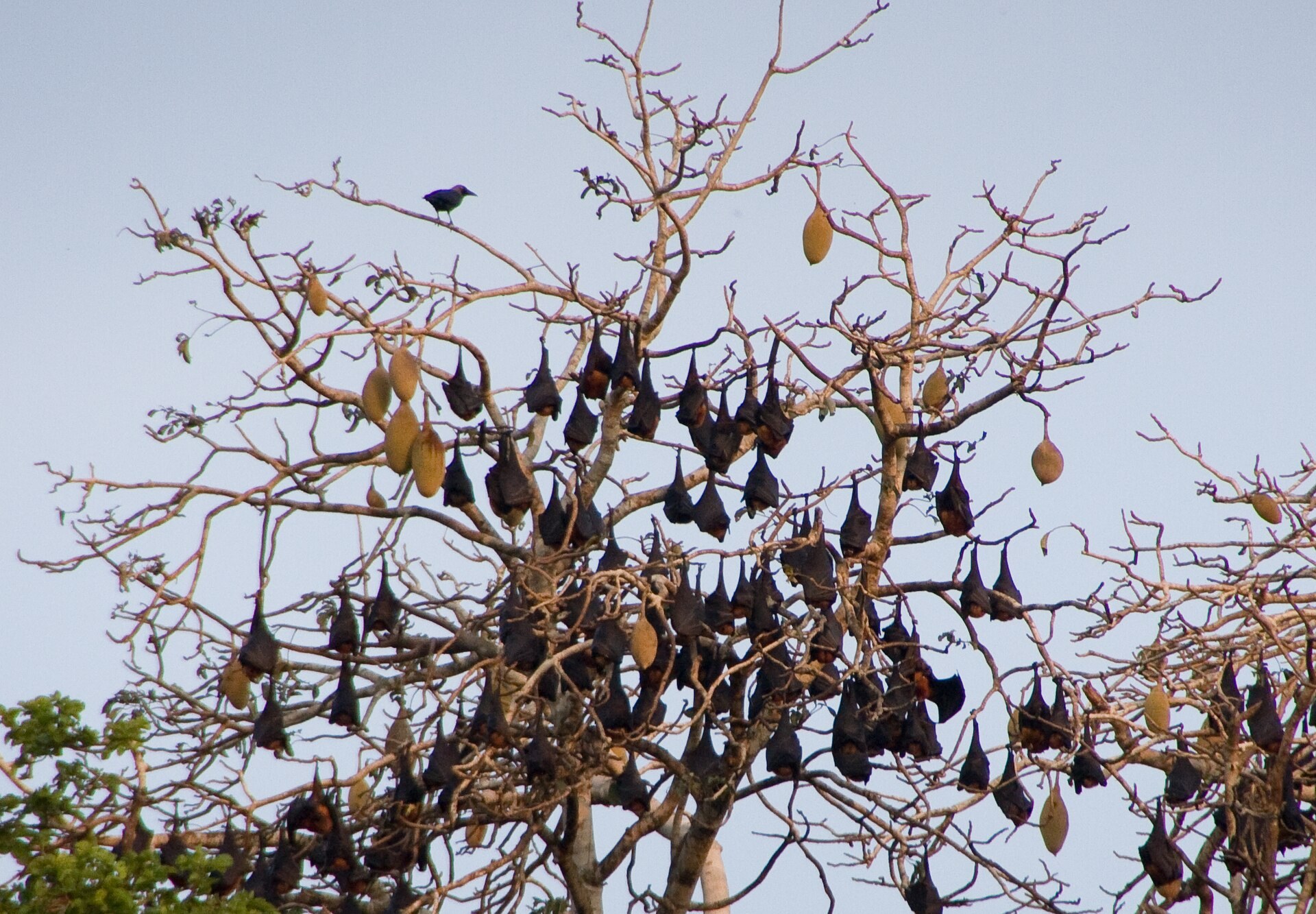
The animals people come for are the Pemba flying fox, a large fruit bat found nowhere else; the Pemba scops owl; the blue duiker; and an endemic subspecies of vervet monkey. Zanzibar red colobus are also present, but they are not native here — they were introduced to the reserve in the 1970s, which is worth knowing when a guide presents them as Pemba wildlife.
Pemba’s four endemic birds make the island the most efficient endemic stop in Tanzania for anyone working a list, and Ngezi is where that work gets done. The birdwatching guide covers the species and the logistics.
The flying foxes, honestly
The Pemba flying fox is Ngezi’s headline animal and the honest position on seeing one has changed, so it is worth stating plainly rather than letting the reputation do the work.
A 2024 survey found that 72.5 per cent of the island’s flying foxes now roost in urban centres, with the colonies at Chake Chake and Wete alone holding nearly fifty-nine per cent of all the bats on Pemba. Over the same period the forest roost at Kidike — long the place visitors were taken to see them — fell from about 4,978 animals in 2008 to 1,491. The species itself has not declined: the island-wide population rose from between 18,200 and 22,100 in 2008 to between 25,328 and 27,412 in 2024. The bats redistributed rather than died.
The implication for Ngezi is direct: the biggest colonies are now in towns, and a forest visit may show far fewer bats than the reputation suggests. The roosts here hold hundreds rather than thousands. That is not a reason to skip the forest, which is worth walking for its own sake, but it is a reason not to build a day around a bat spectacle. The forest walks guide covers the reserve and the wider picture.
Walking it
Ngezi is a walking reserve. Trails run through the forest and out onto the Tondooni peninsula, and the range of habitats within a short distance is the thing that makes it rewarding: primary forest, then swamp, then shrubland, then mangrove and the channel.
Visits are arranged locally on Pemba rather than booked from Unguja, and the reserve is at the far north-western corner of the island, which means a drive from any of the three towns. Accommodation and transport on Pemba are both limited, so this is a place to plan rather than to improvise towards. The Pemba guide covers getting to and around the island, including the caution about advertised direct flights from the mainland that could not be booked when checked.
Forest conservation visits and the questions worth asking about who manages and benefits from a protected area are covered in the conservation tours guide. Reaching the reserve means a vehicle from Chake Chake or the north of the island, which the guide to island transport in Tanzania covers.
Practical notes
Closed shoes, long trousers and insect repellent. This is genuine tropical forest with swamp sections in it, not a garden.
Early morning is the productive time for birds and for the forest generally, as it is everywhere.
Pemba is on the bimodal rainfall pattern: the long rains, masika, from about March to May, and the short rains, vuli, from about October to December. Forest tracks are hardest work at the wet end of masika.
Pemba falls under Zanzibar’s immigration administration rather than the mainland’s, so the archipelago’s separate entry formalities and compulsory inbound insurance apply — see the guide to Zanzibar’s entry rules. Pemba is a conservative island with little tourism. Dress modestly, and expect that a visit here involves the villages around the reserve as well as the forest inside it.
Common questions about Ngezi Forest Reserve
Will I see Pemba flying foxes at Ngezi?
Possibly, but in smaller numbers than the reputation implies. A 2024 survey found nearly three-quarters of the island’s population now roosting in urban centres, with Chake Chake and Wete holding almost fifty-nine per cent between them. The Ngezi roosts hold hundreds rather than thousands.
Are the red colobus at Ngezi native to Pemba?
No. The Zanzibar red colobus is native to Unguja and was introduced to Ngezi in the 1970s. The genuinely endemic mammals here are the Pemba flying fox and an endemic subspecies of vervet monkey.
How big is the reserve?
1,440 hectares, mostly primary forest, established in 1959, at the north-western tip of Pemba.
Is Ngezi worth a trip from Unguja?
Not on its own. Getting to Pemba is the constraint rather than the forest, and a visit here makes sense as part of a Pemba stay — alongside the diving, Misali and the clove country — rather than as a day out from the main island.
What is the birding like?
It is the reason serious birders come to Pemba. The island’s four endemics make it the most efficient endemic stop in Tanzania, and Ngezi is where they are looked for. Early morning is the productive window.