Most Zanzibar holidays mean five to seven nights on Unguja, the archipelago’s main island, split between a beach on one of its coasts and a night or two in Stone Town, the old trading quarter. June to October and December to February bring the driest weather. The island sits a short flight from Tanzania’s northern safari parks, so many visitors add it to the end of a mainland safari.
Zanzibar Beach Areas
Zanzibar’s beach areas by coast, low tide swimming, airport transfer time and character, and what each one means for your stay.
| Area | Low tide | Transfer from airport | Character | What it means for you |
|---|---|---|---|---|
| 01Stone TownWest coast, Zanzibar City | Not a swimming base | About 10 min | Old town, markets, rooftop dining | Spend one or two nights here at the start or end, then move to a beach |
| 02NungwiNorthern tip | Swim at most tides | About 60–75 min | Busy, bars, dhow builders, sunsets | Pick it if swimming at any hour matters more than quiet |
| 03KendwaNorth west coast | Swim at most tides | About 60–75 min | Wide sand, sunsets, monthly full moon party | Calmer than Nungwi by day; expect music on full moon weekends |
| 04MatemweNorth east coast | Sea drops far | About 45–60 min | Fishing village, small lodges | Closest base for Mnemba Atoll boat trips; plan swims around high tide |
| 05KiwengwaEast coast | Sea drops far | About 45–60 min | Larger resorts, many all inclusive | Easy for families who want pools and everything on site |
| 06Pongwe and UroaEast coast | Sea drops far | About 45–60 min | Quiet, palm backed, few bars | Good for a slow week; take taxis for evenings out |
| 07Michamvi PeninsulaSouth east coast | Sea drops far | About 60–75 min | Two shores, west side faces the sunset | The bay side gives an east coast stay a sunset view |
| 08PajeSouth east coast | Sea drops far | About 60–75 min | Kite schools, cafes, younger crowd | The island’s kitesurfing hub; the shallow lagoon suits lessons |
| 09JambianiSouth east coast | Sea drops far | About 60–75 min | Long village shore, seaweed farms | Village life on the doorstep; low tide is for walking, not swimming |
| 10Bwejuu and DongweSouth east coast | Sea drops far | About 60–75 min | Long, uncrowded sand | Space and quiet; check seaweed levels with the hotel before booking |
| 11KizimkaziSouth coast | Sea drops far | To be confirmed | Fishing village, dolphin boats, old mosque | Choose a boat operator that keeps its distance from the dolphins |
| 12Fumba and Menai BaySouth west coast | Sea drops far | To be confirmed | Sheltered bay, dhow and sandbank trips | Base for Menai Bay boat days; often calmer when the north east wind blows |
| 13Pemba IslandNorth of Unguja | Varies by beach | Separate flight or ferry | Green, hilly, few visitors | For a second week or a remote lodge; fewer restaurants and services |
| 14Mafia IslandSouth, off the Rufiji delta | Varies by beach | Separate flight | Marine park, small lodges | Not part of the Zanzibar archipelago; suits divers and whale shark season |
Last checked November 2026. Transfer times are indicative by road from Abeid Amani Karume International Airport and grow after heavy rain. Tide patterns describe typical conditions; tide tables change daily, so ask your hotel for the table for your dates. Sources: transfer operator published times, Expert Africa month guide, hotel and traveller reports on tides.
Where to Stay on a Zanzibar Beach Trip: Coast by Coast
Choosing the coast is the biggest single decision on a Zanzibar beach trip, bigger than the hotel. Unguja is roughly the size of a small county, the roads to the beaches are slow, and each coast behaves differently with the tide and the wind. Book the wrong one and you may find the sea a long walk away for half of every day.
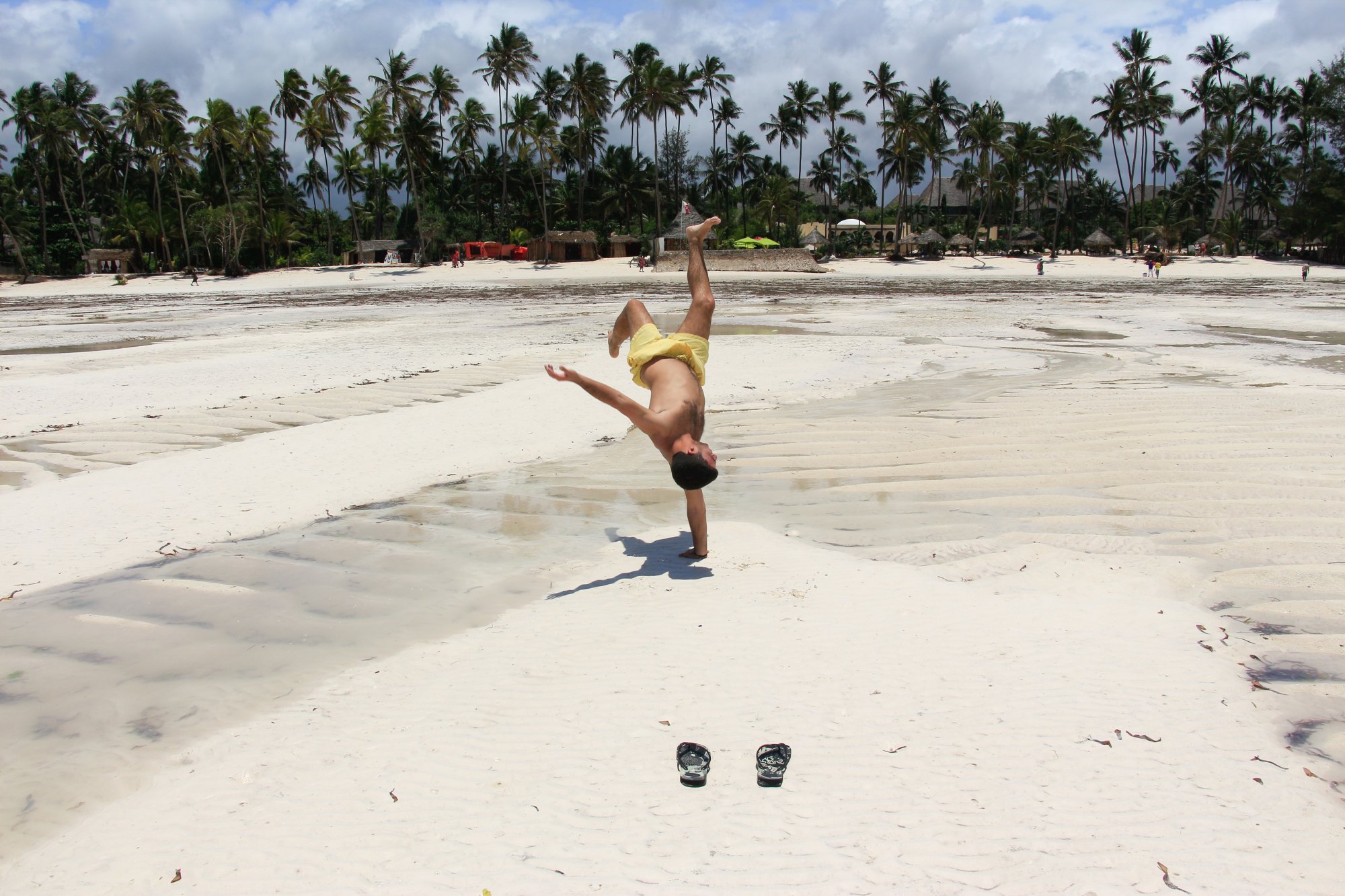
Start with the tide, because it catches more first visitors than anything else. Along most of the east coast the reef sits far offshore and the lagoon inside it is shallow, so at low tide the water pulls back across hundreds of metres of sand and seagrass, dotted with rock pools. Trip reports describe ankle deep water right up to the reef for a few hours each day. On the north coast around Nungwi and Kendwa the beach shelves more steeply, and you can swim at most states of the tide.
The north: Nungwi and Kendwa. This is the liveliest stretch of the island. Nungwi has dhow builders working on the sand, plenty of bars and a sunset view over the water, and it gets busy in the July to August holidays and over Christmas. Kendwa, a short drive down the west side, has a wider beach and a calmer daytime feel, apart from the monthly full moon party that draws crowds and music late into the night. Both suit travellers who want to swim whenever they like and have places to eat within walking distance.
The north east: Matemwe, Kiwengwa, Pongwe and Uroa. Long sand backed by palms and small fishing villages.
Matemwe faces Mnemba Atoll, which makes it the shortest hop for reef boat trips. Kiwengwa holds many of the island’s big all inclusive resorts. Pongwe and Uroa are quieter, with fewer places to eat outside the hotels. When the south east wind blows from about June to October, this coast is often the more sheltered one.
The south east: Michamvi, Paje, Jambiani and Bwejuu. The south east has the island’s widest lagoons and its strongest tidal swing. Paje is the kitesurfing centre, full of kite schools and cafes. Jambiani runs for kilometres past village homes and seaweed plots, and Bwejuu is long and uncrowded. The Michamvi Peninsula has a bay on its western side, which gives it a sunset view on a coast that otherwise faces the sunrise.
Seaweed is the other thing travellers raise about this coast. In some months the wind pushes drifts of it onto the sand, and a few hotels rake their stretch daily while others leave it. If a clean beach matters to you, ask the hotel how it handles seaweed in your month before you pay.
The south and south west: Kizimkazi, Fumba and Menai Bay. These coasts see fewer beach holidaymakers. Kizimkazi is a fishing village best known for dolphin boat trips. Fumba looks onto Menai Bay, a sheltered conservation area with sandbanks and dhow trips, and it often stays calmer when the north east wind blows from about December to February.
Two nights is a fair minimum anywhere, since the transfer from the airport to the north or the south east takes about an hour or more each way. Splitting a week between a swimming beach in the north and a quieter lodge on the east is common, and it softens the tide problem. The beach holidays page covers the wider Tanzanian coast.
Stone Town Walking Tours and Heritage Trips
A guided Stone Town walking tour is the best way into Stone Town, the historic heart of Zanzibar City and a UNESCO World Heritage Site. Its lanes are narrow and unsigned, and a local guide turns a maze of carved doors and coral stone walls into the story of a Swahili trading port that shipped cloves, ivory and enslaved people across the Indian Ocean.
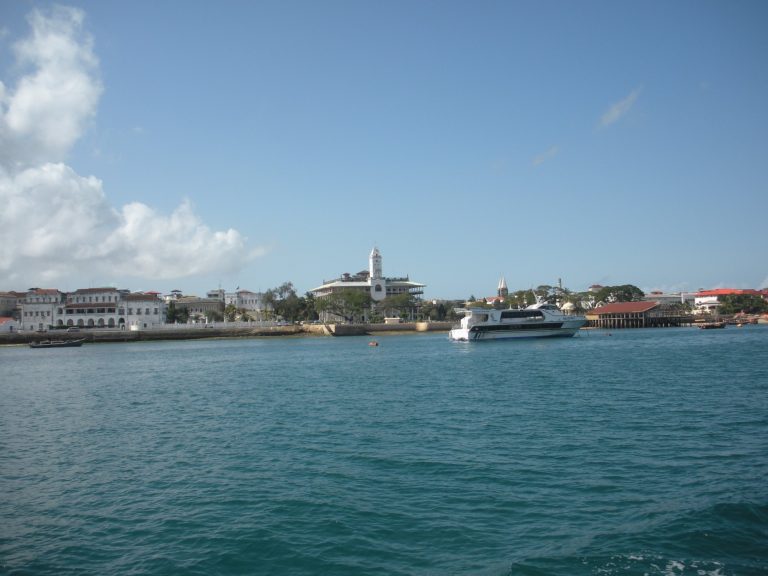
Most walks start on the seafront. The Old Fort hosts festivals and craft stalls, and next door stands the House of Wonders, the former sultan’s palace, which has been closed for restoration since part of it collapsed. From there, guides head inland to the former slave market and the Anglican cathedral built over it. The memorial and small museum there are sobering, and most visitors say the hour is the most important of the day.
Further in, the Hamamni Persian Baths show how the old city washed. Darajani Market sells fish and fruit, with spices by the sack, and its meat hall is not for the squeamish. Music fans look for the Freddie Mercury Museum, since the singer was born in the town.
Evenings belong to Forodhani Gardens, where food stalls grill seafood and fold Zanzibar pizza, a stuffed pancake fried on a griddle, as the light goes. Rooftop restaurants nearby look over the harbour.
Stay one or two nights rather than visiting on a day trip from the beach. The town is at its best early in the morning and after dark, and both are hard to reach from a coast an hour away. Dress with shoulders and knees covered; Stone Town is a conservative Muslim community, and during Ramadan many restaurants close in daylight hours.
Zanzibar Island Tours: Spice Farms, Jozani Forest and Sandbanks
Half day and full day Zanzibar island tours fill the gaps between beach days, and the best of them show sides of the island that a hotel stay never reaches.
Spice farm tours. Zanzibar earned its name as the Spice Island from clove plantations, and spice tours still run on farms inland from Stone Town. A guide cuts open nutmeg, crushes cinnamon bark and lets you taste fruit straight from the tree. Expect a tour of an hour or two, a lunch of rice cooked with the spices you just saw, and a stall selling them at the end.
Jozani Forest. Jozani Forest, in Jozani Chwaka Bay National Park in the south of the island, is the main home of the Zanzibar red colobus, an endangered monkey found nowhere else. Only about 1,600 to 3,000 remain across the islands. Guided walks follow forest trails to troops that are used to people, so sightings are very likely though never guaranteed, and the mangrove boardwalk nearby crosses a tidal swamp. Keep the recommended distance from the monkeys and never feed them.
Prison Island. A short boat ride from Stone Town, Prison Island, also called Changuu, has a colony of giant tortoises and a small beach. It pairs well with an afternoon on Nakupenda sandbank, a strip of sand that appears at low tide and disappears again, so tour times shift with the tide table.
Other trips worth a morning include the Kuza Cave swimming hole near Jambiani, the Mangapwani slave chamber on the west coast, and bicycle rides through villages with a local guide. Cultural fixtures such as the Mwaka Kogwa celebrations at Makunduchi bring crowds to the south of the island once a year.
Book tours through your hotel or a licensed operator rather than a beach seller. Traveller reports describe the island as bigger and slower to cross than it looks, so a “short” trip from Nungwi to Jozani can mean two hours each way.
Dhow Cruises, Snorkelling Trips and Scuba Days on the Reefs
A sunset dhow cruise from Stone Town or Nungwi, under the lateen sail Swahili boats have used for centuries, is the classic evening out. Day trips by dhow head to sandbanks in Menai Bay and to small islands for snorkelling and a seafood lunch.
The reefs around Mnemba Atoll in the north east and Menai Bay in the south west are the main snorkelling and scuba areas, with turtles and reef fish, plus dolphins in some months. Visibility tends to be best from about October to March, and the long rains make conditions poor. Snorkelling and scuba each have their own guides on this site, so this is the short version.
Dolphin trips from Kizimkazi need care. Independent accounts describe a dozen or more boats chasing and circling pods so that visitors can jump in beside them. If you go, choose an operator that keeps its distance, cuts the engine near the animals and lets the dolphins choose whether to come closer. Whale sharks are a Mafia Island trip, not a Zanzibar one.
Zanzibar Holiday Trips Month by Month
Zanzibar has two dry seasons and two wet ones, and the sea stays warm all year. The table below gives the pattern for Zanzibar holiday trips; conditions shift by a few weeks from year to year.
| Month | Rain | Crowds | Best for |
|---|---|---|---|
| January | Low | High, then easing | Beach, kitesurf |
| February | Low | Moderate | Beach, festival |
| March | Rising | Low | Quiet beaches |
| April | Very high | Very low | Lowest rates |
| May | High | Very low | Lowest rates |
| June | Low | Moderate | Value, safari |
| July | Low | High | Beach, safari |
| August | Very low | Very high | Beach, safari |
| September | Very low | High | Beach, reefs |
| October | Low | High | Beach, reefs |
| November | Moderate | Low | Value |
| December | Moderate | Peak at Christmas | Festive breaks |
June to October is the main dry season and the most popular time. Days are sunny, evenings are a little cooler, and the south east trade wind brings steady kitesurfing on the east coast. August and September are usually the driest months. The trade off is price and space: European school holidays fill the island in July and August, and popular beach lodges can sell out six months ahead.
December to February is hot and humid but mostly dry, with the north east wind making the south west coast more sheltered. Christmas and New Year are the busiest dates of the whole year, with long minimum stays at many hotels, while the second half of January and February are quieter. Stone Town’s Sauti za Busara music festival usually falls in February.
March to May brings the long rains, heaviest in April. Roads flood, sea conditions are poor and a number of beach hotels close for refurbishment. If you travel then for the low rates, confirm your hotel is open. November brings the short rains, usually as passing showers between sunny spells, and some of the best value of the year.
Ramadan moves about eleven days earlier each year. During that month Stone Town slows down in daylight and comes alive after sunset, while beach hotels run as normal. The Zanzibar International Film Festival brings crowds to Stone Town in July. For the mainland side of the calendar, see the best time to visit Tanzania.
Combining a Tanzania Safari With Zanzibar Beach Time
Ending a Tanzania safari on Zanzibar is the most common way to build a beach holiday into an East African trip, and the order matters. Game drives start early and run over rough roads, so most people want the beach after the safari rather than before it.
From the northern circuit, the usual route is a drive or flight back to Arusha, then a scheduled flight to Zanzibar of roughly an hour and a half. Several small airlines also fly from Serengeti airstrips to Zanzibar, which saves the long drive back from the Serengeti and the Ngorongoro Crater. Southern safaris in Nyerere National Park or Ruaha connect through Dar es Salaam, which is also where the fast ferries to Stone Town leave.
Timing lines up well for both halves. June to October is dry on safari and on the island, and it covers the river crossings of the Great Migration in the northern Serengeti. January and February pair the calving season in the southern Serengeti with hot, dry beach days. April and May are poor for both.
Light aircraft on safari routes usually limit luggage to soft bags of about fifteen kilograms, including hand luggage, so pack beach clothes into the same small bag. Leave a buffer: an afternoon arrival on Zanzibar after an early bush flight is tiring, and the transfer to the north or south east adds another hour or more. For how many days each part needs, see how many days you need in Tanzania.
Zanzibar Trips for Couples, Families and Kitesurfers
Honeymoon couples tend to choose the north east or the Michamvi Peninsula for small lodges and private beach space, or Pemba for real seclusion. Families do better where the sea is close at all hours, which points to Nungwi and Kendwa, or to resorts with good pools on the east coast, where low tide rock pools also keep children busy. Kitesurfers head to Paje and Jambiani in the windy months. Divers and snorkellers stay near Matemwe for Mnemba. Anyone who wants a second, wilder island can add Pemba, or the reef reserve on Chumbe Island for a day.
Practical Planning for Your Zanzibar Trip
Most visitors fly into Abeid Amani Karume International Airport, a few kilometres from Stone Town, directly from Europe, the Gulf or Nairobi, or on a domestic flight from Arusha, Kilimanjaro or Dar es Salaam. Fast ferries from Dar es Salaam take between one and two hours depending on the boat; buy tickets at the official terminal office, not from touts outside.
Zanzibar is part of Tanzania, so a Tanzanian visa covers it, and you can apply online before travel. Visitors also need the government’s mandatory inbound travel insurance from the Zanzibar Insurance Corporation, bought online before you fly. Your own travel insurance does not replace it. Mainland Tanzania now runs a matching scheme, and one policy bought for your first point of entry covers the whole trip. Our Tanzania travel requirements page covers passports and vaccination rules, including the yellow fever certificate needed if you arrive from a country with yellow fever risk.
Plastic carrier bags are banned and can be confiscated on arrival.
The Tanzanian shilling is the local currency, though most hotels quote in US dollars; use ATMs inside banks. Taxis booked through your hotel are safer than lifts offered on the street, and local buses called daladala are cheap but crowded. Avoid walking alone on dark beaches at night.
Talk to a travel clinic about malaria prevention, and pack reef shoes for the coral and sea urchins on east coast lagoons. More on moving around the country is in getting around Tanzania.
Zanzibar Holidays FAQ
How many days do you need for a Zanzibar holiday?
Five to seven nights suits most people: one or two in Stone Town and four or five on a beach. After a safari, three or four nights works, though it leaves little time for island tours.
Which part of Zanzibar is best for swimming?
The north, around Nungwi and Kendwa, where you can swim at most tides. On the east and south east coasts the sea goes out a long way at low tide, so plan swims around high tide.
How much do the entry costs add up to for a Zanzibar holiday?
The fixed costs are the visa and the insurance. Tanzania’s ordinary single entry visa is US$50 for most nationalities, while US citizens pay US$100 for a multiple entry visa valid for 12 months. The mandatory Zanzibar Insurance Corporation cover is US$44 per adult and US$22 per child, valid for up to 92 days. Fast ferry fares from Dar es Salaam run from roughly €30 to €105 one way depending on class. Hotel rates vary more than anything else and climb sharply in high summer and over Christmas.
Is Zanzibar safe for tourists?
Zanzibar is broadly safe for visitors who take normal care: use hotel booked taxis, keep valuables out of sight in Stone Town, avoid empty beaches after dark and use bank ATMs. Check your government’s travel advice before you go.
Can I combine a Zanzibar holiday with a safari tour on the mainland?
Yes, and it is the most popular way to visit. Fly from Arusha or straight from a Serengeti airstrip to Zanzibar at the end of the safari. June to October and January to February suit both halves.
What should I wear in Stone Town?
Cover shoulders and knees in town and in villages. Swimwear is fine on hotel beaches but not in the streets, and modest dress matters most during Ramadan.
Is Zanzibar worth visiting in the rainy season?
November usually is, with short showers and lower rates. April and May are a gamble: heavy rain and rough sea, with some hotels closed, though the hotels that stay open offer the lowest prices of the year.
Is Mafia Island part of Zanzibar?
Mafia lies further south off the Rufiji delta and belongs to mainland Tanzania. The Zanzibar archipelago is Unguja and Pemba plus many smaller islands.
Tanzania Safari.travel is a marketplace for Tanzania safaris and beach holidays run by independent tour operators. You can compare beach holiday listings or browse every trip that includes Zanzibar safaris and island stays, then send your dates and the coast you prefer straight to the operator. Enquiries go to the operator directly, and there is no booking fee.