What Stone Town is
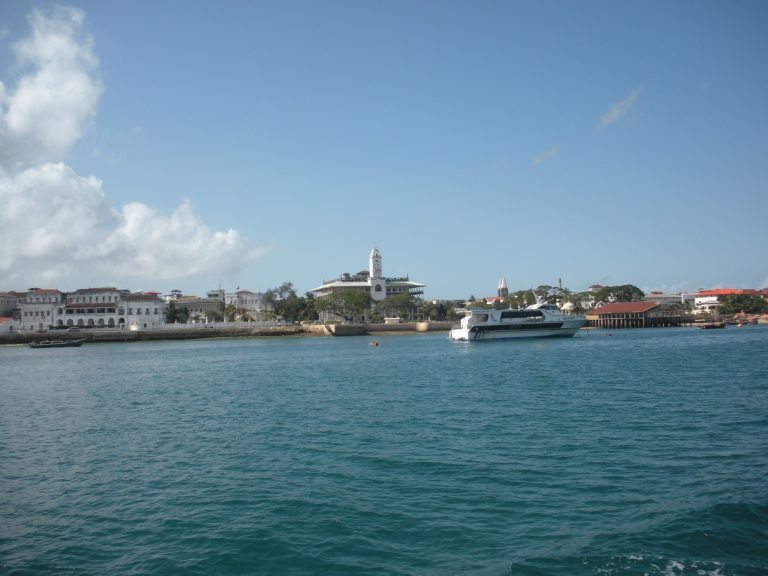
Stone Town — Mji Mkongwe, the old town — is the historic quarter of Zanzibar City, on a promontory jutting from the western side of Unguja into the Indian Ocean. It was inscribed on the UNESCO World Heritage List in 2000, and the inscription is the clearest short description of the place anyone has written: an outstanding example of a Swahili trading town, retaining its urban fabric and townscape virtually intact.
Three criteria carried the inscription. The town is an outstanding material manifestation of cultural fusion. It illustrates, through its architecture and street plan, centuries of seaborne trade between Asia and Africa. And it has great symbolic importance in the suppression of slavery, as one of the main slave-trading ports in East Africa and also as the base from which its opponents, David Livingstone among them, ran their campaign.
The important consequence of all that for a visitor is simple. The town is the monument. Not a building in it, not the doors, not any one museum. The most rewarding hour available here is the one spent getting lost in the alleys.
How it is built, and why that matters
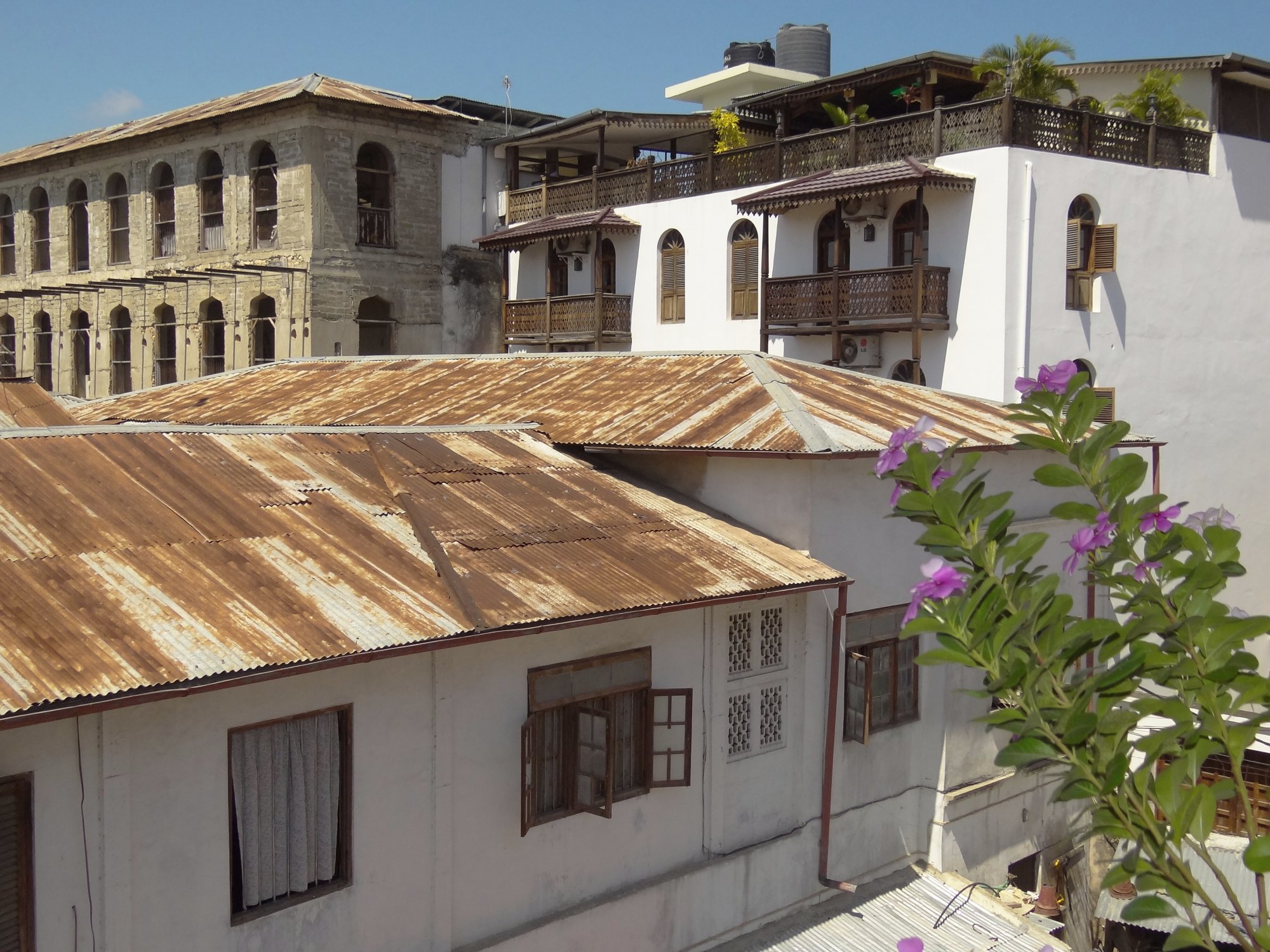
Almost everything here is built of coral rag: a local limestone quarried from ancient reef, laid in thick lime mortar, then plastered and lime-washed, with mangrove timber for structure. UNESCO’s description records the fusion in the building traditions — Swahili, Indian, Arab and European, layered over each other.
The standard house is two storeys, with long narrow rooms arranged round an open courtyard reached through a narrow corridor, and a heavily carved double door on the street. Alongside them are simpler single-storey Swahili houses, and narrow-fronted Indian shophouses along the bazaar streets. Most of the major buildings date from the eighteenth and nineteenth centuries.
Coral rag is also why the town is in trouble. It is soft, it takes water, and the specialist materials needed for the highest-grade heritage buildings are largely not available locally. The Stone Town Conservation and Development Authority, the responsible body, has stated that cast iron for the House of Wonders has had to be sourced abroad on shipping timelines of six or seven months, and that even traditional materials such as mangrove poles can be hard to procure consistently. Around twenty buildings had undergone major renovation as of April 2026, some government funded and some through public-private partnerships.
The same authority makes a point worth carrying into any walk: most properties in Stone Town are privately owned, and the government’s role is largely to regulate and monitor while ownership and stewardship stay with residents. The scaffolding you walk under belongs to somebody. These are homes.
Walking it
Stone Town is walkable because it has no alternative. The lanes were laid out for people and handcarts and most will not take a vehicle. Getting lost is the standard experience and is generally the best part of it — the town is small enough that you will come out at the seafront or at Creek Road soon enough.
A guide is worth it for the first walk, for orientation and because the layout is the thing that needs explaining. After that, wandering is the better use of an afternoon. Organised routes and what they do and do not cover are set out in the historical walking tours guide.
One detail almost no guided route covers: the dividing line between Stone Town and Ng’ambo — “the other side” — is Creek Road, now Benjamin Mkapa Road. Crossing it is the most interesting hundred metres of any walk here, and it is the part of Zanzibar City where most people actually live.
On the carved doors, which are the town’s most photographed feature: they are a detail of the monument rather than the monument itself, and a walk spent hunting them misses the thing they belong to. Many of the buildings behind them are private homes, offices or businesses. Ask rather than wander in, and accept a refusal.
The sites, and their unusually fluid state
Stone Town’s visitor sites change status more often than most places, and several widely listed ones could not be confirmed as currently open when this was checked.
Beit al-Ajaib, the House of Wonders — the building on almost every photograph of the seafront — is closed. Anyone planning a day around it should know that before arriving rather than after.
The Zanzibar museums authority’s own website refused connections entirely during this research, which means several sites cannot be verified either way from here. That includes the Princess Salme Museum and the palace ruins at Mtoni and Maruhubi. Treat those as unverified rather than as closed, and check locally before building a morning around one. Zanzibar’s antiquities sit with its own Department of Museums and Antiquities rather than with the mainland museums body, and Stone Town itself with the conservation authority — which is why mainland museum information does not answer questions about this town.
What is reliably there is the fabric: the Old Fort, built on the site of an earlier Portuguese church; the Old Dispensary; St Joseph’s Roman Catholic Cathedral; Christ Church Anglican Cathedral, built on the site of the last slave market; the former residence of the slave trader Tippu Tip; the Malindi mosque; the Hamamni and other Persian baths; the Royal Cemetery; and the seafront mansions. The museum picture more broadly is covered in the museum tours guide.
The slave market site, and what is actually known
The former slave market, where Christ Church Cathedral now stands, is the most visited historical site in the town and needs to be approached with the facts rather than the tour narrative.
The cathedral’s own history is not in dispute. What is disputed, in the academic literature, is the authenticity of the underground chambers shown to visitors as slave-holding cells. A study published in 2020 argues that the site has been constructed as a place of memory at the expense of historical reality, and among the evidence it records is an 1892 map of Stone Town which labels the site of the present memorial as Kwa Kimoto, after a family living in the district, with no mention of the chambers at all. It also records that their authenticity is contested within Zanzibar itself.
None of that diminishes what happened in this town, which is documented beyond argument and is one of the reasons it carries World Heritage status. It does mean a visitor is better served by the exhibition, which stands on its own, than by the more dramatic version of the story. The fuller treatment, including the sites at Mangapwani and on the mainland, is in the slave trade history guide.
Eating, and the Forodhani question
Forodhani Gardens, on the seafront in front of the Old Fort, becomes an open-air food market after sunset. It is the most photographed food experience in Tanzania and the most argued-about, and both of those are fair.
Darajani, the town’s main market, is the other fixture and the starting point of most food walks and cooking classes. It is a working market for residents rather than a visitor attraction, which is exactly its value and also why it can feel unwelcoming for the first ten minutes. Both are covered in the food and market tours guide.
On Zanzibar pizza, which you will be offered: it is not a pizza. It is a thin sheet of dough wrapped round minced meat, vegetables and egg, folded and fried on a hotplate, closer to a stuffed crepe. It is a modern Stone Town street item associated with the visitor trade, and no source gives it an origin, an inventor or a date. Eat one anyway.
Using the town as a base
Stone Town is where the island’s boats, tours and transfers are organised from, and it is a short run to the airport and the ferry port. Most spice tours leave from here for gardens a short drive north or east. The islands in the channel — and the sandbanks between them — are the standard half-day on the water, covered in the sandbank trips guide, and the sailing off the town is the most scenic on the island, in the dhow sailing guide. Chumbe, the access-controlled reef sanctuary, lies south-west of the town and has to be arranged in advance rather than added to a boat’s route on the day.
Two or three nights here is the usual allocation, either at the start of an island trip or split around a beach stay — an allocation worth setting against the whole shape of a Tanzanian itinerary rather than decided in isolation. The town in the evening, once the day boats have gone, is a different and better place than the town at eleven in the morning.
Practical notes
Dress covered — shoulders and knees — everywhere in the town. This is not a beach and beachwear reads as it would in any other town centre. During Ramadan, expect local restaurants to close in daylight hours and keep your own eating and drinking out of public view during the day; hotels serve guests as usual.
Ordinary city sense applies. The usual complaints are petty theft and persistent touts rather than anything worse, and both concentrate on the seafront area after dark.
Most visitors arrive through the port or the airport a short drive away, and both are covered in the guide to arriving in Zanzibar and moving on. The alleys are narrow, uneven and frequently unlit at night. Flat shoes, a torch on your phone and a rough sense of which way the sea is will get you further than a map, since street signs are sparse and the lanes were never laid out to a grid.
Zanzibar is a separate immigration administration from the mainland and requires compulsory inbound travel insurance bought through the government portal; per-night government charges are also collected through accommodation. The guide to Zanzibar’s own entry requirements sets out what is verifiable and what is not.
Common questions about Stone Town
How long should I spend in Stone Town?
Two or three nights suits most people. A single night is enough for the main sites and not enough for the thing the town is actually good at, which is being walked without a plan.
Is the House of Wonders open?
No. Beit al-Ajaib is closed, and the specialist materials for its restoration are being imported on long shipping timelines. It is still the building on the postcard, so it is worth knowing in advance.
Do I need a guide?
For the first walk, yes — the layout is what needs explaining and it is hard to read on your own. After that, getting deliberately lost is the better use of your time. At the slave market exhibition a thoughtful visitor can manage without one.
Are the underground chambers at the slave market authentic?
Contested. A 2020 study argues the site has been shaped as a place of memory at the expense of historical accuracy, citing an 1892 map that labels the location Kwa Kimoto with no mention of the chambers, and records that their authenticity is disputed within Zanzibar too. What is not disputed is Zanzibar’s central role in the Indian Ocean slave trade, which UNESCO cites directly in the town’s inscription.
Why is Stone Town a World Heritage Site?
It was inscribed in 2000 under three criteria: as an outstanding material manifestation of cultural fusion, as an exceptional illustration of centuries of seaborne trade between Asia and Africa, and for its symbolic importance in the suppression of slavery — both as a major slave-trading port and as the base from which its opponents campaigned.
Can I go inside the houses with the carved doors?
Some are museums or churches and are open. Many are private homes, offices or businesses, and the courtyard houses in particular are lived in. Ask rather than wander in, and take a no gracefully.
Is Stone Town safe to walk at night?
Generally, with ordinary city sense. Petty theft and persistent touts are the usual complaints and both concentrate on the seafront after dark. The alleys are dark and uneven, so a torch is more useful than a map.
Can I combine Stone Town with a beach stay?
Easily. Nothing on Unguja is more than a couple of hours from anything else, and a common pattern is a night or two in the town at the start or end of a beach week. The town is also where the island’s boat trips and transfers are organised from.