
Historical and Architectural Walking Tours in Tanzania
Reading the towns on foot, from Stone Town’s Omani and Indian quarters to German and Asian-era Dar es Salaam, Bagamoyo, Tanga and Mikindani.
Tanzania has Swahili stone towns, Omani forts, German bomas and post independence modernism, and in most places no organised walk of any of it. This guide covers which towns genuinely have a walking tour, where a city tour is really a drive, and how to read the materials the buildings are made of.
Safaris That Include Historical Walking Tours
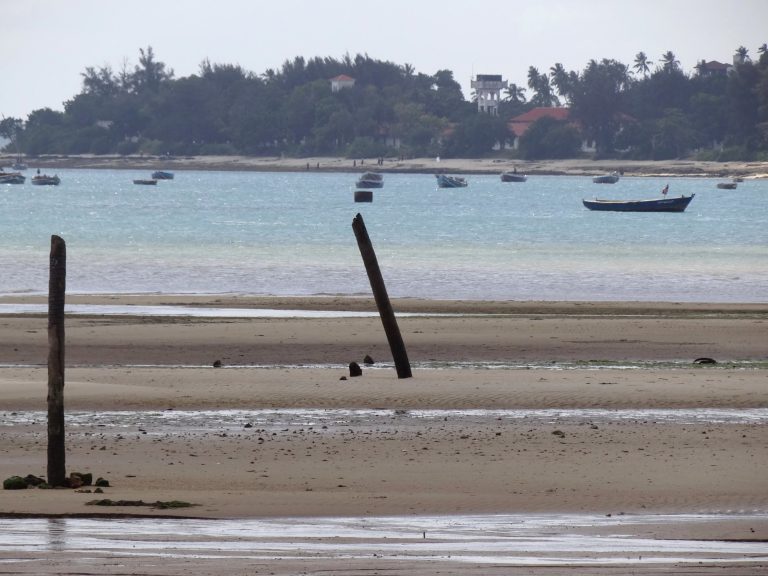

4 Days Zanzibar Island Safari | Stone Town, Beach & Spice Tour
by Kori Safaris Verified operator


a 12 Day Tanzania Safari
by Wild Whispers Africa Verified operator
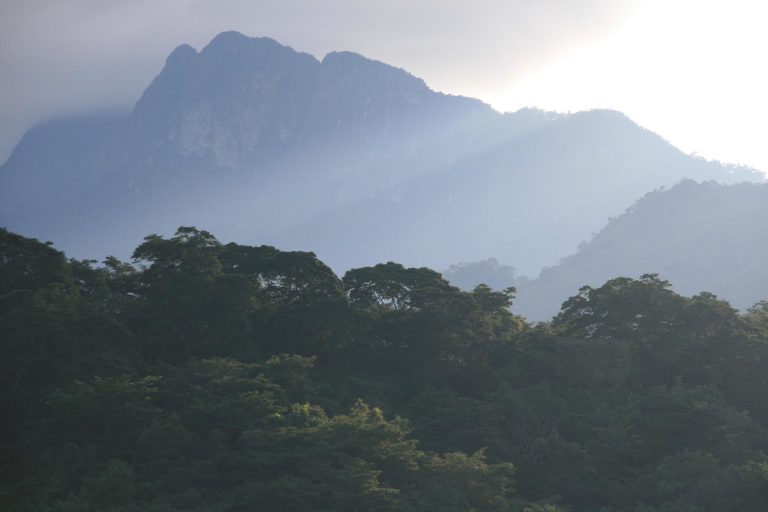

14 Days Southern Tanzania Safari & Zanzibar Beach
by Oree Safaris Verified operator
Historical Walking Tours Guide in Tanzania
What a historical walking tour means here, and where it is really a drive
Tanzania has more historic urban fabric than its reputation suggests: Swahili stone towns, Omani forts, German administrative bomas, Indian commercial streets, Gothic-revival mission churches and post-independence modernism, often within a few hundred metres of each other. What it does not have in most places is an organised walking tour of any of it.
That gap is the single most useful thing to know before booking. A product sold as a city tour in Tanzania is usually a vehicle circuit with photo stops, and a product sold as a historical walking tour may be a guide who will walk with you rather than a researched route. Both can be good. Neither is what the words suggest.
Two towns can be said with confidence to have a genuine, documented walking tour: Stone Town, where the streets are too narrow for cars, and Mikindani in the far south, where a guided route of about two hours is published by the organisation that runs it. Bagamoyo has walks in practice, though no named organisation running them could be confirmed. Everywhere else, you are arranging something rather than joining something.
Stone Town, the one town built for walking
Stone Town, Mji Mkongwe, is walkable because it has no alternative. The lanes were laid out for people and handcarts, and most will not take a vehicle. Getting lost is the standard experience and is generally the best part of it.
What to look at as you walk: the characteristic house is two storeys, its long narrow rooms arranged around an open courtyard reached down a narrow corridor, and externally distinguished by carved double doors. Alongside those are the narrow bazaar-street Indian shopfronts with a duka at the front, and the simple single-storey Swahili houses, which are as much a part of the protected fabric as the seafront mansions. Why the town is inscribed, and what that inscription actually protects, is covered under Swahili cultural tours.
Look for the baraza, the long stone bench built along the outside wall of a building. It is a raised walkway when the rain floods the lane and a place to sit the rest of the time, and it is the clearest bit of evidence that these streets were designed as social space.
Named buildings worth finding on a walk include the Old Fort, built by the Omanis in 1699 with part of an earlier Portuguese church built into it, the Old Dispensary on the seafront, St Joseph's Catholic Cathedral, Christ Church Anglican Cathedral on the site of the former slave market, the house associated with the trader Tippu Tip, the Hamamni baths and the Royal Cemetery. The House of Wonders is closed and under restoration.
One detail worth carrying for the walk itself: the dividing line between Stone Town and Ng'ambo, the other side, is Creek Road, now Benjamin Mkapa Road. Crossing it is the most interesting hundred metres of any Stone Town walk, and almost no guided route does it.
Dar es Salaam: the architecture is there, the walk is not
Dar has a genuinely rewarding architectural core, and almost nobody walks it.
The Old Boma, where Morogoro Road meets Sokoine Drive facing the harbour, is the oldest building in the city and is commonly misdescribed as German. It was built in 1866 and 1867 by Sultan Majid bin Said of Zanzibar, and only later restored and enlarged under German rule, with a Zanzibari carved door and coral stone walls that give the game away. It houses a centre for architectural heritage founded in 2014 as a joint initiative of a Berlin university unit, the Architects Association of Tanzania and Ardhi University's faculty of architecture, with a permanent exhibition on the city's architecture that deliberately foregrounds the period from independence onwards rather than the colonial buildings. Its current opening arrangements could not be confirmed, so check before making a journey for it.
The Askari Monument on Samora Avenue is the strongest single interpretive stop in the city, and most visitors photograph it without knowing why. It was unveiled in 1927, sculpted by a British artist, and commemorates the askari who fought in the East African campaign of the First World War. It stands on the plinth that previously carried a statue of the German general Hermann von Wissmann, which the British dismantled after taking the city in 1916. One plinth, two empires, and a memorial to African soldiers erected by the side that had just won.
Within a short walk are the Lutheran church on the seafront, built by German missionaries at the turn of the twentieth century in a Bavarian idiom with a turreted bell tower and tiled canopies over the windows, and St Joseph's Cathedral, Gothic revival, built by Benedictine missionaries in the same period. Both are still in use, which is the point. Kariakoo, whose name is a Swahilisation of the British Carrier Corps that was based there, is a different city entirely and is covered under food and market tours.
The honest caveat: Dar city tours sold online are vehicle circuits with photo stops, taking in the monument, the fish market, Kariakoo, the Village Museum and the carvers' market at Mwenge. The distances along Sokoine Drive and Samora Avenue are perfectly walkable and the heat is the real obstacle. If you want to walk it, say so explicitly, and start at seven in the morning.
Bagamoyo
Bagamoyo's old town is compact, atmospheric and badly served by what is written about it.
Start with a correction. Bagamoyo is a National Historic Site of Tanzania. It is not a World Heritage Site, though a great many pages say so. Tanzania has seven inscribed properties and Bagamoyo is not among them; what exists is a tentative-list entry covering the Central Slave and Ivory Trade Route, submitted in 2006 and still tentative.
The town was settled in the eighth century as a Zaramo village and grew as a Swahili stone settlement, a satellite of nearby Kaole, before becoming the last halt for caravans walking from Lake Tanganyika to the coast. The surviving fabric includes the Caravan Serai where caravans assembled and re-stocked, a fort built in the 1860s by an Arab trader and fortified through the following decades, and the German Boma, completed in 1897, which served as the regional administrative headquarters under both German and British rule.
Two kilometres north is the Holy Ghost Mission, established after Father Antoine Horner chose the site in 1868. Its original church, built in 1872, is reported to be the oldest church on the East African mainland. David Livingstone's body was laid there for a night in 1874 on its way to the coast, and the original church's tower carries his name. The grounds hold a three-storey Old Fathers' House built in coral stone with mangrove-wood floors and roof, which is a local building idiom rather than a European one, a cemetery, a grotto from 1876, and a museum.
A detail that tells you something about heritage practice here: a German conservation report records that the Boma's original pitched roof with its long overhang was removed during restoration and replaced with a flat roof. The restoration damaged the building's authenticity. It is worth looking for, and worth remembering when a guide describes a building as restored.
Bagamoyo's place in the caravan and slave trade is covered properly under slave trade history tours, including why the town's usual billing as a major slave port is disputed by historians.
Mikindani
Mikindani, twenty-five kilometres from Mtwara in the far south, is the best-documented town walk in Tanzania outside Zanzibar and almost nobody goes.
It is an official National Museums of Tanzania centre, listed as Mji Mkongwe Mikindani, and described as a significant trading port from the ninth century with Arab, Portuguese, German and British layers, exporting ivory, gum copal, enslaved people and seed crops. The national museums body names the surviving fabric: the Custom House, the Sultanate Palace, the German Governor's Residence, the slave market, the mosque, an Indian temple, stone-built homes, Indian Street, historical graves, churches and historical water wells. Mikindani Day is held on 26 October each year.
The town walk is published by the hotel occupying the old German boma of 1895, which is run by a UK charity. It runs about two hours with an English-speaking guide and a map, taking in Livingstone House, the old slave market, Bank House and the Governor's House, along with Hindu, Muslim and Christian places of worship in a town small enough to hold all three within a few streets. Its own published guidance asks visitors to ask before photographing people, which is the correct instruction and is rarely written down anywhere else.
Tanga, Pangani and the northern coast
Tanga has a German colonial core and the Urithi Tanga Museum occupies its old German boma, which makes it the obvious anchor for a walk in the town.
Pangani, where the Pangani River meets the sea about forty-five kilometres south of Tanga, is frequently described as a walkable historic centre with a riverfront boma and a fort facing the Pemba Channel. The building list circulating online could not be verified from a reliable source and is not repeated here. What can be said is more useful: in September 2026 the National Museums of Tanzania reported a meeting in Pangani to identify and inventory heritage sites in the district and to set a joint strategy for developing them. In other words, the national museums body describes Pangani's heritage tourism as something still being built rather than an established circuit. Go, by all means, but arrange a guide locally and do not expect a product.
Iringa and the southern towns
Iringa was founded as a German military base in 1896 and its boma, built in the early 1900s, reopened as a regional museum and cultural centre in 2016. The town sits high and cool and is one of the more pleasant places in Tanzania to walk around.
Above it stands Gangilonga Rock, a granite inselberg whose name is glossed in Hehe as the talking stone, associated with Chief Mkwawa, who led the Hehe resistance against the Germans. It is a short walk from town and the view is the reason to do it. One widely repeated claim should be treated with care: operator pages describe Gangilonga as the site of Mkwawa's last stand against the Germans in 1894. That conflicts with the documented history, in which the German assault fell on his fortress at Kalenga, Mkwawa escaped, and he died in 1898. The rock's association with him is real; the last stand is not sourced.
Further south, Kilwa Kivinje is a mainly nineteenth-century trading town, quite distinct from the medieval island ruins offshore, and has no confirmed organised walk. The island ruins themselves are a guided site visit rather than a town walk, and are covered under archaeological tours.
What the buildings are actually made of
An architectural walk in Tanzania gets much better once you can read the materials, and there are essentially four vocabularies.
- Swahili coral construction. Coral ragstone quarried from old reef, laid in thick lime mortar, with mangrove poles for floors and roofs. Mangrove sets the room width, which is why Swahili rooms are long and narrow: the timber could not span further. Plastered and lime-washed on top.
- Omani and Indian additions. Carved double doors, deep verandas, cast-iron balconies and the bazaar shopfront with its duka. The doors are the most photographed element and the least representative one.
- German colonial. Heavy masonry bomas with deep verandas and, originally, steep pitched roofs with long overhangs for the rain, plus mission churches in Bavarian and Gothic-revival idioms. Where a boma now has a flat roof, that is usually a later alteration rather than the original design.
- Post-independence modernism. The least regarded and most rapidly disappearing layer, and the one the architectural heritage centre in Dar deliberately puts first.
Walking well
- Start early. By ten in the morning on the coast, walking is unpleasant, and by midday it is unwise. Seven to ten, then again after four, is the working day.
- Ask before photographing people. This is the explicit instruction from the one organisation in the country that publishes a walking route, and it applies everywhere.
- Many of these buildings are homes, offices or places of worship. Courtyards in Stone Town are private. Ask, or stay in the lane.
- Dress for the town, not the beach. On the coast that means shoulders and knees covered, and in Zanzibar it is enforced rather than merely expected.
- Carry water and expect nowhere to buy it in the smaller towns.
- Ask a guide how they know something. A great deal of what is said about these towns is repeated tour copy, including at least two claims corrected in this guide.
Questions travellers ask
Which towns actually have organised walking tours?
Stone Town, abundantly, and Mikindani, which has a published two-hour route. Bagamoyo has walks in practice though no named organisation running them could be confirmed. Elsewhere you are arranging a guide rather than joining a tour.
Is a Dar es Salaam city tour a walking tour?
Almost never. What is sold is a vehicle circuit with photo stops. The historic core is walkable and the heat is the reason nobody does it, so if you want to walk, ask specifically and go early.
Is Bagamoyo a World Heritage Site?
No, despite what a great many pages say. It is a National Historic Site of Tanzania. The country has seven inscribed World Heritage properties and Bagamoyo is not among them; there is a tentative-list entry covering the Central Slave and Ivory Trade Route.
How long do I need for Stone Town?
A guided walk of two to three hours for orientation, then at least one more session on your own. The town rewards being walked twice, once with someone explaining it and once lost.
Do I need a guide?
In Stone Town, for the first walk. In Mikindani, yes, because the route is the product. In Bagamoyo and Iringa a guide adds a lot, since there is little signage. Ask how they know what they are telling you.
Is it safe to walk in these towns?
Generally yes, with ordinary city sense. Petty theft and persistent touts are the usual complaints rather than anything worse, and both concentrate in Stone Town's seafront area after dark.
What is the most interesting single stop?
For a short visit to Dar, the Askari Monument, because it is a memorial to African soldiers standing on the plinth of a dismantled German general. For the south, Mikindani, because the whole town is the stop.
Can I go inside the historic buildings?
Some are museums or churches and are open; many are private homes, offices or businesses. Courtyard houses in Stone Town in particular are lived in. Ask rather than wander, and accept a refusal.