
Big Five Safaris in Tanzania
An itinerary built to give a reasonable chance at lion, leopard, elephant, buffalo and rhino. In Tanzania the rhino is the limiting factor, and the Ngorongoro Crater is the usual place to look.
Ngorongoro Crater supplies the black rhino that decides most Big Five safaris in Tanzania, and together with the Serengeti and Tarangire it puts lion, leopard, elephant, buffalo and rhino within a few hours' drive of each other. A northern circuit of five to seven days in the June to October dry season gives a fair chance at all five. Leopard and rhino are the two most often missed, and no park or operator can promise the full set.
Safaris That Include Big Five Safaris
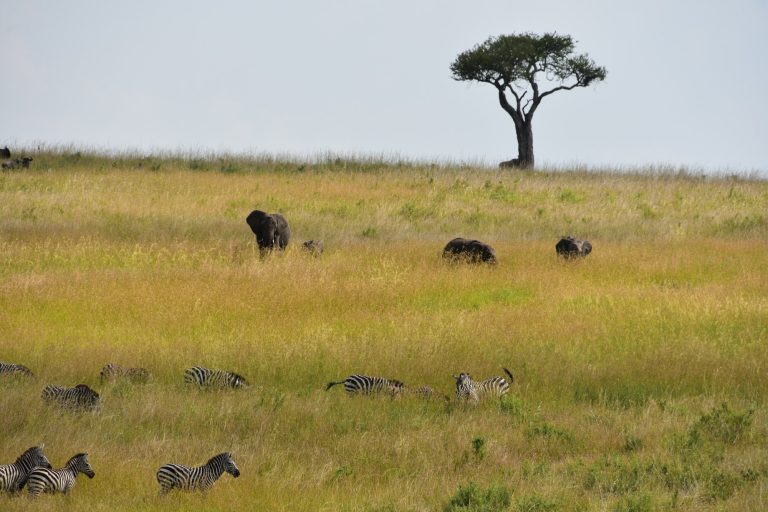

9 Days Tanzania Safari Holiday
by Insight Safari Holidays Verified operator
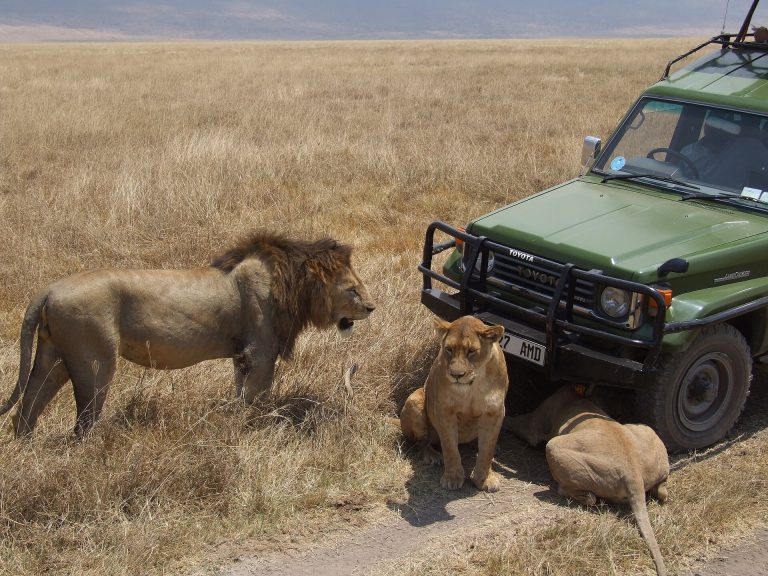
4 Day Tanzania Safari: Ngorongoro, Serengeti, & Tarangire
by Insight Safari Holidays Verified operator
5 Days Tanzania Cultural Experience
by Insight Safari Holidays Verified operator


5 Days Tarangire and Ngorongoro Crater Safari
by Tranquil Safaris Verified operator
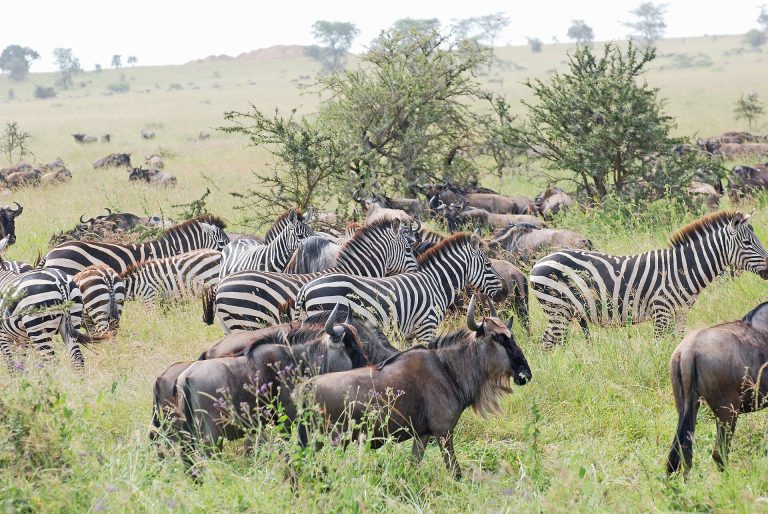

Grand East Africa: Mara, Serengeti & Gorillas
by Ancient Africa Safaris Verified operator
From $15,100 per person
View Safari
10 Days Wildlife Tanzania & Culture Safari
by Insight Safari Holidays Verified operator
See all 50 safaris that include big five safaris
Big Five Safaris Guide in Tanzania
Big Five Safari Sighting Guide for Tanzania's Parks
How likely each of the Big Five is in Tanzania's main parks, and which parks hold all five.
| Park | Lion | Leopard | Elephant | Buffalo | Black rhino | What it means for you |
|---|---|---|---|---|---|---|
| 01Ngorongoro CraterNgorongoro Conservation Area | GoodResident prides on the floor | LowForest edges, rarely seen | FairMostly bulls near Lerai | GoodLarge herds on the grassland | FairBest wild chance, often distant | Descend when the gate opens at 06:00 and carry binoculars for rhino |
| 02Serengeti National ParkSeronera and the Moru Kopjes | GoodTerritorial prides all year | GoodSeronera riverine woodland | FairWoodland and the north | GoodCommon along rivers | LowMoru area, a bonus only | Give leopard two or more days around Seronera |
| 03Tarangire National ParkTarangire River and Silale Swamp | FairAlong the river in dry months | FairRiverine trees | GoodPeak herds July to October | GoodGathers on the river | Not presentNo visitor population | Your elephant park, best late in the dry season |
| 04Lake Manyara National ParkRift Valley floor | FairKnown for resting in trees | LowGround water forest | GoodForest and lake shore | GoodLake shore grassland | Not presentNo visitor population | A half day that adds elephant and buffalo, not rhino |
| 05Arusha National ParkMount Meru and Momella Lakes | Not presentNo resident lion | LowListed, rarely seen | LowOccasional | GoodGlades and lake edges | Not presentNo visitor population | Good for walking and canoeing, weak for the Big Five |
| 06Mkomazi National ParkFenced rhino area inside the park | LowPresent, thinly spread | LowPresent, thick bush | FairMoves with Tsavo | FairPresent | GoodBooked viewing in the fenced area | Arrange rhino viewing with the park before you travel |
| 07Nyerere National ParkRufiji River, formerly Selous | GoodCommon near the lakes | LowSeen now and then | FairOften from a boat | GoodCommon | Not offeredVery rare, not a visitor sighting | Expect four of the five plus boat and wild dog viewing |
| 08Ruaha National ParkGreat Ruaha River | GoodLarge prides | FairRiverbanks and rocks | GoodBig dry season numbers | GoodLarge herds | Not offeredNot a visitor sighting | Strong for four of the five with far fewer vehicles |
| 09Mikumi National ParkMkata floodplain | FairOpen floodplain | LowRarely seen | FairFloodplain and woodland | GoodCommon | Not presentNo visitor population | A short trip from Dar es Salaam, not a full Big Five park |
| 10Katavi National ParkKatuma River floodplains | FairFollows the buffalo | LowRarely seen | FairDry season river | GoodHuge late dry season herds | Not presentNo visitor population | Go in August to October for the buffalo herds |
Chance scale, for a visitor spending a full day or more in the park: Good means seen on most trips; Fair means seen on many trips; Low means present but often missed; Not present or Not offered means no visitor population to look for.
Last checked November 2026. Sightings are never guaranteed. Ratings are an editorial summary of NCAA and TANAPA species lists, Frankfurt Zoological Society reports on Serengeti rhino and published trip reports, not survey data.
Black Rhino Safaris in Ngorongoro Crater
A black rhino safari in Ngorongoro Crater is the reason almost every Big Five itinerary in Tanzania bends towards the crater. The Ngorongoro Conservation Area Authority lists black rhino among the Big Five on the crater floor, and this is the one place in the country where a visitor without a special booking has a fair chance of seeing a wild one on a normal game drive.
The crater is a collapsed volcano roughly 600 metres deep, and its walls keep most of the large animals on the floor all year. That confinement is what makes the rhino findable. A black rhino in open savannah can vanish into hundreds of square kilometres of thicket; on the crater floor it has far less room to disappear, and the guides know its habits.
Distance is the catch. Crater rhino often show up as two grey shapes out on the grassland or along the edge of the Lerai forest, a long way from the nearest track, because vehicles must stay on the roads. Trip reports return to the same detail again and again: the group that saw rhino had binoculars, and the group that did not often drove straight past them. One recent account describes a team that searched the floor all morning without a rhino, then picked out a pair from the rim on the way out, through a guide's binoculars. Pack a pair for every person in the vehicle, not one to share.
Timing shapes the day. Driving in the conservation area runs from 06:00 to 18:00, and the descent gates into the crater close at 16:00. The animals are most active in the cool first hours, so a descent soon after the gates open puts the vehicle on the floor while rhino and lion are still in the open. The rim road can sit in thick fog at dawn, which slows the drive from the lodges, so leave a little earlier than the guide's first suggestion.
Four of the five are straightforward here. Buffalo and lion are common on the floor, and the crater's elephant are mostly old bulls feeding near the Lerai forest and the wall. Leopard is the weak link: present in the forest fringes and on the rim, rarely seen on the open floor. A crater day alone seldom produces all five, which is why the crater works best as one stop in a longer circuit.
The population itself has a long and fragile history. Counts recorded 108 rhino in the crater in 1968 and only 25 by 1977, after heavy poaching, and the authority now guards the animals with constant patrols and camera surveillance. Current numbers are not published, and that is deliberate. Any figure quoted in a brochure is a guess, and often an old one.
See the Ngorongoro Crater guide for the crater's roads and descent routes.
Serengeti Rhino Tracking around the Moru Kopjes
Rhino tracking in the Serengeti is a bonus, not a plan. The park holds black rhino, and the Frankfurt Zoological Society, which supports the park's rhino protection teams, reports that numbers have grown more than tenfold since its project began in the mid nineties. Animals now turn up in parts of the park they had not used for decades.
The southern kopje country around the Moru Kopjes has the longest association with Serengeti rhino. Even there, sightings stay uncommon, and the precise locations are kept quiet for security reasons. A guide who hears of a rhino near Moru may drive for it. A traveller who builds the trip around that hope will usually go home without it.
Treat a Serengeti rhino the way regular visitors do: as luck on top of a trip that already included the crater.
Mkomazi Rhino Viewing Trips in the North East
Mkomazi National Park, on the Kenyan border east of Kilimanjaro, offers the most reliable rhino viewing in Tanzania, and it works on a different model from the crater. Its black rhino live inside a fenced, guarded area of about 55 square kilometres within the park, where the park warden has said tourists can see them more easily than on open plains. A Mkomazi rhino viewing trip is arranged with the park in advance and takes place inside that fence.
The park now markets its rhino with a near-certain sighting slogan, and visitor numbers have risen from about 3,000 to about 10,000 a year since the rhino viewing programme opened, according to the chief park warden. Read the slogan as marketing. The viewing is close and usually successful because the animals are managed in a confined area, which is a very different thing from finding a wild rhino on a game drive.
That difference cuts both ways. Travellers who care most about seeing a rhino clearly, and about how the species is being brought back, often find Mkomazi more satisfying than a distant crater sighting. Travellers who want the animal in a fully wild setting may feel the fence takes something away. Both reactions are fair.
Mkomazi also holds elephant, buffalo, lion and leopard, plus African wild dog and the long-necked gerenuk, but the other four of the Big Five are thinly spread in its dense thorn bush. The park sits awkwardly between the northern circuit and the coast, so it suits a trip that runs from Arusha or Moshi towards Tanga or the Usambara Mountains. Charter flights can use the Kisima airstrip near the rhino area. The Mkomazi National Park page covers access and the park's other activities.
Leopard Game Drives in the Seronera Valley
Leopard is the animal most Big Five trips miss, so the itinerary has to give it time. Leopard game drives in the Seronera valley, in the central Serengeti, offer the best odds in Tanzania. The Seronera River and its tributaries carry strips of riverine woodland with big sausage trees and yellow-barked acacias, and a leopard stretched along a branch in the middle of the day is the classic Seronera sighting.
Two days around Seronera is the sensible minimum for a traveller set on leopard. One afternoon is a coin toss. Leopards are solitary and mostly nocturnal. Many spend the hottest hours invisible in a thicket or a tree that happens to face the wrong way.
The radio network changes the odds. Guides share sightings, and a leopard found by one vehicle is known to others within minutes. That has a cost: a Seronera leopard can draw a crowd of vehicles, and late arrivals get the worst angles. A guide who heads for quieter drainages, rather than chasing every call, often finds a leopard of his own.
Outside Seronera, Tarangire's riverine trees produce leopard on a fair number of trips, and Ruaha's riverbanks and rocky hills are good leopard country in the south. Arusha National Park lists leopard but rarely shows it, and on the Ngorongoro Crater floor a leopard sighting is unusual.
After dark is when leopards move, and most northern parks do not allow night driving. A few camps in and around Tarangire hold permission for night drives, which is the one realistic way to add a hunting leopard to a northern trip. The Seronera Valley guide sets out the main loops.
Lion Safaris from the Serengeti Plains to Ruaha
Lion are the easiest of the five to find in Tanzania, and a lion safari on the northern circuit rarely ends without them. The Serengeti's territorial prides hold ground around Seronera and the kopjes and do not follow the migration, so they are there in every month. The Ngorongoro Crater floor has resident prides in a small space, which makes for some of the closest lion viewing in the country.
In the south, Ruaha holds large prides that hunt buffalo and giraffe, and Nyerere's lions are common around the lakes along the Rufiji. Lake Manyara is known for lions resting in trees. The behaviour is real, though it is not unique to Manyara, and a sighting is far from certain on a half-day visit.
The hour matters more than the park. Lions sleep through most of the day, and a pride found at noon is a row of sleeping backs. The same pride at first light, or in the last hour before the gates close, is up and moving.
Elephant Safaris in Tarangire and the South
An elephant safari in Tarangire is the set piece of the dry season. When water dries up across the wider Maasai Steppe, elephant from a much larger area converge on the Tarangire River and the Silale Swamp, and Tanzania National Parks describes the resulting dry-season density of large animals as second only to Ngorongoro Crater. The build-up runs from about July and peaks around October.
Tarangire is also where many itineraries start, because it sits closest to Arusha. That makes it a good first day: a near-certain elephant sighting with a fair chance of lion and leopard in the same afternoon. Visit in the rains, though, and the herds disperse into country the tracks do not reach.
Lake Manyara's forest and lake shore hold elephant within an hour of Tarangire, and this is the park where the pioneering field study of elephant family life took place. In the south, Ruaha carries large dry-season numbers along the Great Ruaha River, and in Nyerere a boat on the Rufiji brings elephant drinking at the bank into close view. Ngorongoro's elephant are fewer. Most are old bulls, worth seeing for the size of their tusks.
Buffalo Watching from Katavi to the Crater Floor
Buffalo are the one member of the five that almost every visitor sees, and buffalo watching is worth more attention than it gets. Herds graze the Ngorongoro Crater floor, the Serengeti's riverbanks and the shores of Lake Manyara, and Arusha National Park's buffalo often stand at the edge of the Momella Lakes.
For scale, nothing in Tanzania matches Katavi in the late dry season, when shrinking floodplains pull buffalo into herds of many hundreds, with lion close behind. Old solitary bulls deserve respect on walks and around camps. Guides treat them as one of the most dangerous animals in the bush.
Planning a Big Five Safari Route Across Tanzania
Most Big Five routes in Tanzania follow the same logic: Tarangire for elephant, the Serengeti for lion and leopard, and Ngorongoro Crater for rhino, with buffalo turning up in all three. The order changes with the season and the start point, but a route that leaves out the crater is no longer a realistic Big Five trip.
Five days can cover this route, but it leaves one day for leopard and almost no slack. Seven days, with a third Serengeti day and a calmer crater day, gives every animal a fairer chance. The how many days you need in Tanzania guide explains the trade-off in more detail.
Putting the crater last carries a risk: a missed rhino on the final morning leaves no second chance. Putting it first means the long Serengeti days follow, with time to recover if the crater disappointed. Either works. Ask the operator whether the crater day can move if the weather closes in.
Group size matters more than travellers expect. The crater service charge applies per vehicle, not per person, so it weighs most on couples, and a private vehicle lets the guide wait at a distant rhino as long as needed. In a shared vehicle, one passenger's patience may not match another's.
A trip that adds the south gains strong lion and elephant viewing in Ruaha and Nyerere, a fair chance of leopard, and African wild dog, which few northern trips see. They do not give rhino. A combined north and south trip can still reach all five, provided the crater stays in the northern half.
When comparing Big Five itineraries, check each one for a full crater day and at least two Serengeti nights before looking at anything else.
Best Season for a Big Five Safari in Tanzania
The long dry season from June to October is the best season for a Big Five safari in Tanzania. Grass is short, bush thins out and animals gather on permanent water, so leopard in a tree and rhino on the crater floor are both easier to pick out. The cost is crowding: the crater and Seronera are at their busiest, and lodges fill early.
| Months | Conditions | Big Five viewing | Crowds |
|---|---|---|---|
| January to February | Short dry spell | Good | Busy |
| March | Rains build | Fair | Moderate |
| April to May | Long rains | Harder | Quiet |
| June to October | Long dry season | Best overall | Busiest |
| November | Short rains | Fair to good | Moderate |
| December | Showers ease | Good | Busy at holidays |
January and February are a strong second choice in the north. Lion and other predators gather around the calving herds on the southern plains, and the crater does not change much with the seasons. April and May bring the long rains: tall grass hides leopard and lion, some tracks turn to mud, and several camps in the south and west close. Crater rhino stay on the floor all year, so a green-season crater day can still deliver the fifth animal.
For the southern and western parks, the late dry season from August to October matters most. Katavi's buffalo herds and Ruaha's river elephant peak then. The best time to visit Tanzania guide covers each park month by month. A traveller who can only go in April should still book the crater and simply plan more time in the Serengeti for the cats.
Big Five Safari in Tanzania: Frequently Asked Questions
Can you see the Big Five in one day in Tanzania?
It happens only rarely. Ngorongoro Crater holds all five, yet leopard is seldom seen on the open floor, so a single crater day usually gives four at most. Over a five to seven day northern circuit, the chance of all five rises a great deal, though it never reaches certainty.
Which park is best for a Big Five safari in Tanzania?
No single park does everything well. Ngorongoro Crater is best for rhino, the Serengeti's Seronera valley for leopard and lion, and Tarangire for elephant in the dry season. Most Big Five trips combine all three.
How much are park fees on a Big Five safari in Tanzania?
The Ngorongoro Conservation Area charges non-East African adults US$70.80 per person per 24 hours, and lodges inside the area add a concession fee of US$59 per person per night. Tanzania National Parks conservation fees for non-resident adults are about US$82.60 per 24 hours for the Serengeti and Nyerere, US$59 for Tarangire, Lake Manyara and Arusha, and US$35.40 for Mkomazi, Ruaha, Mikumi and Katavi. Most package prices already include these; check the quote.
What does a Ngorongoro Crater descent cost?
On top of the entry fee, the authority charges a crater service fee of US$295 per vehicle per trip for non-East African visitors. Because it applies per vehicle, two travellers pay far more each than a full vehicle of six. Mkomazi's rhino viewing is a separate arrangement with the park, so confirm its charge when booking.
Are there white rhino in Tanzania?
Not in any population a visitor would see. Tanzania's rhino are eastern black rhino, browsers that live alone or in pairs, quite unlike the grazing groups of white rhino in southern Africa.
How many days do you need to see the Big Five in Tanzania?
Five days is the minimum for a route that includes Tarangire, the Serengeti and the crater. Seven days gives leopard two or three days and leaves room for a second attempt at anything missed.
Is the southern circuit good for the Big Five?
It is good for four. Ruaha and Nyerere give lion, elephant and buffalo with a fair chance of leopard, plus wild dog and boat or walking trips the north rarely offers. Black rhino is not a realistic sighting there, so pair the south with Ngorongoro Crater if all five matter.
What should I pack for a Big Five safari in Tanzania?
Binoculars for each person come first, because distant crater rhino and leopard in trees are the two sightings most often missed without them. Add a warm layer for the cold crater rim at dawn and a dust cover for the camera.
Tanzania Safari.travel is a marketplace for Tanzania safaris run by independent tour operators. It does not run trips itself. The Big Five safari listings let you compare how many days each itinerary gives the crater and the Serengeti, and see which operator runs each one. Send your enquiry straight to the operator whose route suits you; no booking fee is added.