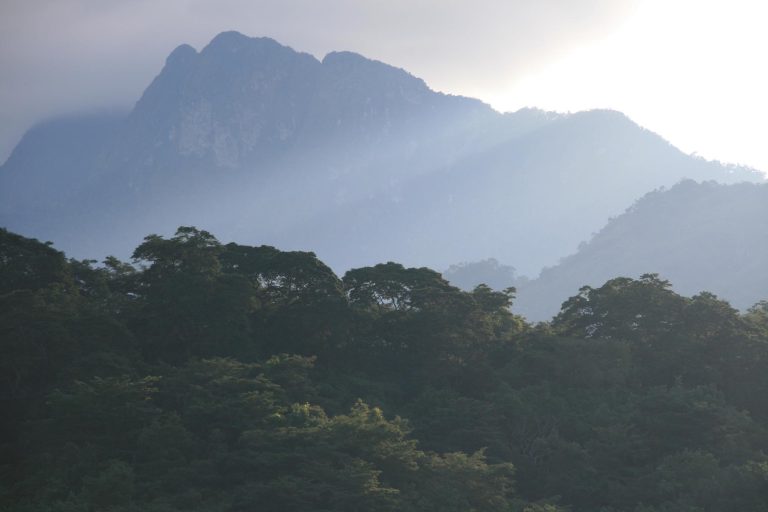
The park you can reach in a morning
Mikumi is the most accessible large national park in Tanzania from Dar es Salaam, and that accessibility is the whole of its case. TANAPA puts it at roughly three to five hours by road from the coast depending on traffic, and about an hour from Morogoro. It sits directly on the A7 highway, which crosses the park for fifty kilometres. Nowhere else in the country delivers open-plain game viewing on that kind of notice.
The park was established in 1964 with an area of 1,070 square kilometres and expanded in 1975 to 3,230. TANAPA gives its elevation range as 500 to 1,250 metres and a temperature of around 25 degrees Celsius. It takes its name from a nearby village, itself named for the borassus palm.
The Mkata Floodplain
The open grassland of the Mkata Floodplain is what makes Mikumi work. Visibility is long, the herds are on show rather than in cover, and a game drive here produces sightings quickly, which is exactly what a two-day trip needs. The comparison with the Serengeti is made locally and is about the look of the place rather than its scale.
TANAPA lists four of the Big Five — elephant, buffalo, lion and leopard — with rare sightings of African wild dog, alongside eland, greater kudu and sable antelope. Large herds of zebra, wildebeest and giraffe work the plains and the acacia savanna. Lions are frequently seen along roadside verges and on kopjes. Hippo pools and river loops near the main areas give close, easy viewing of hippo and crocodile with waterbirds working the shallows, and Malundwe Mountain, the park’s highest point, closes the view to the south.
Birds
TANAPA records over 400 bird species in Mikumi and singles out the lilac-breasted roller, bateleur eagle, fish eagle and saddle-billed stork. The combination of floodplain, pans, wetland margins and acacia woodland in a compact area makes it a productive park for birding on a short visit, and the dry-season pans concentrate waterbirds as reliably as they concentrate mammals.
What you can do here
TANAPA’s activity list for Mikumi is unusually broad for a park of its size: game viewing, birdwatching, guided walking safaris, picnics and viewpoints, filming and photography, and optionally a balloon safari. The park also appears on TANAPA’s published tariff for night game drives, which is a genuine differentiator — most Tanzanian parks do not allow them.
TANAPA also describes cultural tourism around the park, with local dance, cooking and crafts, and notes that conference and sports tourism operate here. That mix follows from the highway: Mikumi gets domestic and regional visitors in a way that the remote southern parks do not.
Walking must be with an authorised ranger or guide, and off-road driving is restricted to protect habitat and for safety.
Who Mikumi is actually for
It is worth being direct about this, because Mikumi is frequently compared unfavourably with parks it is not competing with.
Mikumi is the best park in Tanzania for a traveller with two or three days, a road connection and no budget for light aircraft. It has a genuine floodplain with genuine herds, it permits night drives, and it can be reached from the coast in a morning. Nothing in the northern circuit is available on those terms.
What it does not have is the sense of remoteness that defines Ruaha and Nyerere. The highway is audible in parts of the park, visitor numbers are higher, and the domestic and conference traffic that TANAPA itself describes means this is not empty country. A traveller who has flown to Tanzania specifically for a wilderness safari will get more from the parks further south. A traveller who wants a real park at the end of a short drive should come here and not apologise for it.
Accommodation runs from public campsites through special campsites, which must be pre-booked, to lodges and tented camps in and near the park and around Mikumi town. TANAPA advises confirming availability, park fees and transfer logistics in advance, because peak periods fill.
Those park fees are a published government charge, not an operator’s price. TANAPA’s 2023/24 tariff booklet sets Mikumi’s conservation fee at US$30 per non-EAC adult for twenty-four hours, flat all year, with a reduced rate for children of five to fifteen and nothing below five. It is the most recent booklet the authority has published and its VAT basis is contradicted on TANAPA’s own website, so treat it as the published position rather than a quote. The guide to where park fees sit in the cost of a trip sets out both.
The highway through the park
The A7 crosses fifty kilometres of Mikumi, and wildlife crosses the A7. Speed limits through the park are enforced and exist because animals are killed on this stretch. Anyone driving it, whether on safari or simply in transit to Iringa, should treat it as a game-viewing road with lorries on it rather than as a highway with a scenic section.
Getting there
The main entry is near Mikumi town on the A7. Scheduled and charter flights operate to Mikumi Airstrip with transfers arranged by lodges. The standard-gauge railway’s Dar es Salaam–Morogoro leg also puts Mikumi within reach of the coast without a long drive, which is a genuinely useful option covered in the rail and ferry journeys guide.
When to go
The Tanzania Meteorological Authority classifies this part of the country as unimodal: one rainy season from November into April or May, wetter in its second half, rather than the two seasons that govern the northern highlands and the coast. Northern Morogoro Region sits close to the boundary between the two regimes, so rainfall behaviour here is less clear-cut than further south.
TANAPA flags the dry season, roughly June to October, as the time when wildlife concentrates on the Mkata floodplain. That is the easy answer, and it is the same answer the seasonal picture across Tanzania gives for most of the southern circuit. The green season brings better light, migrant birds and far fewer vehicles, with the usual costs: heavier going off the main tracks and animals dispersed because water is everywhere.
Where it fits in a trip
Mikumi does two jobs. As a destination in its own right it is the short safari from Dar es Salaam, workable in two or three nights — which makes it the usual answer for travellers weighing up how much time a Tanzanian trip really needs and finding they have less of it than the northern circuit wants, and the sensible introduction for anyone whose time or budget will not stretch to the northern circuit.
As a staging post it is the first stop on the overland southern circuit: Mikumi, then the Udzungwa Mountains for forest walking, then Iringa, then Ruaha. That sequence gives savanna, rainforest and dry miombo in one road trip, and Mikumi is what makes the first leg short enough to be worth doing.
Nyerere can be reached from the Morogoro and Ifakara side, which puts it in range of the same itinerary for travellers who want a boat safari as well.
Practical notes
- Keep windows closed near baboons and secure food. They work the picnic sites.
- Avoid bright and blue clothing where tsetse are active.
- Never approach hippo pools or elephant herds on foot.
- Park hours end at dusk, so plan gate times.
- Drone use requires prior written permission.
Common questions
How long does it take to get to Mikumi from Dar es Salaam?
TANAPA gives roughly three to five hours by road depending on traffic, and about an hour from Morogoro. There is also an airstrip, and the standard-gauge railway reaches Morogoro.
Can you see the Big Five at Mikumi?
Four of them. TANAPA lists elephant, buffalo, lion and leopard, with wild dog as a rare sighting. There is no rhino viewing here.
Are night drives allowed?
Yes. Mikumi appears on TANAPA’s published tariff for night game drives, which many Tanzanian parks do not. Arrange it through your accommodation in advance.
Is Mikumi worth it if I am also going to Ruaha or Nyerere?
If you are driving south, yes — it is on the way and the floodplain game viewing is genuinely good. If you are flying straight to Ruaha or Nyerere, Mikumi adds a savanna experience you will get in better form at either.
Can you visit as a day trip?
It is done, particularly from Morogoro, but the game viewing is early and late and a day trip misses both ends. Two nights is the minimum that uses the park properly.