A narrow park against the wall of the Rift
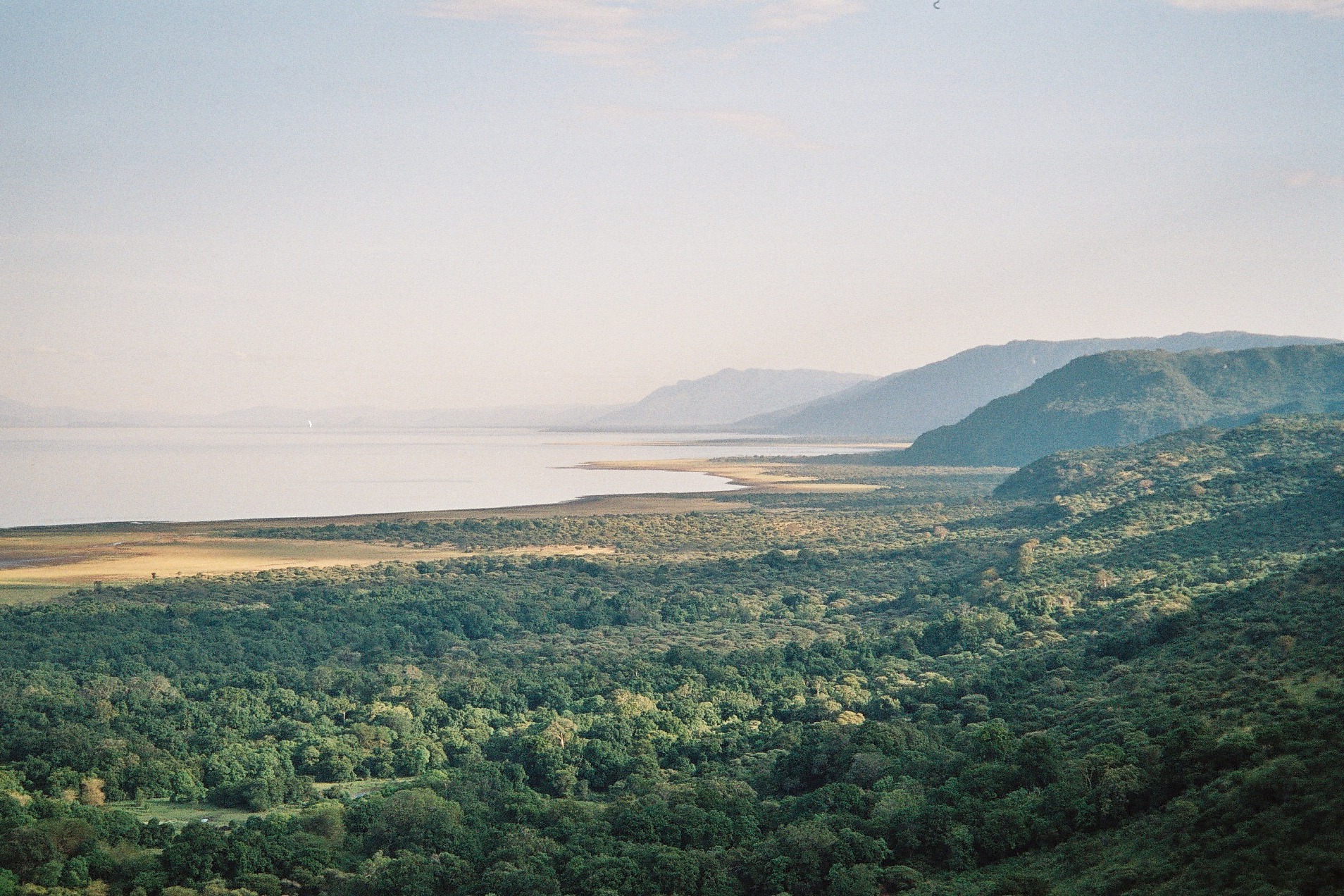
Lake Manyara National Park is a strip of land pinned between the steep western wall of the Great Rift Valley and a large shallow alkaline lake on the valley floor. It sits directly on the road from Arusha and Tarangire towards Ngorongoro, which is why so many itineraries treat it as a stop rather than a destination. TANAPA’s own view is less casual: it calls Manyara an exceptional national park that would deserve a visit regardless of where it was located, and the park was declared part of a World Biosphere Reserve in 1981.
Manyara was gazetted as a national park in 1960 and declared a Man and Biosphere Reserve in 1981. Its park brochure gives the area as 648.7 square kilometres, of which 262.7 square kilometres is lake and 386 square kilometres dry land, and the TANAPA data service agrees. The authority’s general brochure gives 325 square kilometres instead, a figure that matches neither the total nor the land area; the park-specific document is the one used here.
The name comes from Euphorbia tirucalli, called emanyara in Maasai — the plant used to build the thorn hedge around a boma.
The habitat list is the reason to come. TANAPA’s park brochure counts seven distinct habitats within a thirty-kilometre stretch: groundwater forest, acacia woodland, grassland, escarpment wall, lake floodplain, rain forest and riverine woodland. Copious springs at the northern end spill out from the base of the Rift wall and feed a genuinely jungle-like groundwater forest of tall figs and mahoganies, which stands in abrupt contrast to the dry acacia bush all around it and to the open alkaline lake beyond. Further south lies the Marang forest, an evergreen rain forest of about 230 square kilometres on the park’s south-western side, its canopy hung with ferns, mosses and lichens and holding elephant, buffalo, duiker, baboon, blue monkey and leopard. TANAPA makes a claim about all this that is hard to test and easy to believe: that on a game drive here you see more variation in the distance travelled than anywhere else in Africa.
The tree-climbing lions, and what TANAPA says about them
Manyara’s marketing rests on lions in trees, and the honest version is more interesting than the myth. Some lions here do rest up in the heat of midday on the lower, broad-limbed branches of trees. TANAPA is explicit that this has given rise to a mistaken belief that Manyara’s lions are somehow a different kind of lion, and that in fact lions in many parts of Africa spend time in trees, probably to escape flies.
So it is a behaviour, not a subspecies, and it is not on demand. Lions are not numerous in a park this size and a tree-lion sighting is a matter of luck on any given morning. A visit built entirely on that hope will often disappoint; a visit built on the forest, the escarpment, the birds and the baboons rarely does. The big five safari guide sets out where each of the five is realistic in Tanzania and why Manyara is not the answer for most of them.
What else lives here
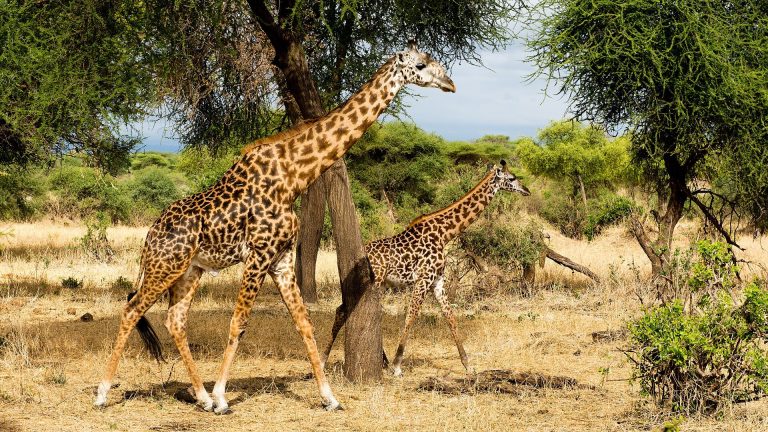
Most of the characteristic East African mammals are present: elephant, buffalo, hippo, lion, leopard, cheetah, giraffe and a good spread of plains game. Manyara is also credited by TANAPA with reputedly the largest baboon troops in Africa, and the groundwater forest holds blue monkeys as well, which makes it a better primate watching stop than its size suggests. The forest canopy is the other half of that: a forest walk here is a different exercise from a drive through it.
The park’s elephants have a particular place in the scientific record. This is where Iain Douglas-Hamilton did his pioneering studies of African elephant, work he later described in Among the Elephants, and elephant remain very much part of the experience.
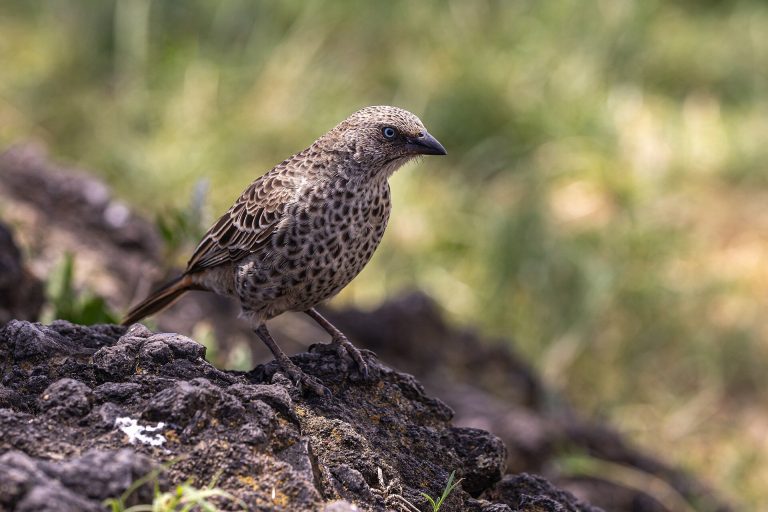
Birds are arguably the strongest reason to stop. TANAPA records more than 400 species and says a first-time visitor is likely to see around a hundred of them in a day, naming the palm-nut vulture and the silvery-cheeked hornbill among the ones to look for, and the brochure describes rafts of pelicans and, in its own words, “literally millions of flamingos at some times of the year” — a characterisation that comes with its own seasonal qualification, because flamingo numbers on any soda lake move enormously with water level. The flamingo watching and bird watching guides cover what determines whether they are there at all.
The hot springs and the southern end
In the south of the park are extensive hot water springs — Maji Moto — heated by volcanic activity and evidence of how tectonically active this stretch of the Rift still is. TANAPA puts them about thirty kilometres south of the park entrance, gives the water temperature as ranging from 40 °C to 76.5 °C, and describes the spring as spreading over a distance of two kilometres through fifteen channels that flow all year even through prolonged drought. The water is mineral-rich and is locally associated with curative properties, and the algae it supports are a food source for lesser flamingo. A long walkway runs out across the steaming rivulets and reed beds at the lake edge, giving a view up and down the full length of this part of the Rift Valley, and old bull buffalo are often seen wallowing in the warm alkaline mud nearby.
This end of the park is much less visited than the forest at the northern gate, largely because a vehicle that has come to Manyara for two hours never reaches it. Anyone with a full day has a genuine reason to keep driving south. The springs are hot enough to be dangerous and are not a bathing site; the hot spring swimming guide covers the Tanzanian hot springs that are.
Enormous baobabs are scattered through the drier parts of the park, and one of them has an unlikely footnote: TANAPA records that a Manyara baobab was visited by Disney Imagineers in 1994 and became the inspiration for the baobabs in Disney’s Animal Kingdom in Florida.
What you can do at Lake Manyara
Manyara allows an unusually wide range of activities for a small park, and several of them are not available in the larger ones.
Game driving is the main activity, along a network of roads through the park; the game drive guide covers how the day is structured. Guided walking safaris are possible by prior arrangement with the park authorities, including a hike up to the Marang forest via the Iyambi River in the south — see walking safaris. Night game drives are possible in the park, in TANAPA’s own words, and Manyara is named in its night-drive schedule; the night game drive guide sets out the published rules. Canoeing is an activity option depending on the level of water in the lake, which is a real qualification rather than a formality, and Manyara appears in TANAPA’s canoeing schedule alongside Arusha and Nyerere; see canoe safaris. Bush meals are allowed in all national parks but are particularly popular here, which the bush dining guide explains.
The park’s best-known set piece is its canopy walkway, a suspended bridge through the crowns of the groundwater forest with intermittent viewing decks, walked as a guided tour that TANAPA says takes an hour to an hour and a half. Its published length is not settled: the park brochure calls it 400 metres long, the TANAPA data service 470 metres. The height is given as 18 metres above the forest floor. The point of it is not the elevation but the company — the canopy has its own birds, butterflies and monkeys, and you are among them rather than below them.
On accompaniment, TANAPA’s wording for Manyara is that walks are made with a skilled park ranger and require prior arrangement with the park authority. The park brochure does not use the word “armed” for Manyara, although the TANAPA website does; the authority publishes no blanket armed-ranger rule for walking across all its parks, so it is worth asking rather than assuming.
Getting there and when to go
A good tarmac road runs close by the main gate, linking Manyara to Arusha, Tarangire, Ngorongoro and the Serengeti. TANAPA gives the run from Arusha to Mto wa Mbu as 115 kilometres and about two hours along the Makuyuni–Ngorongoro–Serengeti road. The main gate sits at the edge of Mto wa Mbu, a market town unusual for the number of Tanzanian language groups living side by side in it and a centre for village walks in its own right, covered in the village tours guide.
There is a second way in that far fewer itineraries use. A gravel road runs to the southern end of the park from Babati, and the southern entry gate allows a traverse of the full length of the park on the way north — the route TANAPA itself recommends for visitors coming from Tarangire’s Sangaiwe gate. By air, a small airport on the edge of the Rift above the park takes regular scheduled flights all year round.
TANAPA describes Manyara as an all-year park, with the most popular times being the two dry seasons of late June to October and January to February. Its rainfall is bimodal: short rains in November and December, long rains from March to May. The park brochure gives an annual mean temperature of 26.5 °C with a range of 11 °C to 34 °C and relative humidity between 45 and 85 per cent. The groundwater forest stays green whatever the season, which is part of the point of it. The month-by-month guide to the northern circuit covers how those two dry windows line up with the rest of a trip.
Manyara is one of only five parks where TANAPA’s conservation fee changes with the season. Its published tariff booklet for 2023/24 sets the non-citizen adult rate at US$50 per person per 24 hours from 16 May to 14 March and US$45 from 15 March to 15 May, so the reduction falls inside the long rains rather than outside them. The booklet states that its charges exclude VAT while TANAPA’s own tariff page states that fees include it; the contradiction is unresolved, and the guide to what a day at a northern circuit gate costs sets out both statements along with the vehicle and concession heads.
Where Manyara fits in a trip
Manyara is most often given a half-day on the way to Karatu and the crater, and that is a defensible use of it. A morning in the groundwater forest and along the lake shore, then lunch and on up the escarpment, is a good half-day and better than not stopping. Whether the park earns a night rather than a morning is exactly the trade the guide to how long a northern circuit itinerary needs works through.
The case for a night is the southern half of the park, the hot springs, the canopy walkway and the night drive, none of which fit into a morning. Accommodation inside the park is limited to park cottages, public and special campsites, one lodge and some seasonal tented camps; most of the beds serving Manyara are outside it, many on the Rift escarpment above with a view across the valley floor, and many more in Mto wa Mbu and Karatu.
Common questions about Lake Manyara
Are tree-climbing lions a likely sighting?
Possibly, but it should not be the reason for the visit. The behaviour is real and is seen here more often than in most places, but lions are not numerous in a park this size and no guide can produce one on request. TANAPA is also clear that the lions themselves are ordinary lions, and that resting in trees is recorded in many parts of Africa.
Is half a day enough for Lake Manyara?
It is enough for the northern third — the groundwater forest, the lake shore and the hippo pool — and that is how most itineraries use the park. A full day or an overnight is what it takes to reach the hot springs in the south, to use the canopy walkway without rushing, or to do a night drive.
Are there flamingos on Lake Manyara?
Sometimes, in very large numbers, and sometimes hardly at all. The lake is alkaline and shallow, and flamingo numbers on lakes of this kind rise and fall with water level and food supply rather than with a calendar. No source publishes a reliable month-by-month expectation.
Can you walk or canoe in Lake Manyara?
Both are listed activities. Walking safaris are arranged in advance with the park authorities and include a longer hike to the Marang forest in the south. Canoeing depends on the level of water in the lake, so it is worth confirming that it is running before planning around it.
Is the canopy walkway worth doing?
It changes what you see rather than simply raising you above it — the canopy has its own birds, insects and monkeys. TANAPA describes it as a guided tour of an hour to an hour and a half, so it needs to be planned into the day rather than added to the end of a drive.
Do you need a four-wheel-drive vehicle?
The approach roads are tarmac, but the park’s internal network is unsurfaced and the ground near the lake can be very soft. The standard safari vehicle used on the northern circuit handles it; an ordinary saloon car does not.