
Village Tours and Community Tourism in Tanzania
Visits run by the community itself rather than by an outside operator, from the cultural tourism programmes around Mto wa Mbu and the Usambaras to fishing villages on the coast and the lakes.
Village tours put a traveller on foot through a working rural community, from the irrigated plots of Mto wa Mbu to the hill paths of the Usambaras. This guide covers what still operates, what happened to the Cultural Tourism Programme that once coordinated it, and the questions that separate a real community visit from a scheduled stop.
Safaris That Include Village Tours


6 Days Tanzania Safari, Wildlife & Culture
by Wild Whispers Africa Verified operator
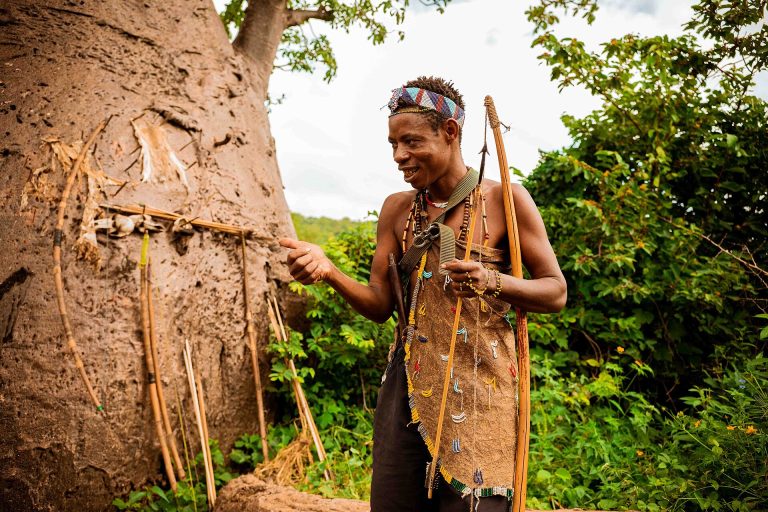

10 Days Wildlife Tanzania & Culture Safari
by Insight Safari Holidays Verified operator

5 Days Tanzania Wildlife Safari
by Wild Whispers Africa Verified operator

14 Days Southern Tanzania Safari & Zanzibar Beach
by Oree Safaris Verified operator

a 12 Day Tanzania Safari
by Wild Whispers Africa Verified operator
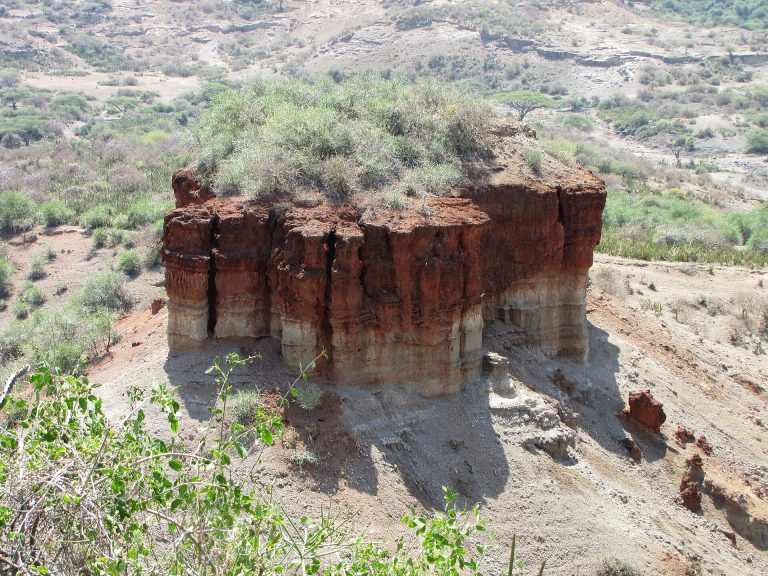
8 Days Tanzania Culture & Wildlife Safari
by Insight Safari Holidays Verified operator
See all 9 safaris that include village tours
Village Tours Guide in Tanzania
What a village tour in Tanzania actually is
A village tour is a half or full day spent walking through a working rural community with a guide from it: past the farm plots and the irrigation furrows, into somebody's kitchen, up to a viewpoint or a waterfall, through a workshop where something is being made, and usually round a lunch cooked by a women's group. The best of them are unhurried and slightly shapeless, and the walking is as much of the point as the stops.
It is the quietest activity in Tanzanian tourism and one of the few that puts money directly into a rural household rather than into a lodge. It is also the activity where what is advertised and what exists have drifted furthest apart, which is what most of this guide is about.
The offer is fairly consistent wherever it survives: a guided village walk, farms and crops explained by the people growing them, a local meal, craft production, sometimes a homestay, and a nature component such as a forest walk or a climb to a viewpoint. Cycling, canoe trips and cooking sessions have been added in various places over the years.
The Cultural Tourism Programme, and what became of it
Almost every article about village tourism in Tanzania refers to the Cultural Tourism Programme as though a traveller could ring it up. The honest position is more complicated and worth setting out properly, because it determines how you actually arrange one of these visits.
The programme was launched in 1995 by the Dutch development agency SNV, after it received a request in 1994 from a group of young Maasai who wanted to develop tourism in their village. It was a loose network of communities operating independently of each other, each offering its own package. SNV financed the modules and controlled their spending; the Tanzania Tourist Board handled promotion. The content included campsites, homestays, food, trained guides, hiking, cycling, canoeing, fishing and dhow trips, and visits to healers, storytellers, artisans and cooking mamas.
It worked. Visitors to the eighteen initial modules rose from 2,600 in 1998 to over 7,000 by 2001. The programme won a socially responsible tourism award in 1999 and was presented by the UN's tourism body as Tanzania's good-practice example in 2002.
Then the donor left. SNV withdrew in 2001, the project having been designed as a five-year one from the start. Cooperation between the communities declined almost immediately. The coordinating body that was supposed to hold the network together broke down before it had properly started, and each village went back to dealing only with its own activities. Academic study of the period records that in some places revenues were not distributed properly and that conflicts over land and resources escalated.
A second problem proved more corrosive than the first. Guides for the original modules received only brief training, at Arusha schools whose business is wildlife and mountaineering and which teach almost nothing about cultural interpretation. Once SNV left there was no money to train more. Communities that had sponsored young people through guide school found that they became safari driver-guides instead, where the money was, and did not come back.
SNV returned in 2005, and consultants identified accommodation standards, hygiene in toilets and food preparation, weak interpretation, and an imbalance of nature-based over culture-based activity despite the programme's name. A follow-on project ran from 2008 to 2014 with the UN tourism body and the Tourist Board: 25 enterprises existed before it, 32 more were established, making 57 by 2014, with 467 people trained and recorded visitors rising from 35,000 in 2007 to 70,000 in 2013.
That 2014 figure is the last reliable count of anything. What has happened since is harder to establish, and the state of the programme's own infrastructure is the clearest available evidence.
The domain that fronted the network for years no longer belongs to it. It returns a working page, but the page is gambling and print-on-demand spam in Indonesian, and a link that once pointed at an Usambara tour now redirects to an unrelated foreign domain. The domain of the association that was set up to represent cultural tourism enterprises no longer resolves at all, and neither does the government domain that once served the programme. The Tourist Board's own cultural tourism page is live but generic, and names no programme, no module and no village.
So: there is no working official directory of cultural tourism enterprises in Tanzania. Whether any central coordination still exists could not be established, and the honest answer is that it is unknown. What survives are individual enterprises running independently, several of which are in good health. The practical consequence for a traveller is that you arrange these visits one at a time, directly or through an operator, and that a list of module names copied from an old guidebook is not a set of phone numbers.
The places where village tourism still works
These are enterprises whose current operation could be confirmed.
- Mto wa Mbu, on the road between Lake Manyara and Ngorongoro, is the best known and the busiest. It is a famously multi-ethnic village, settled from many parts of Tanzania, and the walk takes in irrigated farm plots, banana varieties, rice, a local brew, craft workshops and a meal. Bike tours are part of the offer. A second, separately run operation also works from the village.
- Ilkiding'a, in the hills at the foot of Mount Meru near Arusha, runs village walks, farm visits and craft work. Its own material presents the village as Maasai; academic work describes the settlement as one of Arusha, or Waarusha, people, who are Maa-speaking but historically settled and agricultural. Both descriptions circulate, and the difference is itself worth asking about.
- Tengeru, in Arumeru district outside Arusha, has been running since 1998 and names its founder publicly, which is rarer than it should be. Coffee is part of its offer.
- Lushoto and the Usambara Mountains support two confirmed operations, one focused on eco-cultural tours around Magamba and one running a wider set of village, agricultural and cycling tours from Lushoto with its own cultural heritage centre. The Usambaras are the strongest walking country in this whole category, and the forest the walks run through is a state nature reserve.
Two places that appear on village tourism lists are worth reclassifying. Mambo ViewPoint in the Usambaras and Mufindi Highland Lodge in the Southern Highlands are both real and both operating, but they are lodges rather than community enterprises. That is not a criticism; it is a different thing, and being told you are visiting a community project when you are staying at a private lodge is the sort of blurring this category suffers from.
For anyone who wants the subject matter without the complications of visiting a living community, the Village Museum in Dar es Salaam is an open-air museum of Tanzanian vernacular architecture, part of the national museums network. It is a museum rather than a village, which means it carries none of the consent questions, and it is covered under museum tours.
What the district councils actually document
With the national directory gone, Tanzanian district councils turn out to be the most reliable current source on what village tourism officially exists where. Their published material is worth knowing about, because it confirms activities without overselling particular businesses.
Longido District Council, in Arusha Region, documents Maasai boma cultural tourism directly and publishes a district tourism officer as the contact. It describes visitors seeing everyday village life, and it also documents a community wildlife management area in the district. Mount Longido, which gives the district its name, is recorded at 2,637 metres, its Maasai name meaning the mountain with stones for sharpening knives.
Monduli District Council documents Maasai village tourism, a community-managed wildlife area, and the Engaruka historical and cultural area with its ancient irrigation systems. Karatu District Council names cultural tourism around the Iraqw and Hadzabe peoples, and separately names coffee agro-tourism, which matches what coffee tours and farm tours cover. Mbulu District Council names Yaeda Chini as a cultural tourism area centred on the Hadzabe community, states that a photography tourism centre involving the Hadzabe is being established with community members trained in photography, and notes frankly that tourism's contribution to the local economy is still moderate.
Meru District Council near Arusha names waterfalls in the Meru forest and a council-owned forest at Usa Springs, and lists among its investment opportunities the training of local communities to prepare food and coffee for visitors and to produce beadwork. In other words the village tourism offer there is officially recognised but still being built, which is a more honest description than most marketing manages.
The gaps are equally informative. Lushoto District Council publishes twenty-five pages and not one of them is about tourism, in the district that is the Usambara tourism centre. Hanang publishes fifty-one pages and none on tourism. Pangani, Kilolo and Mufindi publish none. Kyela District Council, which contains Matema on Lake Nyasa, has a page titled for tourist attractions that is completely empty. Where a district's own government does not document its tourism, a traveller should not assume an organised product exists.
Fishing village visits
Fishing village visits are widely advertised, at Nungwi, Jambiani and Kizimkazi on Zanzibar, at Pangani on the mainland coast, at Kigoma and Ujiji on Lake Tanganyika, and at Matema on Lake Nyasa. Not one named community programme running them could be verified as currently operating.
That is not the same as saying nothing happens. Fishing and dhow trips were part of the original cultural tourism offer, and boats go out from all of these places every day. What it means is that a fishing village visit is usually an informal arrangement made by a hotel or a guide with people on the beach, rather than a community enterprise with a structure behind it. There is nothing wrong with that, but it changes the questions worth asking: who arranged this, what were they told, and is anybody being taken away from a working morning.
The one institutional anchor in this category is at Kigoma and Ujiji, where the national museums network runs a centre. Ujiji's own history is substantial and is covered under slave trade history tours.
Zanzibar's government tourism domains could not be reached at all from this research, so the absence of a confirmed Zanzibar programme should be read as unverified rather than as proof that none exists.
Healers, herbalists and traditional medicine
Visits to traditional healers are a real and documented part of village tourism in Tanzania. They were an explicit component of the original programme, listed alongside storytellers, artisans and cooking mamas, and academic work on the Lake Eyasi area records visitors learning about plants used as food and as medicine, and about Datoga knowledge of traditional plants and medications.
What could not be confirmed is a single named, standalone herbalist programme anywhere in the country, including the herbal walks often advertised around Jozani in Zanzibar and in the Usambaras. Traditional medicine in Tanzanian tourism exists as a component of a village visit rather than as a product with an organisation behind it.
Two practical points follow. Treat any tour sold specifically as a traditional medicine experience with more scepticism than a village walk that happens to include a herbalist. And take the encounter for what it is: an explanation of a knowledge system by someone who holds it, not a consultation. Buying preparations to take home is a different matter entirely, and one where identification, dosage and your own country's import rules all become your problem.
Where the money goes
The fee split at cultural tourism enterprises is generally not publicly documented. Some publish claims about the proportion of revenue reinvested locally or the number of people benefiting. Those are the organisations' own statements about themselves, not audited figures, and this site does not repeat them as fact.
What is documented is less comfortable. The academic account of the period after the donor withdrew records that in some places revenues were not distributed properly. That was twenty-five years ago and says nothing about any particular enterprise today, but it is the reason a specific question is better than a general assurance.
Worth asking, on the day or before booking:
- Is there a village development fee, who collects it, and what has it paid for recently? A good answer names a building.
- Is the guide from this village? This matters more than it sounds. There is a documented case of a supposedly local guide at a cultural tourism module being neither from the community nor from the region, which came to light only because the visitors happened to speak Swahili.
- Who cooked the lunch, and are they paid for it separately?
- Is the craft sold here made here?
Arranging one, and the questions that matter
Because there is no central directory, there are three realistic routes. You can arrange a visit through the safari operator already handling your trip, which is the easiest and puts a margin between you and the village. You can contact a surviving enterprise directly, which is the most direct route and works where a live contact exists. Or you can arrange it through your accommodation, which is common and is where the quality varies most.
Whichever route, a few things separate a good day from a poor one.
- Insist on a named village. "A village tour near Arusha" is not an itinerary line, it is a placeholder.
- Allow half a day at least. The whole value is in not being rushed, and these visits are frequently compressed into ninety minutes between two other things.
- Ask what the walking is. The Usambara walks in particular are proper hill walking, and pleasantly so.
- Ask permission before photographing, every time. The same rules that apply on a Maasai cultural visit apply in any village.
- Do not give sweets, pens or money to children. It creates the dynamic that makes these visits unpleasant for everyone arriving after you.
- Buy something, from the person who made it. It is the least mediated transaction available, and craft workshops covers what is worth buying.
Questions travellers ask
Is the Cultural Tourism Programme still running?
Individual enterprises are, several of them well. A functioning central network is another matter: the programme's directory domain has been taken over and now serves spam, the enterprise association's domain is dead, and the Tourist Board's own cultural tourism page names no modules. Whether any central coordination survives could not be established. Arrange visits one at a time rather than expecting a network.
Can I still visit the villages named in older guidebooks?
Several of the best known module names could not be confirmed as operating organisations, and their plausible web addresses do not resolve. The villages exist; the enterprise may not. Ask your operator to confirm a specific named village and a specific contact rather than repeating a list.
How do I book without going through a safari company?
Contact a surviving enterprise directly where one exists, which is the case around Mto wa Mbu, Arusha and Lushoto. Elsewhere, going through an operator or your accommodation is realistically the only route, and it is worth asking who they are dealing with at the other end.
How much of what I pay stays in the village?
Rarely documented. Some enterprises publish a figure about themselves; none of those has been independently audited. Ask what the village development fee has paid for recently, and treat a specific answer as a good sign.
Is the guide really from the village?
Worth asking directly. Guide training and retention has been a documented weakness of this sector for two decades, and there is at least one recorded case of a supposedly local guide being from neither the community nor the region.
Are fishing village visits a real thing?
Fishing villages are real and boats go out daily, but no organised community programme running visits could be verified at any of the places these are usually sold. In practice such a visit is an informal arrangement rather than a structured enterprise, which is worth knowing before paying for it as though it were one.
What is the best region for village tourism?
The Arusha area for convenience, since Mto wa Mbu, Ilkiding'a and Tengeru sit on or near routes most northern itineraries already use. The Usambara Mountains around Lushoto for quality, because the walking is genuinely good and two operations there could be confirmed as running.
Is a homestay better than a day visit?
Generally yes, for the same reason longer is better in every category here: the conversation changes direction once the visit stops being a scheduled call. Homestays were part of the original offer and some enterprises still run them, though standards of accommodation and sanitation were flagged as a weakness of the sector and are worth asking about specifically.