The park that is still sold as Selous
Nyerere National Park was gazetted in 2019 out of the northern sector of the Selous Game Reserve, and almost everything that made Selous famous as a photographic destination — the Rufiji River, the oxbow lakes, the boat safaris, the walking country — is inside the new national park rather than in the reserve that kept the old name. A traveller who books a “Selous safari” is, in nearly every case, going to Nyerere.
That matters for planning, because the two places are now run by different authorities under different rules. Nyerere is a national park administered by Tanzania National Parks. The Selous Game Reserve that remains to the south is a wildlife reserve under a different agency, managed largely as hunting blocks, and it is not where photographic camps sit.
TANAPA describes Nyerere as Africa’s largest national park and gives its area as 30,893 square kilometres. Its elevation range is published as 100 to 400 metres and its temperature range as 13 to 41 degrees Celsius, which is a fair summary of the experience: this is low, hot country, and the heat is part of what you are signing up for.
The Rufiji, and why the boat is the point
The Rufiji is Tanzania’s largest river, and in the north of the park it spreads into a braided system of channels, sandbanks, palm islands and oxbow lakes. That geometry is the reason Nyerere is the country’s headline destination for boat safaris, and the reason a trip here is structured differently from a northern-circuit trip.
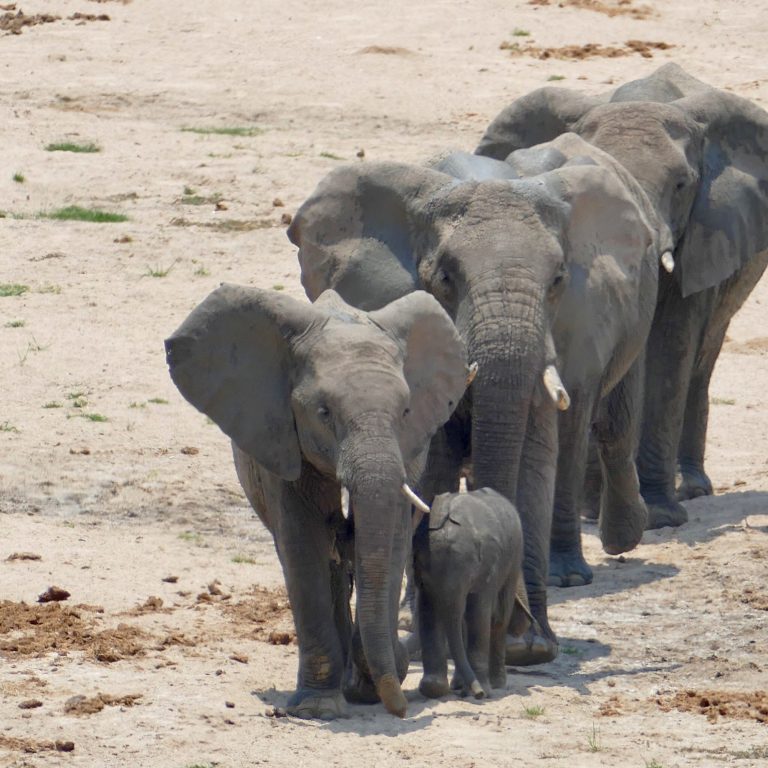
On a boat you are at water level. Crocodiles that would be a distant shape from a vehicle are three metres away and at eye height. Hippo pods spend the day submerged with only ears, eyes and nostrils showing, surfacing to blow and squabbling loudly enough to carry across a lake. Elephant come down to the riverine belt to drink, and an elephant that ignores a boat will frequently not ignore a vehicle — which changes the encounter completely.
A morning on the water typically runs two to three hours, working the channels between lakes wherever the water is high enough, and it pairs naturally with a drive on the same day. TANAPA also tariffs canoeing here, which puts a paddle craft on the oxbow lakes bordering the main river for a quieter, slower version of the same thing.
The park’s own activity list names game viewing, guided walking safaris, boat safaris on the Rufiji, filming and photography, scenic viewpoints and a bush meal experience.
Walking, and the fly camps
Nyerere is one of the classic places in Africa to walk. TANAPA lists guided walking safaris among the park’s activities, with the option of overnighting in lightweight fly camps set up ahead of the group. Multi-day walking here covers less ground than most people expect — the distance is not the point — and the river systems give the routes a natural structure, because water is where the animals are.
Walks are led by a qualified park guide with an armed ranger, go early, and must be arranged in advance rather than requested on the morning. Anyone who wants to walk should say so when the trip is being put together, not on arrival.
What lives here
TANAPA’s own description is that the park holds most of the Big Five, rhino excepted, alongside rare antelope that the northern parks do not produce: roan, sable, Lichtenstein’s hartebeest, greater kudu and brindled gnu. The mix of riverine forest, floodplain and vast miombo woodland is what allows that range.
The park is one of the continent’s strongholds for African wild dog, and TANAPA puts conservation of that population near the front of its own description of the place. A pack on a hunt is a better piece of theatre than almost anything else on a safari, and Nyerere is one of the few parks where the odds are genuinely worth building a trip around. Lion, leopard and spotted hyena are all present; elephant and buffalo use the riverine belt heavily in the dry months.
Game drives work differently here from the north. The park is enormous and lightly visited, so a drive is a longer, emptier, more exploratory thing, and sightings are less often shared with other vehicles. TANAPA’s published tariff includes night game drives for Nyerere, so a night drive is a possibility to raise with a camp when planning.
Birds
Nyerere is a serious birding destination, and the water is why. TANAPA’s own surfaces give the park’s bird list as more than 430 species in one place and over 440 in another, so treat the number as “well over four hundred” rather than as a precise figure. Among the species TANAPA singles out are Pel’s fishing owl and white-backed heron, both of which are the kind of bird people plan around.
On the lakes, African skimmer work the surface at dusk, white-fronted bee-eaters nest in colonies in the sandbanks, and giant, pied and malachite kingfishers, open-billed stork, palm-nut vulture in the borassus palms and African fish eagle are constants. A boat is a much better birding platform than a vehicle, because it gets close without noise.
Getting there
TANAPA describes road access from Dar es Salaam through Kibiti and Utete, or from the Morogoro and Ifakara side depending on which gate a camp uses. A four-wheel drive is recommended and effectively necessary in the rains. Scheduled and charter flights serve park airstrips including Mtemere and Kiba, with transfers arranged by the camp; flying in is the normal way in for most visitors, and a scenic flight over the Rufiji system on the way in shows the river geometry that defines the whole park. How the southern parks connect to the rest of the country, by air and by road, is set out in the guide to moving between Tanzania’s circuits.
When to go
The southern circuit runs on a single rainy season rather than the two seasons of the northern highlands and coast. The Tanzania Meteorological Authority treats this part of the country as unimodal: one season that arrives in November and runs into April or May, with the wetter half of it falling in the second part of that span.
For Nyerere that produces a straightforward picture. The dry months from roughly June to October concentrate animals on permanent water, drop the grass, and give the best game viewing and the most reliable roads — the southern circuit’s half of Tanzania’s seasonal calendar. The wet months green the park, bring migrant birds and put on a better show for photographers who want cloud and colour, but roads deteriorate, some camps close for part of the season, and the heat and humidity are considerable. River levels also govern which channels a boat can reach, so the boating experience is not identical through the year.
Where it fits in a trip
Nyerere pairs most naturally with Ruaha, because both are reached by air and the flight between them is short, and because they are genuinely different landscapes rather than two versions of the same one. A trip that includes both gives water and boats at one end and dry, rocky, baobab country at the other.
Travellers coming overland from Dar es Salaam often string Nyerere together with Mikumi and the Udzungwa Mountains, which adds a forest and a walking-only park to the mix. The Rufiji reaches the sea opposite Mafia Island, which makes a coastal week the obvious way to finish.
Practical notes
- Tsetse concentrate in thick riverine vegetation along parts of the Rufiji. They are attracted to blue and black, so avoid both in your clothing, and carry repellent without expecting it to solve the problem.
- Life jackets are worn on boat safaris and limbs stay inside the boat. This is not decorative: the river holds very large crocodiles.
- Never leave a vehicle except where permitted or on an authorised guided walk.
- Drones require a specific permit. Assume no unless you have arranged otherwise in writing.
- Seek medical advice on malaria prophylaxis before travelling. This is low, hot, wet country.
- Entry is a published government charge, not an operator’s price. TANAPA’s 2023/24 tariff booklet sets Nyerere’s conservation fee at US$70 per non-EAC adult for twenty-four hours in peak season and US$60 from 15 March to 15 May, with a reduced rate for children of five to fifteen. It is the most recent booklet TANAPA has published and its VAT basis is contradicted on the authority’s own website — the guide to the full park tariff and what sits on top of it sets out both.
Common questions
Is Nyerere the same place as Selous?
Not any more, though it was. Nyerere National Park was created in 2019 from the northern part of the Selous Game Reserve. The area most safaris visit, including the Rufiji and its lakes, is now inside the national park. The Selous Game Reserve still exists to the south under separate management.
Can you walk in Nyerere?
Yes. TANAPA lists guided walking safaris among the park’s activities, including multi-day walking with fly camps. Walks are led by a park guide with an armed ranger and must be arranged in advance.
Is a boat safari better than a game drive here?
They do different jobs. The boat gets you to water level with hippo, crocodile, drinking elephant and riverine birds; the drive covers the woodland and floodplain where the predators and plains game are. Most itineraries use both, often on the same day.
How do most people get in?
By air. Scheduled and charter flights serve airstrips inside the park, including Mtemere and Kiba. Road access from Dar es Salaam runs through Kibiti and Utete; a four-wheel drive is recommended and matters most in the rains.
Are there rhino?
TANAPA’s own description of the park’s wildlife lists most of the Big Five with rhino as the exception. Plan a trip around elephant, buffalo, lion and leopard, and around wild dog, which is the species Nyerere is genuinely important for.