
Fly Camping in Tanzania: The Walk-In Night Under Canvas
A night out from the main camp in lightweight tents carried in for the purpose, usually at the end of a walking safari in the southern circuit.
Fly camping is the lightest way to sleep in the Tanzanian bush: a minimal camp carried in on foot, pitched for a single night, and struck in the morning. Inside the national parks it is not accommodation you book on its own. TANAPA treats it as part of a long walking safari, which means it comes with an armed ranger, a designated route, an age limit and a walk in the afternoon heat to reach the site. That dependency is the thing most itineraries leave out, and it is the thing worth understanding first.
Safaris That Include Fly Camping
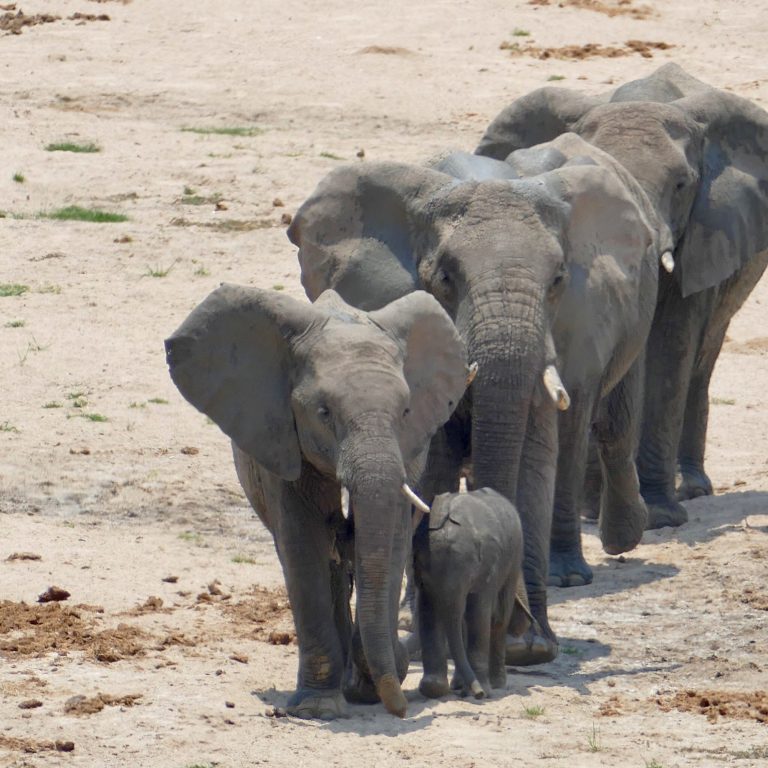

A Guide to Fly Camping in Tanzania
What Fly Camping Is
Fly camping is an overnight in a camp that was carried to the spot rather than driven to it. A small tent or a bedroll under a net, a fire, food cooked simply, and nothing left behind in the morning. The name comes from the old expedition sense of a "fly" — a light sheet of canvas pitched fast and moved on.
It is the smallest, most temporary form of sleeping in the Tanzanian bush, and it exists for one reason: to let a walking safari keep going past the point where you would otherwise have to turn back towards a vehicle.
The Rule Most Itineraries Leave Out
Inside Tanzania's national parks, fly camping is not a room type. TANAPA defines it as a component of a long walking safari — in its own words, "a special and adventurous type of accommodation offered during long walking safaris", offered "as a part of walking safari".
Several practical consequences follow from that one sentence, and they are the reason this page exists separately from camping safaris:
- You cannot book the camp without booking the walk. TANAPA's guidelines state that fly camping is booked automatically when a customer books a long walking safari. There is no path where a vehicle drops you at a fly camp for the night.
- An armed ranger comes with you. Walking safaris in the parks are conducted on designated trails under the escort of armed park rangers alongside a professional guide. The ranger is not optional and is not a formality.
- You walk to it in the afternoon. The guidelines describe guests spending the afternoon walking to the fly camp. That is the hottest part of the day, on foot, carrying water.
- The group carries the camp. All equipment and supplies are carried by the walking safari group. What gets carried is what gets slept in and eaten.
- The site is chosen by the park, not by you. Park management identifies appropriate sites during survey of the walking areas. You sleep where the survey says, which is why fly camp locations rarely appear on a map in advance.
A "long" walk, in this framework, means one that runs beyond four hours; anything at or under four hours is classed as a short walking safari. Prior booking is mandatory either way, and TANAPA sets a minimum age of twelve for walking safaris. Both of those figures come from TANAPA's published walking-safari guidance — confirm them against the park you are actually going to at the time you book, because TANAPA rebuilt its website during 2026 and its guideline documents are not currently reachable at a public URL.
What the Night Is Like
Smaller than you expect, and quieter. There is no generator, no vehicle, no lighting beyond the fire and head torches. Dinner is whatever was carried and cooked on the fire. Bedding is a roll or a light tent, often with the option of sleeping with the flap open under a net.
A watch is kept through the night, and the fire is usually kept in. You will hear a great deal more than you would in a vehicle-based camp, partly because there is less between you and the outside, and partly because you are somewhere no camp normally stands.
Washing is a basin. There is no lavatory beyond a spade and a discipline about where. Everything that came in goes out, including waste, which is a rule and also the only way the site stays usable for the next group.
The appeal is not comfort and no honest description should suggest otherwise. The appeal is that you arrived on foot, which changes your sense of the country completely, and that you are sleeping somewhere with no permanent human structure in any direction.
Where Fly Camping Happens
Fly camping follows walking country. It is concentrated in the southern and western parks, where walking is well established and the distances make a single long walk worthwhile.
- Nyerere National Park — the most developed walking-and-fly-camping country in Tanzania, with river systems that give the walks structure.
- Ruaha National Park — big, dry and empty, with sand rivers that make natural walking routes.
- Katavi National Park — remote enough that walking and fly camping are a large part of what the park is for.
- Mahale Mountains and Udzungwa Mountains — forest and mountain walking rather than plains walking, and a very different night.
- Serengeti — walking is available in designated areas rather than park-wide, so fly camping here is more tightly constrained than the park's size suggests.
Outside the national parks the rules are set by whoever holds the land. Wildlife management areas, game reserves and private concessions bordering the parks each run their own walking and camping permissions, and some are considerably more flexible about where a light camp can stand. If an itinerary offers fly camping with fewer conditions than described above, the likely explanation is that the night is not inside a national park — which is a legitimate answer, and worth asking about rather than assuming.
Fly Camping Compared With the Other Ways to Sleep Out
| Fly camp | Special campsite | Mobile camp | |
|---|---|---|---|
| How you arrive | On foot | By vehicle | By vehicle |
| Booked as | Part of a long walking safari | Accommodation, reserved in advance | Accommodation |
| Kit | Carried by the group | Carried by the vehicle | Trucked in and left standing for a season |
| Facilities | None | None | Beds, showers, mess tent |
| Nights in one place | Usually one | Several | Weeks to months |
| Armed ranger | Yes, throughout | Site-dependent | Camp staff, not usually an escort |
Who It Suits
Fly camping suits a reasonably fit traveller on a second or third safari who has done the game drives and wants the next thing. Walking several hours in heat with water on your back is the entry requirement, and it is a real one — the afternoon leg to camp is the hardest part of the day, not the walking itself.
It is not a first-safari activity, it is not available to under-twelves in the national parks, and it is a poor idea for anyone with mobility limits, a heart condition or a heat intolerance. There is no vehicle nearby and evacuation from a fly camp is slow by definition.
When to Go
The dry months, roughly June to October, are when walking country is walkable: grass is short, visibility is long, water is concentrated so animals are predictable, and the ground is firm. This is also when the southern parks are at their best generally.
Walking programmes contract sharply during the long rains around March to May. Long grass makes walking both harder and less safe, rivers become uncrossable, and several walking areas close outright. A fly camp in the wet is rarely on offer, and where it is, it is worth asking what changed. The southern and western walking parks keep a longer dry window than the northern circuit does, which is set out in the country's two rainfall regimes.
What to Carry
Less than you want to. The group carries everything, so weight is a shared problem rather than a personal one.
- More water than feels necessary, and the means to carry it hands-free
- Neutral colours — greens, browns, greys. Not white, not black, not bright
- Long sleeves and long trousers, for sun, thorn and insects rather than modesty
- Boots already broken in. A fly camp is a bad place to discover a blister
- A head torch, and a spare
- Sun hat, high-factor sunscreen, insect repellent
- Any personal medication, carried on you rather than in a shared bag
Leave behind anything that rustles loudly, anything scented, and most of what you packed. The camp is carried on human shoulders and everyone benefits from restraint.
Questions Travellers Ask
Can I book a fly camp without doing a walking safari?
Not inside a national park. TANAPA treats fly camping as a component of a long walking safari and books it with the walk. Outside the parks — in game reserves, wildlife management areas and private concessions — the landholder sets its own rules and arrangements vary.
Is there an armed ranger?
Yes. Walking safaris in Tanzania's national parks are conducted on designated trails under the escort of armed park rangers, alongside a professional guide. This applies for the whole walk, including the night.
Is there a minimum age?
TANAPA's walking safari guidance sets a minimum age of twelve. Because TANAPA's published guidelines are not currently reachable online following its 2026 site rebuild, confirm the current limit with the specific park when booking.
How comfortable is it?
Basic by design. A bedroll or light tent, a mosquito net, a fire, washing from a basin and no lavatory. Some operators run a more comfortable version outside the national parks, but the carried-in camp inside a park is deliberately minimal.
How far do you walk?
Beyond four hours, since that is the threshold at which TANAPA classes a walk as long rather than short. Actual distance depends on terrain, heat and the group, and the guide sets the pace to the slowest walker.
What happens if the weather turns?
The camp is light and the group is on foot, so guides are conservative about forecasts. Walks are shortened, re-routed or cancelled, and a fly camp night is among the first things dropped when conditions deteriorate. Build a flexible day around it rather than a fixed one.
Is it safe to sleep with the tent open?
Where guides allow it, a net rather than a closed flap is common, and a watch is kept through the night with the fire in. Follow the guide's instruction for the specific site rather than a general rule — it varies with what is in the area that week.