Where Ruaha is, and why it feels different
Ruaha sits west of Iringa in south-central Tanzania, on a dry plateau cut by the Great Ruaha River. TANAPA calls it the country’s second largest national park and, following boundary changes in 2023, gives its area as about 19,822 square kilometres. Its published elevation is around 750 metres and its temperature range 14 to 29 degrees Celsius.
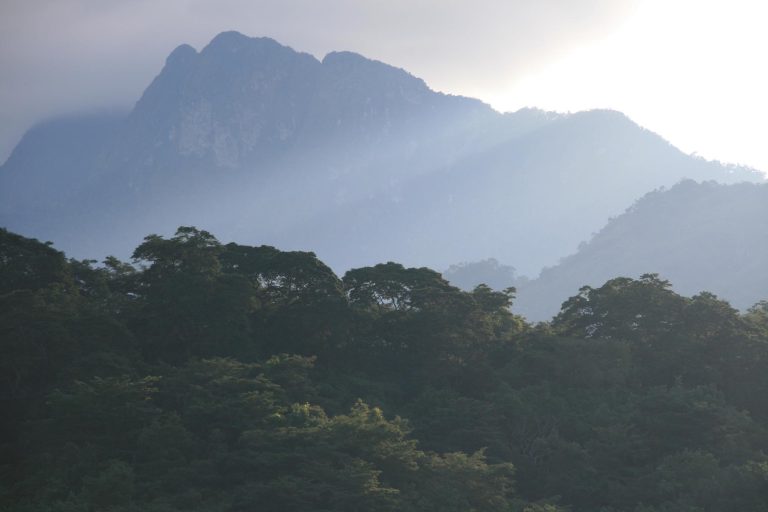
The reason Ruaha is worth a long flight is ecological rather than scenic, though the scenery is remarkable. The park sits where the miombo woodland of southern Africa meets the acacia country of East Africa, and species from both ranges occur together. That is why a single itinerary here can produce greater and lesser kudu, sable and roan alongside the plains game a northern-circuit traveller already knows. It is a combination that does not occur elsewhere in Tanzania.
The park’s history is longer than its name. TANAPA records it as established in 1910 as the Saba Game Reserve under German administration, expanded and renamed Rungwe Game Reserve by the British in 1946, with the southern portion designated Ruaha National Park in 1964. The Usangu wetland was added in 2008, and the boundaries changed again in 2023.
The Great Ruaha River
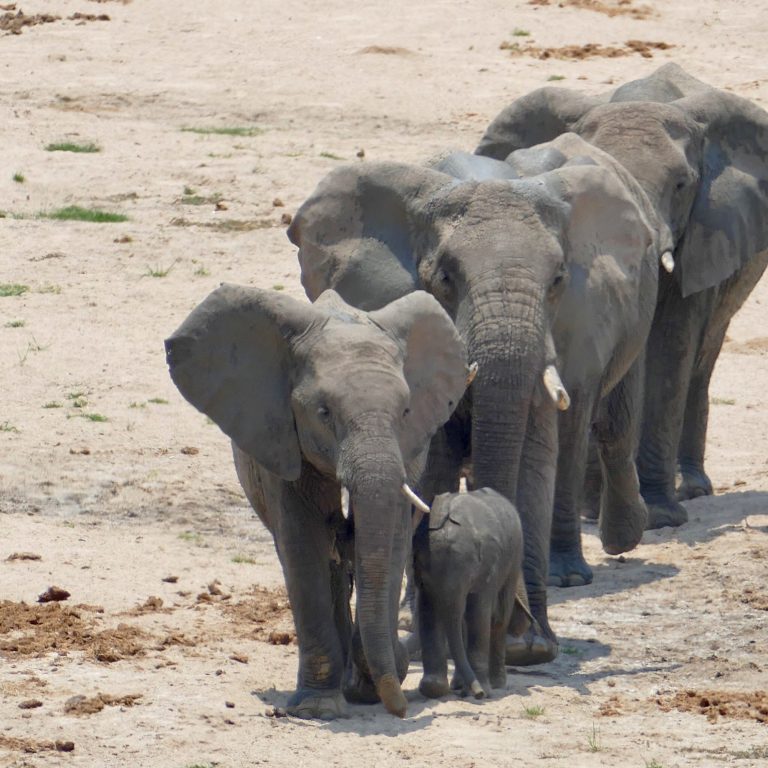
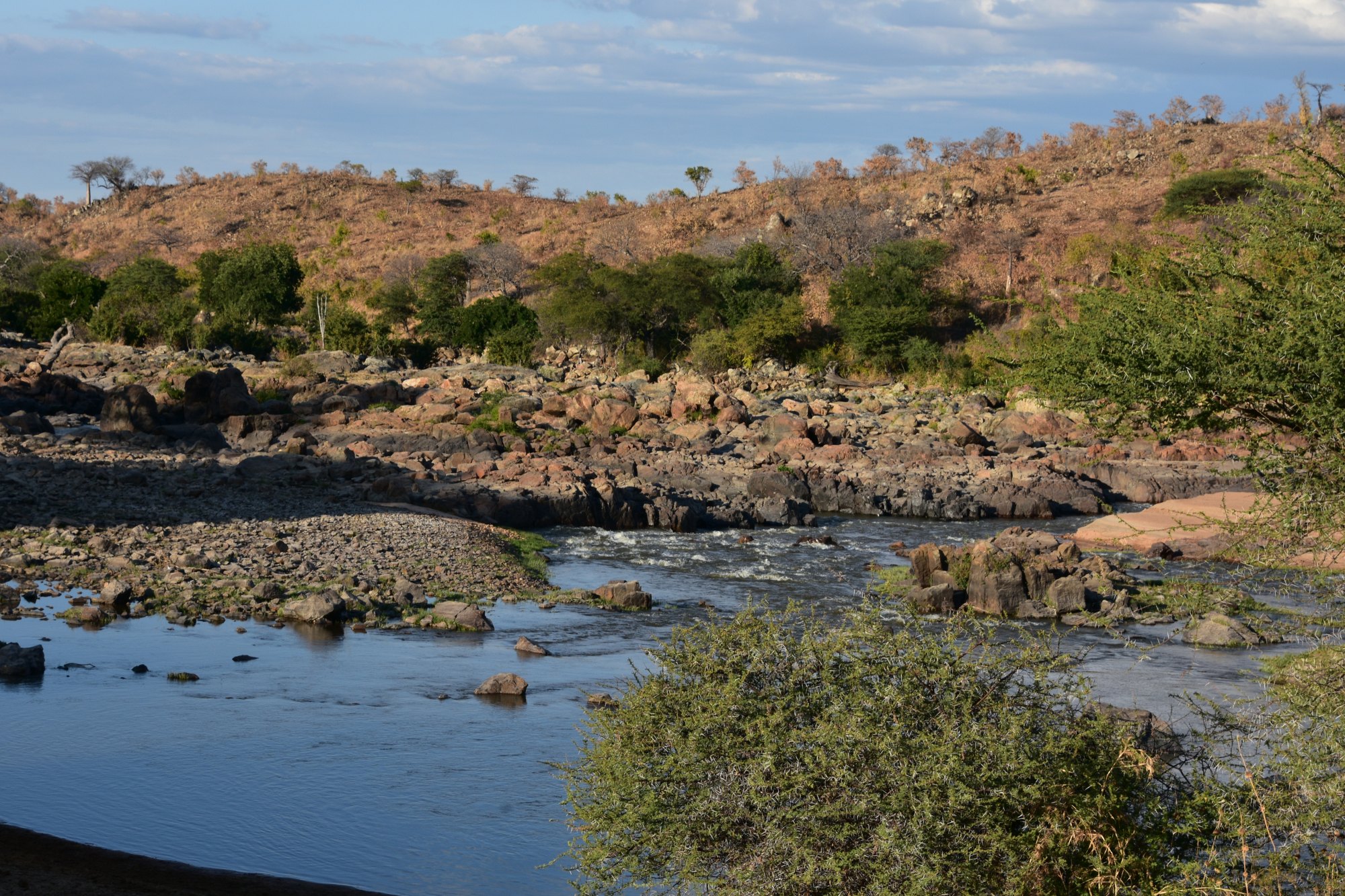
The river is the organising fact of a Ruaha safari. In the dry months it contracts to permanent pools and seeps in the sand, and every animal in the country around has to come to it. That concentration is what makes Ruaha’s dry season so strong: elephant herds gathering along the river lines, predators working the approaches, and a constant traffic of game at a handful of predictable places.
The riverbanks are also the park’s best leopard country, because leopard need cover and prefer riverine woodland. Sand rivers elsewhere in the park make natural routes both for animals and for people on foot.
Predators
Ruaha’s reputation rests on its lions. The prides here are often larger than northern ones, and the reason is prey size: lions that hunt buffalo and giraffe need numbers, so the social structure adapts. TANAPA lists large lion prides, leopard and cheetah among the park’s headline wildlife, along with African wild dog.
Ruaha and Nyerere together hold wild dog populations that are significant on a continental scale, which is why the southern circuit is the serious choice for anyone who wants that species. A Big Five itinerary here will not produce rhino, but a southern circuit of Ruaha and Nyerere will very probably produce the other four.
Baobabs, kopjes and the look of the place
Ruaha photographs unlike anywhere else in Tanzania. Ancient baobabs stand across open savanna, granite inselbergs and rocky ridges rise out of the plateau, and the light in the dry season is hard and clean. TANAPA’s own list of the park’s natural attractions leads with the Great Ruaha River, the baobab plains, the predator country, the miombo and its special antelopes, the dry-season elephant congregations, the raptors and the kopje viewpoints — and, tellingly, the remote wilderness feel that comes from very low visitor numbers.
That last point is not marketing. Ruaha is a large park with few beds, so a camp is often the nearest accommodation to the game rather than a cheap alternative to it, and vehicles at a sighting are rare. For photographic safaris this is the park’s real advantage: time at a sighting, and no queue.
Birds
TANAPA gives Ruaha more than 570 bird species, and singles out the Ruaha red-billed hornbill and the Ruaha chat as birds first described here. The range-overlap logic that governs the antelope applies to the birds too, producing species combinations that occur nowhere else in the country. River cliffs and woodland are the prime areas, and raptors are a particular strength. It is one of the country’s best parks for birding that is not wetland birding.
Activities
Game drives are the backbone. TANAPA also lists guided walking in designated zones, birding along the river lines, photographic safaris and sundowners on the banks, and notes that walking operates only in designated areas and must be guided by authorised rangers — so a walking safari here is arranged in advance, not decided on the day.
Ruaha appears on TANAPA’s published tariff for night game drives, and ballooning has been inaugurated in the park by TANAPA, which makes it the southern circuit’s entry point for a balloon safari. The dark skies and low light pollution also make it one of the better parks in the country for stargazing, helped by a southern latitude that lifts the Magellanic Clouds clear of the horizon.
Getting there
TANAPA describes road access as roughly two to three and a half hours from Iringa town via Tungamalenga, with dry-season times varying and a four-wheel drive recommended, particularly in the rains. Daily scheduled and charter flights land at Msembe and Jongomero airstrips, with transfers arranged by camps. Park gates close in the early evening, so arrival times need planning.
Most visitors fly. The approach into Msembe gives an aerial read of the river and the plateau that is worth the window seat. The trade-off between a long drive south and a short flight is the one covered in the guide to getting between Tanzania’s parks.
When to go
This is unimodal rainfall country in the Tanzania Meteorological Authority’s classification: one rainy season beginning in November and running into April or May, rather than the two seasons of the northern highlands and the coast. The second half of that season is the wetter half.
The dry months, roughly June to October, are the classic game-viewing window and the months TANAPA itself flags as peak, which is the southern circuit’s version of Tanzania’s wider seasonal pattern. Water is scarce, grass is short, animals are concentrated on the river, and roads are reliable. The green season is a different park: better light and cloud, migrant birds in, calving among the plains game, black-cotton soil that becomes difficult, and animals dispersed because water is everywhere. Some camps close for part of it.
Where it fits in a trip
Ruaha and Nyerere are the standard southern pairing, flown between. Overland, Ruaha follows naturally from Mikumi and the Udzungwa Mountains along the A7, with a night in Iringa before the final leg. Iringa itself is worth the stop for the Isimila stone age site and the Hehe history at Kalenga.
Travellers with time continue south-west into the Southern Highlands or west to Katavi, both of which extend the remote-park theme rather than breaking it.
One cost note, because it cuts against the park’s reputation for expense. Entry is a published government charge rather than an operator’s price, and TANAPA’s 2023/24 tariff booklet puts Ruaha’s conservation fee at US$30 per non-EAC adult for twenty-four hours, flat all year — well under half the Serengeti rate. What makes a Ruaha trip costly is the flying and the small camps, not the gate. The booklet is TANAPA’s most recent and its VAT basis is contradicted on the authority’s own website; the guide to how the fee layer works against everything else covers both.
Practical notes
- Avoid blue and black clothing. Tsetse are strongly attracted to both and parts of Ruaha carry them.
- Carry more drinking water than you think you need. This is hot, dry country and the drives are long.
- Stay in the vehicle except where permitted. TANAPA’s own wording is that wildlife in Ruaha is truly wild.
- Night drives and drones both require specific permission.
- Take medical advice on vaccinations and malaria prevention before travelling.
Common questions
How big is Ruaha?
TANAPA gives about 19,822 square kilometres following boundary changes in 2023, and describes it as Tanzania’s second largest national park. Older figures in circulation predate those changes.
What can you see in Ruaha that you cannot see in the north?
Greater and lesser kudu together, sable and roan, and a realistic chance of African wild dog. The park sits on the boundary between eastern and southern African species ranges, which is what produces the overlap.
Can you walk in Ruaha?
Yes, in designated zones only, guided by authorised rangers and arranged in advance. It is not an activity you can decide on at the gate.
Is Ruaha good for a first safari?
It is excellent, but it is a long way from Arusha and it is not the place to see a wildebeest migration. It suits a traveller who wants space, low vehicle density and unusual species more than one who wants to tick a list quickly.
When is the best time to visit?
June to October for concentrated game on the river and dependable roads. November to April is green, birdier and much quieter, with harder driving and some camps closed.