
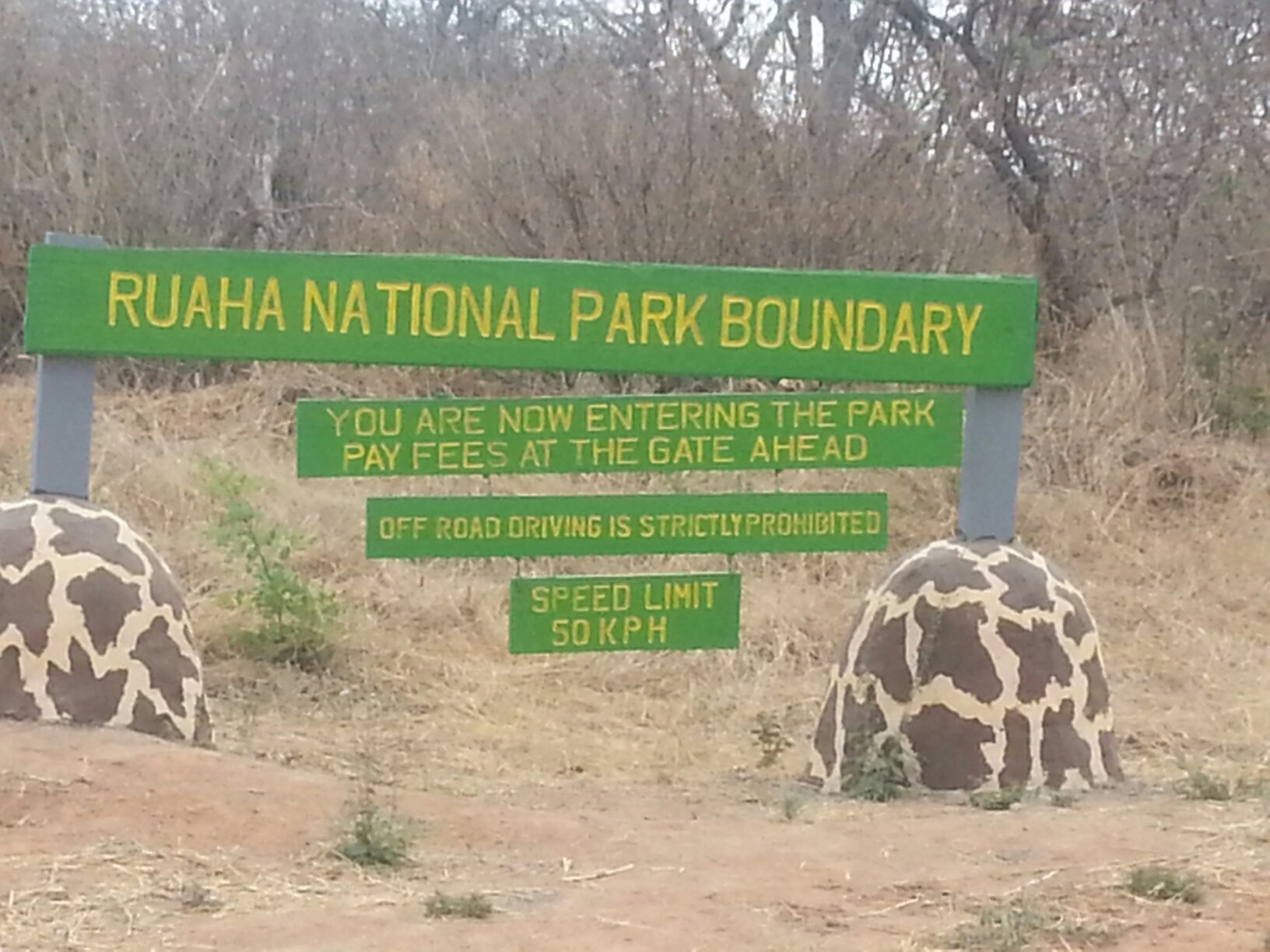
A Tanzania safari is priced in three layers that behave completely differently. The first is a published government tariff that every operator pays at the same rate and none of them can discount. The second is the trip an operator builds on top of it — vehicles, lodges, flights, staff — and that is where two quotes for an identical route diverge by a factor of three without either seller doing anything dishonest. The third is everything a quote leaves outside its own edges. This page works through all three, and it is where the park fees are explained, dated and kept current. A fee belongs somewhere it can be sourced and corrected in one move; where a destination guide quotes one it gives a single dated line and points back here, rather than carrying a figure of its own that will quietly go stale.
Before any figure on this page: the tariff year problem
Tanzania has two separate conservation authorities charging visitors, and they publish on different cycles.
Tanzania National Parks (TANAPA) runs the national parks — Serengeti, Kilimanjaro, Tarangire, Ruaha, Nyerere and the rest. Its published tariff booklet is headed Tariffs: From 1st July 2023 to 30th June 2024, and that document is still what TANAPA’s own tariff page served on 21 September 2026. There is no 2024/25 or 2025/26 booklet on the site. TANAPA’s tariff page describes itself as “Financial Year 2023/2024” and carries “June 2024” as the validity date. So the figures below are the most recent that TANAPA has published, and they are more than two financial years old. That is not the same as saying they are the rates being charged at the gate today. Treat them as the published position and ask your operator to confirm the current one in writing.
The Ngorongoro Conservation Area Authority (NCAA) is a separate body with its own law, its own gates and its own tariff, published at ncaa.go.tz. The Ngorongoro Conservation Area is not a national park and TANAPA’s booklet does not cover it. NCAA’s tariff page carries no financial year at all, and states plainly: “Tariffs are subjected to change without prior notice.” The figures below were read from that page on 21 September 2026.
Two things follow, and they matter more than any individual number:
- Anyone quoting you a single “park fee” for a northern-circuit trip is flattening two authorities, several fee heads and at least three different seasonal definitions into one line.
- Any figure on any website, including this one, is a snapshot. The authority that decides what you pay is the one at the gate, and the document that binds them is a Government Notice, not a web page.
Layer one: what the state charges, and on what basis
Conservation fees in the national parks
TANAPA charges a conservation fee per person per day. It splits visitors three ways — East African Community citizens paying in shillings, expatriates and residents of Tanzania paying a reduced dollar rate, and non-EAC citizens paying the full dollar rate. Almost every international visitor reading this is in the last category. Children under five are free everywhere; children between five and fifteen pay a reduced rate; sixteen and over pay the adult rate.
These are the non-EAC adult rates from the 2023/24 booklet, per person per day.
| Park | Peak | Low | Child 5–15 |
|---|---|---|---|
| Serengeti, Nyerere | 70 | 60 | 20 |
| Kilimanjaro | 70 (no seasonal split) | 20 | |
| Lake Manyara, Tarangire, Arusha | 50 | 45 | 15 peak, 15 low |
| Gombe | 100 (no seasonal split) | 20 | |
| Mahale Mountains | 80 (no seasonal split) | 20 | |
| Katavi, Mikumi, Ruaha, Rubondo Island, Saadani, Kitulo, Mkomazi, Udzungwa Mountains, Burigi-Chato, Ibanda-Kyerwa, Rumanyika-Karagwe, Saanane Island | 30 (no seasonal split) | 10 | |
| Ugalla River, Kigosi | 20 (no seasonal split) | 20 | |
Three things in that table are worth stopping on.
The seasonal split applies to five parks only, and the window is not the one you would guess. TANAPA’s peak season for conservation fees runs from 16 May to 14 March. The low season is 15 March to 15 May — two months. So for ten months of the year you are paying the peak rate, and the discount lands squarely inside the long rains. Kilimanjaro, Ruaha, Katavi and everywhere else charge one flat rate all year.
The most expensive parks are not the famous ones. Gombe at $100 and Mahale at $80 both cost more per day than the Serengeti. That is a deliberate policy on very small, very fragile chimpanzee parks with tiny visitor ceilings, and it is why a Mahale leg reprices a trip. Meanwhile Ruaha, Katavi and Mikumi — three genuinely large wildlife parks — sit at $30.
A conservation fee is a day, not an entry. Three nights in the Serengeti is four days of conservation fee if you enter on day one and leave on day four, and operators differ in how they count the last day. Ask.
The 18 per cent that is not in the table
TANAPA’s booklet ends with a list of notes, and one of them reads: “All charges are VAT (18%) exclusive.”
That single line reprices everything above it. A $70 Serengeti day is $82.60 with VAT. A $100 Gombe day is $118. Over four Serengeti days for two people, the VAT alone is a hundred dollars.
It is also a line that TANAPA’s own website contradicts. The tariff page at tanzaniaparks.go.tz states, under “Important Information”, that “All fees are inclusive of 18% VAT where applicable” — the exact opposite of what the booklet it links to says. On 21 September 2026 both statements were live on the same domain, one linking to the other. The booklet is the document and the booklet wins; a designed PDF signed off as the tariff outranks a summary box on a page built around it. But the contradiction is the reason to get the VAT basis stated explicitly in any quote, rather than assuming.
NCAA presents its figures differently and attaches no VAT note of any kind. Its published rates carry two decimal places, and the arithmetic behind them is visible: $70.80 is $60 plus 18 per cent, $35.40 is $30 plus 18 per cent, $47.20 is $40 plus 18 per cent, $295 is $250 plus 18 per cent. NCAA does not say that its figures are VAT-inclusive and this page will not assert it for them — but the pattern is worth noticing, because it means the two authorities are almost certainly quoting on different bases.
The practical instruction either way is the same: when you compare two quotes, establish whether each has VAT inside or outside its park-fee line. Eighteen per cent on a third of a trip’s cost is not a rounding error.
Ngorongoro, which is charged on its own terms
The Ngorongoro Conservation Area is the fee structure people are least prepared for, because there are two charges, not one, and the second is per vehicle.
| Head | Non-East African citizen | Basis |
|---|---|---|
| Entry permit, 16 years and over | US$ 70.80 | per person |
| Entry permit, child | US$ 23.60 | per person |
| Crater service fee | US$ 295.00 | per vehicle per trip |
| Motor vehicle permit, foreign registered, tare up to 2,000 kg | US$ 47.20 | per vehicle |
| Motor vehicle permit, foreign registered, 2,001–3,000 kg | US$ 177.00 | per vehicle |
| Public campsite, 16 and over | US$ 35.40 | per person per night |
| Special campsite, 16 and over | US$ 70.80 | per person per night |
| Concession fee, lodges and permanent tented camps | US$ 59.00 | per person per night |
| Olduvai Gorge / Shifting Sands | US$ 35.40 | per person |
| Laetoli footprints | US$ 23.60 | per person |
| Short walking safari, 1–4 hours, adult | US$ 23.60 | per person |
| Bush lunch permit | US$ 23.60 | per vehicle per trip |
| Entry to cultural bomas | US$ 20.00 | per vehicle |
The crater service fee is the one that surprises people. It is charged per vehicle per descent, not per person, which means it falls hardest on a couple travelling alone and barely registers across a full vehicle. It is also the clearest illustration on this page of why group size changes a Tanzania quote more than almost anything else.
NCAA’s other structural rule is short and consequential: “Permit once issued is valid for one entry within 24 hours only.” Driving out of the conservation area and back in — which is exactly what a Serengeti trip does, twice, since the road to the Serengeti runs through Ngorongoro — is a fee event, not a free transit. If your itinerary goes Karatu, Ngorongoro, Serengeti, back through Ngorongoro, that is how the arithmetic works.
The other fee heads, and which ones will actually appear on your trip
TANAPA’s booklet runs to fifty numbered heads. Most of them concern filming crews, aircraft landings and investment leases. These are the ones that touch an ordinary safari, all non-EAC adult, all VAT-exclusive, all from the 2023/24 booklet.
| Head | Rate | Basis |
|---|---|---|
| Public campsite, Kilimanjaro | 50 | per person per night |
| Public campsite, other parks | 30 | per person per night |
| Special campsite, Serengeti / Nyerere / Tarangire / Arusha / Manyara | 60 peak, 50 low | per person per night |
| Seasonal campsite, same five parks | 60 peak, 50 low | per person per night |
| Huts, Kilimanjaro (Mandara, Horombo, Kibo) | 60 | per person per night |
| Rescue fee, Kilimanjaro and Meru | 20 | per person per trip, non-refundable |
| Walking safari, short (1–4 hours), adult | 20 | per person |
| Walking safari, long (over 4 hours), adult | 25 | per person |
| Guide fee, all parks except Kilimanjaro | 20 | per group per day |
| Guide fee, Nyerere, Ugalla River, Kigosi | 40 | per group per day |
| Ranger service fee, climbing Mount Meru | 15 | per group per day |
| Night game drive, applicable parks | 50 | per person |
| Hotel concession fee, Serengeti and Nyerere | 60 peak, 50 low | per person per night |
| Hotel concession fee, Manyara, Tarangire, Arusha, Kilimanjaro | 40 | per person per night |
| Vehicle entry, commercial EA or foreign registered, tare up to 2,000 kg | 40 | per vehicle |
| Vehicle entry, 2,001–3,000 kg | 150 | per vehicle |
| Vehicle entry, 3,001–7,000 kg | 200 | per vehicle |
| Mawenzi Peak technical climbing | 750 | per person per day |
| Cycling, Kilimanjaro | 50 | per person per day, on top of conservation fee |
Four notes on that table.
The seasons change again. Conservation fees run a peak of 16 May to 14 March. Campsite and concession fees run a peak of July to September only, with October to June as low season. Those are two different calendars inside one booklet, applied to two different fee heads, on the same trip. It is not an error; it is what the document says.
The concession fee is why a lodge inside a park costs what it does. Every permanent lodge and tented camp inside a national park pays TANAPA a fee per guest per night on top of everything else — $60 a head in the Serengeti in the high months, $59 in Ngorongoro. That money is inside your lodge rate, not itemised beside it. It is a substantial part of the gap between a camp inside the park boundary and one just outside it, and it is worth knowing about before you conclude that the outside camp is simply cheaper for no reason.
Vehicle entry is charged by tare weight, in bands, and a tour operator’s vehicle is commercially registered and therefore pays the dollar column rather than the shilling one. Which band a given vehicle falls into is on its registration document, and the jump from the first band to the second — $40 to $150 — is large. Open-sided vehicles are charged fifty per cent extra. One caveat, on the banding rather than on the rates: a TANAPA letter to the two tour operators’ associations — reference AE.119/294/01, dated 27 February 2024 and signed by the Conservation Commissioner — says that from 1 April 2024 every tourist vehicle up to 3.5 tonnes tare, extended ones included, is charged at the 2,001–3,000 kg band, and quotes that band’s shilling rate of TShs 35,000 VAT-exclusive. It names no dollar figure, it is a letter rather than a Government Notice, and it is published at tatotz.org by the association that received it rather than by TANAPA. The booklet remains the tariff; if your vehicle is a light one, ask which band it is being charged in.
Fees are multiple entry and non-refundable. TANAPA’s notes say conservation and vehicle fees cover multiple entry, and separately that “fees once paid is non-refundable”. A cancelled trip does not get its park fees back once they have been paid in.
How you pay, and why you cannot pay in cash
TANAPA’s booklet states that “payments are made using government electronic payment gateway (GEPG-MOF) online through TANAPA online reservation, banks using electronic cards and mobile”. There is no cash line. In practice the fees on your trip are paid by your operator through that gateway before or at the gate, and a self-driving traveller needs a card or a mobile-money account rather than dollars in an envelope. Proof of identification is mandatory at the gate, which for a non-EAC visitor means the passport whose details were used for the booking.
The legal source of the TANAPA rates, printed in the booklet, is Government Notice No. 666 of 2 November 2018, GN No. 490A of 29 June 2020 and GN No. 181 of 20 May 2016. If you ever need to establish what a rate actually is, those notices, not a website, are the instrument.
Where the tariff runs out
Not every protected area in Tanzania is a national park. Game reserves, game controlled areas and wildlife management areas fall under the Tanzania Wildlife Management Authority (TAWA), and the community-run wildlife management areas beside Tarangire and on the western edge of the Serengeti set their own entry charges. TAWA publishes two non-consumptive fee schedules on its own site. Entry to the Selous, Ikorongo, Grumeti and Maswa game reserves is US$50 per non-citizen adult for twenty-four hours and US$30 for a child aged five to seventeen; the other game reserves are US$20 and US$10. Conservation areas that are not game reserves are US$10 and US$5. A tented camp or lodge inside a game reserve adds a wildlife conservation fee of US$25 per person per day, against US$15 for a day visitor who does not stay. Neither schedule carries an effective date or a Government Notice number, so unlike the national park tariff these figures cannot be tied to a year — treat them as current until TAWA says otherwise, and check before you rely on them. Zanzibar‘s protected areas are administered separately again, under the islands’ own government rather than either mainland authority.
The community-run wildlife management areas are where the tariff genuinely runs out. They set their own entry charges and publish none of them, and the same is true of Zanzibar’s forest and marine reserves. The honest response is not to fill that with a plausible number. If your itinerary includes a night in a wildlife management area, a conservancy or a Zanzibar forest reserve, the fee exists and is not published; ask for it as a separate line.
Layer two: the part the operator builds
Everything above is the same for everyone. It is also, on a typical mid-range northern-circuit trip, a minority of the bill. The rest is the trip somebody designed, and that is the part worth interrogating.
Accommodation, which swings the total further than anything else
Tanzania has an unusually wide accommodation ladder, and the rungs are far apart. At the bottom sit the parks’ own campsites and huts, charged at the tariff rates above and used by camping safaris that carry their own kit. Above that are lodges and tented camps outside park boundaries — in Karatu for Ngorongoro, in Mto wa Mbu for Manyara — which avoid the concession fee and the in-park premium. Then permanent lodges and camps inside the parks, which pay the concession fee and charge for the location. At the top, small mobile camps that move with the season and fly-in properties in Mahale, Katavi and the remote Serengeti, where the cost of getting supplies in is itself most of the price.
A single trip can be quoted across four of those rungs without the route changing at all. When two quotes for the same itinerary differ sharply, accommodation tier is the first place to look, and the property names are the only way to check.
The vehicle, and the arithmetic of group size
A safari vehicle on the northern circuit is quoted per vehicle per day, and carries a driver-guide whose wage, food and accommodation are inside that figure. The vehicle costs what it costs whether one person or six are sitting in it. So does the crater service fee, the vehicle entry fee and the bush lunch permit.
That is the single most powerful lever a traveller actually controls. Two people pay for a whole vehicle between them. Four people pay for the same vehicle between four. The per-person cost of the ground operation falls steeply up to the vehicle’s capacity and then jumps when a second vehicle is needed. If you are a family of five deciding whether to add a sixth traveller, the marginal cost of that person is close to their conservation fees and their bed, and very little else.
The converse is the solo traveller’s problem. A single person on a private safari is buying a whole vehicle, and single supplements at lodges compound it. Joining a scheduled group departure is the standard answer, and the trade is the itinerary: you travel to somebody else’s dates and pace.
Flights, and where they pay for themselves
Tanzania’s distances are long enough that a flight is sometimes cheaper than the driving it replaces, once you count the vehicle days and the lodge nights consumed by the drive. The clearest cases are the southern and western parks. Reaching Katavi or Mahale by road is a multi-day undertaking that most itineraries simply cannot absorb, which is why those parks are effectively fly-in destinations. Ruaha and Nyerere are drivable and frequently flown for the same reason.
On the northern circuit the calculation is different, because the parks are close enough together that driving is the norm and a flight buys back only the long legs — typically the return from the northern or western Serengeti to Arusha. The guide to getting around Tanzania works through the routes and the trade-offs; how many days you need works through what each choice does to the itinerary.
Season, and what it actually moves
The park fee discount in the long rains is small — $10 a day in the Serengeti, nothing at all in most parks. What moves with the season is the lodge rate, and it moves a lot. Properties in the northern circuit typically run several rate bands across the year, and the gap between the highest and the lowest can be larger than the entire conservation fee for the same night.
So the cost argument for travelling outside the high months is real, but it is an accommodation argument, not a park-fee argument. What you are buying and what you are giving up in each month is the subject of the best time to visit Tanzania, which is the decision that should come first; the price follows it rather than driving it.
Layer three: what sits outside the quote
These are the items most commonly absent from a headline figure. None of them is hidden; they are simply not the operator’s to sell.
- International flights. Almost never included, and the choice of arrival airport changes the ground cost as well as the ticket. Getting around Tanzania covers the gateways.
- Visa. A per-person government charge, paid to Tanzanian immigration, not to your operator. Tanzania travel requirements covers the categories.
- Travel and medical insurance. Not optional in practice on a trip that includes remote parks or a mountain. Evacuation cover is the part that matters.
- Tips. Substantial on a Kilimanjaro climb, where a crew of a dozen or more is involved, and customary on a safari for the driver-guide and lodge staff. Ask your operator what the local norm is rather than guessing.
- Drinks, laundry and anything bought at a lodge. Full-board rates rarely include imported alcohol or soft drinks.
- Activities charged separately. Balloon flights, night drives, walking safaris and cultural visits all carry their own tariff lines, and most itineraries treat them as optional extras rather than inclusions.
- Zanzibar. The islands sit outside the safari circuit commercially as well as geographically. A beach extension is usually a separate quote with its own transfers, and Zanzibar levies its own charges on visitors that a mainland safari quote will not contain.
Reading two quotes against each other
Because this site lists safaris run by independent Tanzanian operators and does not set their prices, comparing quotes is something you will be doing yourself. These are the lines that actually explain a gap.
- Are park fees in or out? Some quotes state a price including all conservation, camping, concession and vehicle fees; others quote the ground arrangement and add fees at cost. Both are legitimate. Comparing one against the other is not.
- Is VAT stated? See above. Eighteen per cent on the fee layer is real money.
- How many days of conservation fee? Count them against the itinerary yourself. Three nights in a park is usually four fee days.
- Which properties, by name? “Mid-range lodge” is not a comparable unit. A named property is.
- Inside or outside the park boundary? This changes both the concession fee and the drive time to the morning game drive.
- How many people in the vehicle, and is it private? A per-person price on a shared departure and a per-person price on a private vehicle are different products.
- Is the crater descent included? The Ngorongoro crater service fee is a separate, per-vehicle, per-descent charge. An itinerary that visits the conservation area is not necessarily an itinerary that goes down into the crater.
- Which internal flights, on which carrier, with what baggage allowance? Bush flights carry strict limits, and a flight swapped for a drive changes the vehicle days.
- What is explicitly excluded? A quote with a short exclusions list is not necessarily generous; it may simply be less complete.
A quote that is far below the others is usually explicable, and the explanation is normally one of three things: fewer nights inside the parks, a lower accommodation tier, or more people in the vehicle. Any of those may be exactly what you want. The problem is only when the difference has not been declared, because the fee layer is fixed and there is nowhere else for a very low number to come from.
The fee stack on a Kilimanjaro climb
A mountain climb is the one Tanzanian trip where the state’s share is both large and easy to compute, because the tariff charges per day and the itinerary is a fixed number of days.
The heads that apply, all non-EAC, all from the 2023/24 booklet, all before VAT:
- Conservation fee, $70 per person per day, with no seasonal variation.
- Either camping at $50 per person per night, or the Marangu huts at $60 per person per night. Marangu is the only hut route. Upper Barafu Camp is charged separately at $100.
- A rescue fee of $20 per person per trip, non-refundable — which buys the park’s first aid and radio at the mountain stations, not a helicopter.
- A crew fee of TShs 5,000 per trip. Note that the tariff’s guide fee line reads “guide fee in all parks except Kilimanjaro”: your guides and porters are paid by the operator, not the park, which is why that is the line that varies between quotes.
The structure is what matters more than the totals: every extra day on the mountain adds a conservation fee and a bed fee to the state’s share before the operator’s costs are counted at all. This is the concrete reason a longer, safer itinerary costs more, and it is a reason worth paying rather than arguing with. The published research on summit success and altitude sickness, which is set out in the climbing Mount Kilimanjaro guide, points the same way.
It is also why a strikingly cheap climb deserves a specific question rather than a general suspicion. The park fees are fixed and identical for every company. So is the mountain. What is left to cut is the crew — their number, their pay, their food, their tents and their equipment. Climbing Kilimanjaro: what to know sets out the questions to ask about that.
Frequently asked questions about Tanzania safari costs
What proportion of a safari price goes to the government?
It varies enormously with the shape of the trip and nobody should give you a single percentage. What you can do is compute the fixed part yourself from the tables above: conservation fee per person per day for each park, plus vehicle entry, plus the crater service fee if you descend, plus concession fee per person per night for any in-park lodge, plus eighteen per cent VAT on the TANAPA heads. On an itinerary weighted towards the Serengeti and Ngorongoro that figure is large. On a Ruaha or Mikumi trip at $30 a day it is much smaller.
Are park fees cheaper in the rainy season?
Only in five parks, and only modestly. TANAPA’s low season for conservation fees runs 15 March to 15 May and applies to Serengeti, Nyerere, Lake Manyara, Tarangire and Arusha. In the Serengeti it is a $10 per person per day reduction. Campsite and concession fees use a different calendar, with a peak of July to September only. Everything else is flat all year. The real seasonal saving in Tanzania is in accommodation rates, not fees.
Do children pay?
Children under five are free at every TANAPA gate and in the Ngorongoro Conservation Area. Between five and fifteen they pay a reduced rate — $20 a day in the Serengeti against $70 for an adult, $23.60 in Ngorongoro against $70.80. From sixteen they pay the adult rate. Those reductions are large enough that a family’s fee bill is much lower than a straight multiplication suggests.
Can I pay park fees in cash at the gate?
TANAPA’s tariff booklet lists payment through the government electronic payment gateway, online through its reservation system, by electronic card at a bank, and by mobile money. It lists no cash option. On an organised safari your operator handles this. If you are self-driving, arrange the payment method before you reach the gate rather than at it.
Why is Ngorongoro charged separately from the national parks?
Because it is not a national park. The Ngorongoro Conservation Area is a multiple-use area under its own authority, established under separate legislation, in which Maasai pastoralists live alongside wildlife. TANAPA does not administer it and its booklet does not cover it. NCAA publishes its own tariff, with its own heads — including the per-vehicle crater service fee, which has no TANAPA equivalent.
Is the crater service fee per person?
No. NCAA publishes it as a rate “per vehicle/trip” — US$295 for non-East African citizens. It is charged for the descent into the crater, and it is the fee head that penalises small parties hardest.
How long is a park permit valid?
NCAA states that a permit “once issued is valid for one entry within 24 hours only”. TANAPA charges its conservation fee per person per day and notes that conservation and vehicle fees are for multiple entry. Where an itinerary re-enters an area — as a Serengeti trip re-enters Ngorongoro on the way back — check how the operator has counted it.
Are the figures on this page current?
They are the most recently published figures from each authority as of 21 September 2026. For TANAPA that is the 2023/24 booklet, which is more than two financial years old and is still what TANAPA serves; no later booklet exists on its site. For NCAA it is an undated web tariff that the authority says may change without notice. Neither is a guarantee of the rate you will be charged, and this page does not pretend otherwise. Get the current figure from your operator in writing.
Why will nobody tell me what a Tanzania safari costs?
Because the honest answer is a structure rather than a number. The same fourteen-day route can be built as a camping trip with a shared vehicle and as a fly-in circuit of small camps, and both are Tanzania safaris. What is genuinely fixed is the tariff layer set out above. Everything else is a set of choices, and a page that averages them into one figure has thrown away the only information you could have acted on.
Where this leads next
Cost is downstream of two decisions that come first: when you travel, and how long you have. Both change the bill more than any negotiation will.
- Best time to visit Tanzania — the two rainfall regimes the country actually has, which is not what the tourism shorthand says, and what each month gives you.
- How many days do you need in Tanzania — what each trip length can genuinely hold, and where the driving eats it.
- Getting around Tanzania — flights, roads, rail and ferries, and where each earns its place.
- Tanzania travel requirements — visas, health rules and what has to be arranged before you can price anything.
- Climbing Kilimanjaro: what to know — the mountain as a planning decision, including where a cheap climb takes its money from.
For the experiences themselves, the activity guides cover what each one involves: game drives, balloon safaris, walking safaris, night game drives, camping safaris and chimpanzee trekking in Mahale and Gombe, where the conservation fee is the highest in the country.
Comparing safaris and sending an enquiry
This site does not sell trips, take bookings, handle payments or charge travellers anything. It lists safaris run by Tanzania’s own tour operators so that the comparison described above can happen in one place instead of across a dozen inboxes. An enquiry goes to the operator who runs the trip, and they quote and answer for it.
Browse the safaris listed by Tanzanian operators, read about the companies behind them, or start from the destination guides if you would rather choose the place before the trip. Then put the questions above to whichever operator looks right, and compare what comes back.