
Chimpanzee Trekking in Tanzania
A forest walk with trackers to a habituated chimpanzee community, with viewing time limited once the group is found. Tanzania’s chimpanzees are in the west, at Mahale and Gombe, with an introduced population on Rubondo.
Lake Tanganyika, on Tanzania's far western border, is where chimpanzee trekking in Tanzania takes place: at Gombe National Park, one to two hours by boat north of Kigoma, and at Mahale Mountains National Park, reached by charter flight and boat further south. Each trek is a guided forest walk to a habituated community, followed by one hour with the chimpanzees. Neither park has a road in, and visitors must be at least 12, or 15 at most Gombe lodges.
Safaris That Include Chimpanzee Trekking


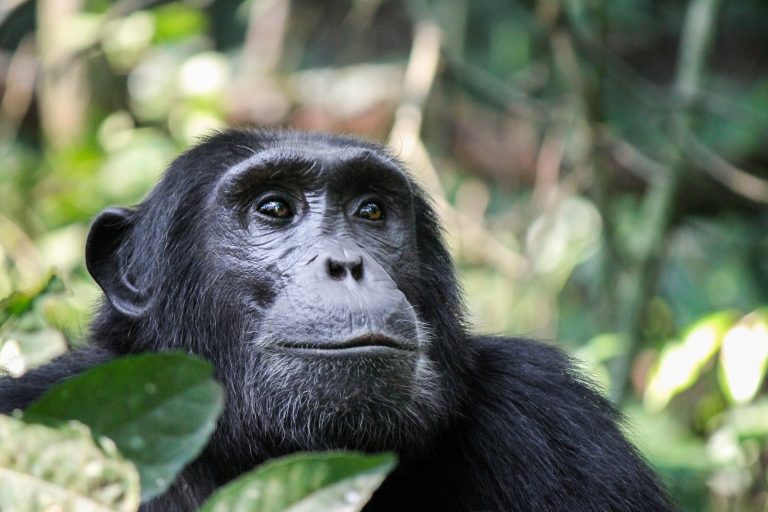
A Guide to Chimpanzee Trekking in Tanzania
Mahale Mountains Chimpanzee Trekking on Lake Tanganyika
Mahale Mountains chimpanzee trekking is the version most people picture when they start planning, and the park earns that position on numbers alone. Mahale Mountains National Park covers 1,613 square kilometres of forested ridges rising straight out of Lake Tanganyika, and it holds roughly a thousand wild chimpanzees, the largest population in any Tanzanian park. Visitors trek to one community, the M group, which camp and research counts put at sixty or more animals.
That group has been followed by Japanese researchers since the 1960s. TANAPA dates the first fieldwork to the early 1960s and the start of habituation to 1966, and the park itself was gazetted in 1985 to protect the population the scientists had come to study. Decades of daily observation mean the M group treats a quiet line of masked visitors as background. Grooming, squabbling over rank, a male drumming on a buttress root: it carries on around you.
The terrain is the price of that setting. The lake sits at about 770 metres and the range climbs to 2,462 metres at Mount Nkungwe, so almost every trek goes uphill through humid forest with few flat stretches to recover on. Guides sometimes cut the path with machetes. On some mornings the camp boat runs you along the shore to a landing nearer the chimpanzees, which can save an hour of hot climbing.
No game drives happen here. TANAPA's own activity list for Mahale is trekking, forest walks, the climb to the peak, boating, kayaking, snorkelling over the lake's cichlids and birding, and that list shapes the stay: a morning trek, then the afternoon on the water. Most camps run one chimpanzee trek per guest per day, which is why three or four nights is the usual length of a visit. With two nights you get one or two chances; with four, a single slow morning in the forest no longer decides the trip.
Accommodation is a small number of lakeside camps, plus TANAPA's own campsites and cottages for self-sufficient travellers. Everything arrives by boat or aircraft, and the camps fold the boat transfers and daily trek into their rates, so most guests never deal with the park paperwork themselves.
Gombe Chimpanzee Trekking Where Jane Goodall Began
Gombe chimpanzee trekking trades size for access and history. Gombe National Park is the smallest national park in Tanzania, a strip of steep valleys running down to the lakeshore north of Kigoma, and it is where Jane Goodall began her chimpanzee study in 1960. Her observations of chimpanzees making tools and hunting meat came from these slopes, and the research has run without a break since.
The park holds about ninety chimpanzees in three communities, Kasekela, Mitumba and Kalande, according to the long-term research team's most recent full count. Visitors usually trek to Kasekela, the community Goodall habituated. The figure has held steady for roughly two decades after falling from somewhere between 120 and 150 in the 1960s, and respiratory illness is the commonest recorded cause of death, which explains why the health rules below are taken so seriously.
Distances are shorter than at Mahale. Gradients are not. The valleys rise sharply from the beach, and TANAPA's own visitor guidance warns that the trails are steep and humid. A trek that covers two kilometres can still mean an hour of scrambling up a streambed.
Gombe rewards the time around the trek too. Olive baboon troops that researchers have watched since the 1960s forage along the shore near the park headquarters at Kasekela, red colobus and red-tailed monkeys move through the canopy, and the Kakombe Waterfall walk and the climb to Jane's Peak viewpoint fill a second morning. Bird lists run to well over two hundred species, mostly forest birds. You can also visit the Jane Goodall research area to see where the study is based.
Facilities are simple. TANAPA runs basic bandas and campsites inside the park, and trip reports describe beds with mosquito nets and cold bucket showers. Most visitors sleep in Kigoma either side, and a long day trip by boat is possible from there.
Rubondo Island Chimpanzee Tracking in Lake Victoria
Rubondo is a different product, and it should be booked as one. The chimpanzees on Rubondo Island National Park descend from sixteen animals released between 1966 and 1969, most of them from European zoos and circuses, in a project led by Bernhard Grzimek of the Frankfurt Zoological Society. The latest published count found at least 35. A habituation programme started in 1997 and had the community semi-habituated by the early 2000s; TANAPA lists the chimpanzee visit as "by arrangement".
So Rubondo chimpanzee tracking is closer to accompanying a habituation team than trekking a relaxed group, with less certain sightings and shyer animals. The island earns its place through sitatunga in the papyrus, boat trips along the shore and one of the densest fish eagle populations anywhere. Treat any chimpanzee sighting there as a bonus.
Gombe or Mahale for Your Chimpanzee Trek
Picking between the two Lake Tanganyika parks comes down to how much of the trip you are willing to give to chimpanzees. Gombe slots into a short Kigoma stop. Mahale is the trip.
| Factor | Gombe | Mahale |
|---|---|---|
| Chimpanzees | About 90 | About 1,000 |
| Group visited | Kasekela | M group |
| Access | Boat, Kigoma | Flight and boat |
| Shortest visit | Day trip | Two nights |
| Usual stay | One or two nights | Three or four nights |
| Minimum age | 15 at most lodges | 12 |
| Open | All year | Camps shut in long rains |
| Rooms | Bandas, Kigoma hotels | Lakeside camps |
Choose Gombe if you are already in western Tanzania or flying into Kigoma, if your budget or time is tight, or if the history of the research is what draws you. Choose Mahale if you want the larger, long-habituated community, the mountain and beach setting and several days with nothing else to do. Families with children aged 12 to 14 should look at Mahale first, since that is the park where the published minimum of 12 is applied by the camps.
Tanzania Chimpanzee Park Comparison
Gombe, Mahale and Rubondo side by side: how you get there, the trekking season, the minimum age and what each one means for your trip.
| Park | Getting there | Season | Minimum age | For your trip |
|---|---|---|---|---|
| 01Mahale Mountains NPLake Tanganyika, M group | Light aircraft to the park airstrip on set days, then about 90 minutes by boat to the camps | June–October best; camps close for the long rains | 12 | Largest population
Plan three nights or more; one trek per day. |
| 02Gombe NPLake Tanganyika, Kasekela community | 1–2 hours by private boat from Kigoma; slower lake taxis run too | Open all year; June–October driest | 15 at most lodges and operators | Easiest to reach
A day trip from Kigoma works. |
| 03Rubondo Island NPLake Victoria, introduced population | Boat from mainland landings such as Kasenda or Nkome, or charter to the island airstrip | June–September and January–February most settled | No published rule found; ask the park | Habituation visit
Sightings less certain than at Gombe or Mahale. |
Last checked November 2026. Verdicts are planning guidance, not a booking check; confirm camp dates, flights and age rules with the operator. Chimpanzee sightings are never guaranteed. Sources: TANAPA visitor guides for Gombe, Mahale and Rubondo; Greystoke Mahale viewing rules; Nomad Tanzania seasonal notes; Safari Air Link western circuit timetable; Kigoma Hilltop Hotel Gombe excursion terms; IUCN APES Atlas.
A Chimpanzee Trekking Day from Dawn to the Lakeshore
A chimpanzee trekking day starts before you wake. Chimpanzees build a fresh sleeping nest in the canopy each night, and trackers walk out at first light to the trees where the community settled the evening before. From there they follow calls and fresh feeding remains until they have contact, then radio the camp or ranger post.
How long the walk takes is the one thing nobody can tell you in advance. On a good morning the trackers find the community near camp and you sit with them before eight. On a bad one the group spent the night high on the ridge, and you climb for three hours, reach them, and then follow at speed as they travel. Trip reports from both parks tell both stories.
Your guide at Mahale may know each chimpanzee by name, mother and rank history, because the research project has been recording them for decades. Ask. The hour changes completely once you know that the old male resting on the log has held his position for years, or that the juvenile watching you is the youngest in the group.
Young chimpanzees are curious and sometimes walk straight past a seated group. When that happens, stay still rather than scrambling backwards; the guide will move you if needed. Most visitors say the sixty minutes goes far faster than they expected, so decide early whether you want photographs or simply to watch, because trying to do both well in one hour rarely works.
Light is the other surprise. The canopy is dense, flash is banned, and a long telephoto lens is often less useful than a fast standard one, since the animals can be close and the light poor.
Chimpanzee Trekking Rules on Age, Masks, Distance and Time
Every chimpanzee trekking rule in Tanzania comes back to one fact: chimpanzees catch human respiratory infections and die of them. At Gombe, illness with respiratory symptoms is the most frequently recorded cause of death in the research records. The rules below were set for Mahale and Gombe by an international team of scientists and vets, and guides do not bend them.
Age. No one under 12 may visit the chimpanzees, a rule printed on the Mahale camps' viewing sheet and in TANAPA's Mahale viewing regulations. At Gombe, Kigoma lodges and several operators state 15 as the TANAPA minimum, while other sources give 12. TANAPA's own Gombe visitor guide does not print a figure, so a family with a 12 to 14 year old should get the operator to confirm in writing before paying.
Masks. A surgical mask over nose and mouth whenever you are near the chimpanzees. Guides and camps supply them.
Distance. At least 10 metres. If a chimpanzee closes the gap, you back off slowly or stay put as the guide directs; you never move suddenly.
Group size and time. Six visitors plus a guide at most, and one hour from first contact. If another group is already with the chimpanzees, yours waits well back until they leave. Under the published Mahale rules, tracking also stops three hours after the first sighting even if your full hour has not been used, which can surprise people on a day when the community keeps moving.
Illness. If you have a cold, a cough or a fever, you do not trek. Tell the camp manager or ranger; at Mahale the camp decides. This is the rule travellers find hardest, after flying a long way, and it is the one that matters most.
Behaviour. No eating or drinking near the chimpanzees, no smoking, no spitting, no flash, no pointing, no direct staring and no leaving bags on the ground where a curious animal can reach them. If you need the toilet, the guide takes you well away and digs a hole. In the unlikely event of a charge, hold on to the nearest tree trunk and do not run.
Boat Trips and Charter Flights to Gombe and Mahale
Both parks begin at Kigoma, or pass close to it, and that is the first thing to plan around. Kigoma has scheduled flights from Dar es Salaam. It also sits at the end of the Central Line railway from the coast, a two to three day ride. By road from Dar es Salaam it is over 1,200 kilometres.
To Gombe by boat. A private motorboat from Kigoma takes one to two hours depending on the boat and the lake, and lodges or operators arrange it; park entry is handled at Kasekela. The budget option is the wooden lake taxi from Kibirizi beach, which stops at villages along the shore and takes three to four hours. It works for a two night stay but makes a day trip impossible, because the return boat passes Gombe early in the morning.
To Mahale by air. Most visitors fly. Scheduled light aircraft run a western circuit on set days, Mondays and Thursdays in the published timetable, from June to October, with landings on request outside those months. The circuit links Mahale with Katavi and Ruaha and connects to Dar es Salaam and Zanzibar; operators also arrange light aircraft from Arusha.
From the airstrip a boat carries you about ninety minutes along the shore to the camps. The baggage limit on these flights is tight, 23 kg including hand luggage on the main scheduled operator, and soft bags are expected.
To Mahale by lake. From Kigoma it is possible to travel south by boat, a long day, or arrange a charter flight to the park airstrip. The historic lake steamer MV Liemba has been rebuilt and the government has announced its return to service, but check whether it is calling at the landings near Mahale before building a plan on it.
The getting around Tanzania guide sets the western leg against the rest of the country's transport, which helps when you are deciding whether to fly or go overland.
Best Season for Chimpanzee Trekking in Tanzania
June to October is the best season for chimpanzee trekking in Tanzania. Western Tanzania has a single long wet season, from about November into April or May, and the dry months that follow bring firmer trails, calmer lake crossings and reliable flights. TANAPA names June to October as the peak window at both Gombe and Mahale.
At Mahale the dry season has a second advantage. As it goes on, the fruit the chimpanzees favour ripens on the lower slopes, and the camp operators report the community spending more time near the lakeshore, sometimes close to camp. August to October tends to give the shortest walks. In the green season, from November to February, the chimpanzees often follow fruiting trees higher up, so climbs lengthen, though the forest is at its most colourful and the haze of the dry months clears.
The best months are also the fullest. Camps book out first from July to October, and Gombe's trekking slots and campsites are limited, so the period with the shortest walks is also the one that needs booking furthest ahead.
Between about mid February and May the main Mahale camps close for the long rains, with dates varying by camp, and the scheduled flights stop with them. Gombe stays open all year. Wet season visitors there often describe short afternoon downpours rather than all-day rain, but the valley paths turn slippery and the lake can delay boats. The best time to visit Tanzania guide explains why the west runs on a different rainfall calendar from the northern parks.
Packing for a Chimpanzee Trek in Tanzania
Boots with real grip matter more than anything else on this list; trail shoes slide on wet roots and leaf litter. Wear long trousers and long sleeves against nettles and biting insects, and pack light gardening gloves for grabbing vines on the steep pitches. A walking pole helps on the descent.
Carry more water than seems sensible and a light rain shell. A dry bag for the camera earns its place, because the boat rides can be wet. Keep the daypack small, since it must stay on your back near the chimpanzees, and remember the light aircraft baggage limit when choosing a camera bag for Mahale.
Adding a Chimp Trek to a Tanzania Safari
Chimpanzees do not fit neatly into a northern circuit week, and it helps to accept that early. The two pairings that work are Mahale with Katavi, joined by the same flight circuit and giving forest trekking and floodplain game drives in one trip, and Gombe as a Kigoma stop between Dar es Salaam and the rest of the country. Rubondo sits closer to the western Serengeti by charter. Many travellers finish on Zanzibar, reached via Dar es Salaam.
The site's note on why chimpanzee tracking is not a game drive covers the mindset shift, and the primate watching listings include trips that add other forest primates. If you have one week and want both plains and chimpanzees, build it around Katavi and Mahale rather than trying to bolt Gombe onto the Serengeti.
Chimpanzee Trekking in Tanzania FAQ
How much does chimpanzee trekking in Tanzania cost?
TANAPA sets the fixed lines. In its most recent published tariff, the conservation fee per non East African adult for 24 hours is US$100 at Gombe, US$80 at Mahale and US$30 at Rubondo, Children aged 5 to 15 pay US$20 at Gombe and Mahale and US$10 at Rubondo, and under 5s go free. A park guide costs US$20 per group per day, and the Mahale Chimpanzee Habituation Experience is listed at US$100 per adult. Boats, flights and rooms come on top and make up most of the total; Mahale camps usually fold park fees and transfers into an all-inclusive rate. Check the current TANAPA tariff before travelling.
Are chimpanzee sightings guaranteed?
Sightings cannot be promised. Trackers find the community before you set out, so most treks to habituated groups at Gombe and Mahale end with a sighting, but chimpanzees move fast and the three-hour tracking cap applies. Rubondo sightings are far less certain.
How fit do you need to be for a chimp trek?
Reasonably fit, and comfortable climbing steep, slippery ground in heat and humidity for one to several hours. Porters help. Camps at Mahale can restrict trekking for guests they think will hold the group back.
What is the minimum age for chimpanzee trekking in Tanzania?
Twelve at Mahale. At Gombe most lodges and operators apply 15, so confirm the rule in writing for any child under 15.
Is Gombe or Mahale better for chimpanzee trekking?
Mahale for the larger population, the long-habituated M group and a longer stay; Gombe for easier access, a shorter visit and the Jane Goodall history. Most people with three or more nights and a flight budget choose Mahale.
Can you visit Gombe without a tour?
Independent visits are possible: travellers fly or take the train to Kigoma, arrange a boat, pay at Kasekela and trek with a park guide. Book the bandas or campsite ahead in peak months.
How does Tanzanian chimpanzee trekking compare with Uganda or Rwanda?
The rules are similar. Tanzania's parks are much harder to reach and quieter, and the Lake Tanganyika setting, with beaches below the forest, has no equivalent in the other two countries.
Chimpanzee trekking is easiest to judge inside a full itinerary, with the flights and boat legs already worked out. Tanzania Safari.travel is a marketplace for safaris from independent tour operators: you can compare the safaris that include chimpanzee trekking at Gombe and Mahale, read the longer guide on that page, and send your enquiry straight to the operator running the trip you like, with no booking fee added. Ask them which trek mornings the plan includes and how the age rule applies to your group.