
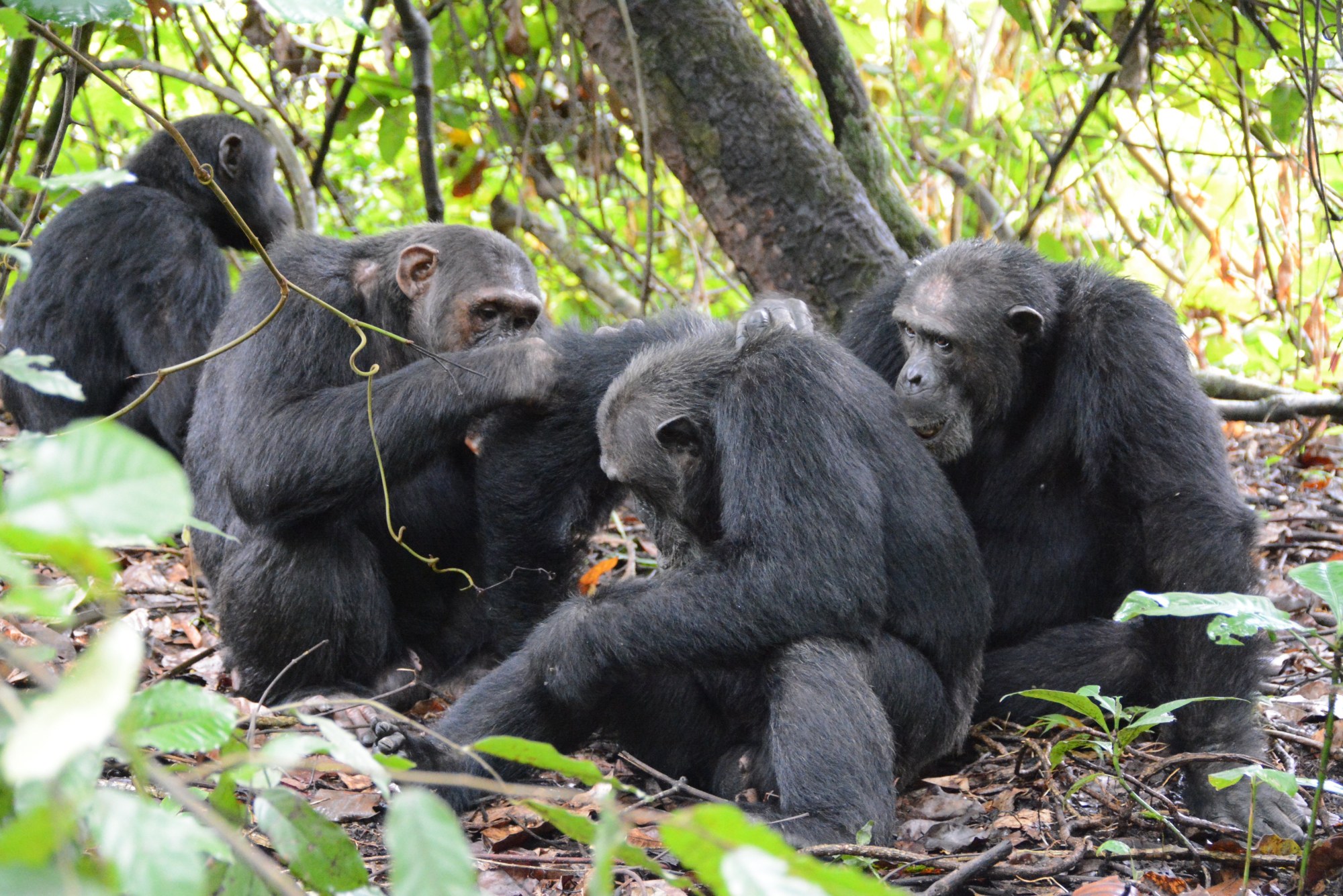
Almost everything written about a Tanzania safari assumes a vehicle. You sit, someone else drives, the animals are outside and you are inside. The two chimpanzee parks on Lake Tanganyika work nothing like that, and the gap between what people picture and what happens is wide enough to spoil a trip booked carelessly.
You arrive by water
Mahale Mountains National Park covers 1,613 square kilometres, of which 1,517 are land and 96 are lake, and was established in 1985. Gombe is a strip of steep forested valleys running down to the lake shore north of Kigoma; TANAPA’s current park record gives it 56 square kilometres, which makes it the smallest national park in the country.
Neither has a road network you use to see animals. The lake is the approach, and at Mahale montane forest, beach and open water sit within a few hundred metres of each other. That geography is the reason the park is memorable and also the reason a visit takes planning.
You walk, and the ground is steep
Tracking means going into the forest on foot with a guide until the group is found. How long that takes is not fixed. The chimpanzees are wild and move where they want, and the terrain at both parks is hills rather than flats.
This is the part worth being honest with yourself about. There is no vehicle to retreat to and no circuit to drive if the morning is unproductive. A reasonable level of fitness is not a marketing detail here; it is the activity.
These are studied populations, not discovered ones
The reason you can see chimpanzees at all is decades of habituation. TANAPA traces Mahale’s research to Japanese fieldwork carried out between 1961 and 1965, with habituation of a community beginning in 1966. The group open to visitors has been known to researchers as the M group and has been followed ever since.
Gombe’s history is better known and older in the public mind: it is where Jane Goodall’s study began, and Tanzania put the park on UNESCO’s tentative list on 27 May 1997, under reference 849, in the natural category.
One small illustration of how carefully these places are documented, and how easily a number drifts: that same 1997 submission gives Gombe’s area as 52 square kilometres while TANAPA’s current record gives 56. Both are official. Neither is a misprint. It is simply what happens to a boundary figure over thirty years, and it is a useful reminder to treat a confidently quoted statistic about a park as something worth checking.
What this means for an itinerary
Chimpanzee tracking does not slot into a northern circuit week. The western parks are a separate leg with their own travel time, and the practical question is whether you want it enough to spend the days getting there — a question getting around Tanzania covers in more detail than a brochure will.
If you do want it, the difference from a plains safari is the point rather than the drawback. Sitting on a forest floor while a habituated community moves around you is not a better version of a game drive. It is a different thing entirely.