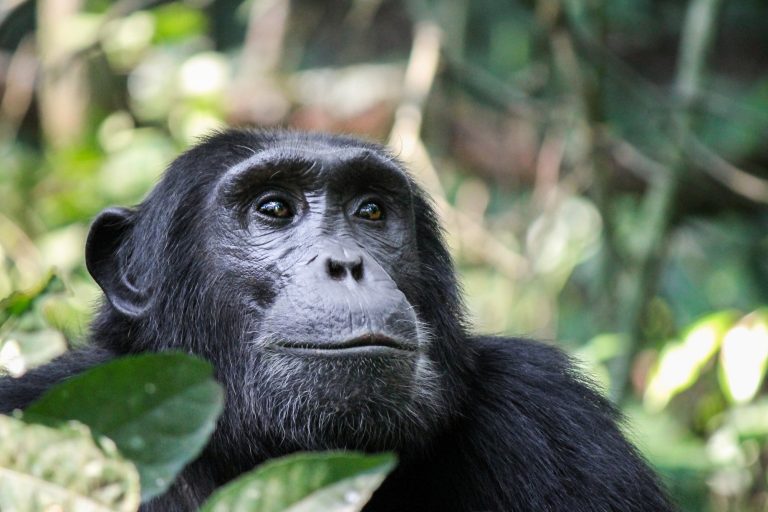
Tanzania’s smallest national park
Gombe is a strip of steep forested valleys running down to the shore of Lake Tanganyika, north of Kigoma. It is the smallest of Tanzania’s national parks and, by a wide margin, the most historically significant, because this is where Jane Goodall began the chimpanzee study that changed what was known about the species.
The park’s area is given differently by two Tanzanian government sources, and both are worth having. TANAPA’s current park record gives 56 square kilometres. Tanzania’s own 1997 submission to UNESCO’s tentative list — Gombe has been on that list since 27 May 1997, reference 849, in the natural category — gives 52 square kilometres. Neither figure is obviously the corrected one, so both are quoted here rather than picking a winner.
TANAPA dates the park’s gazettement to 1968 and states that it was created primarily to protect the region’s chimpanzees. Goodall’s long-term study began in 1960 and has continued since, making it one of the longest continuous studies of any wild animal population.
On UNESCO’s tentative list
The 1997 tentative-list submission is a useful, verifiable document and it is blunt in a way tourism copy rarely is. It describes Gombe as mountainous escarpment on the western rift, with Guineo-Congolian forest in the valleys and miombo woodland of Zambezian type on the drier upper slopes, mingling as semi-deciduous forest on the valley sides. It calls this a productive mosaic and a rich habitat for forest mammals, particularly primates.
It then names the threats directly: disease, and the pressure of a dense local human population, increased at that time by an influx of refugees. A tentative listing is an intention to consider nomination, not an inscription, and Gombe has remained on the list rather than moving onto the World Heritage List.
Chimpanzee trekking at Gombe
The rules, the health precautions, the fitness needed and the reason for each are covered in the chimpanzee trekking guide. Gombe’s own character within that activity comes down to three things.
It is the accessible one. TANAPA describes access by boat from Kigoma or nearby lakeshore villages, taking one to two hours, with park entry formalities handled at Kasekela. That puts chimpanzees within reach of a traveller who has not rebuilt an entire itinerary around them, which is not true of Mahale.
It is steep. The distances are shorter than at Mahale and the gradients are not gentler. TANAPA’s own visitor guidance warns that trails are steep and humid and advises sturdy footwear and pacing.
And the rules are the same as everywhere else: limited group sizes, limited viewing time, minimum viewing distances as directed by rangers, no eating or smoking near the animals, no flash photography, and no trekking with flu-like symptoms. Chimpanzees catch human respiratory infections and die of them. TANAPA’s Mahale regulations, which set out the published detail for Tanzania, put the minimum visitor age at twelve.
The rest of the park
Gombe is small enough to walk, and there is more in it than the chimpanzees.
Kakombe Waterfall is the one TANAPA names, describing it as a cascade in a cool ravine reached by a classic forest hike with butterflies and birds along the way. It is the park’s best-known walk after the trekking itself, and fits the waterfall hiking guide. A second waterfall, often listed elsewhere as “Mkenke Falls”, could not be confirmed as a named waterfall in any authoritative source — Mkenke is a valley name at Gombe — and is therefore not described here.
Jane’s Peak viewpoint is TANAPA’s name for the lookout over the lake and the ridges above the valleys.
The other primates are worth time on their own account. Gombe holds eight primate species, including olive baboon, blue monkey, red-tailed monkey, vervet and red colobus, alongside bushbabies. The olive baboon troops that frequent the lakeshore have themselves been studied for decades. See the primate watching guide.
Birds. TANAPA highlights fish eagles, trumpeter hornbills, turacos and seasonal migrants; the recorded list runs to 287 species, mostly forest birds, with migrants present from around November to April. The bird watching guide covers the forest-birding problem in general.
The lakeshore. Pebbled beaches, clear water and cichlids. TANAPA’s own note is that swimming or snorkelling may be possible at designated spots and that current advice should be sought from rangers or guides. Read the bilharzia section of the Lake Tanganyika guide before deciding.
Getting there and staying
Most visitors come by boat from Kigoma, a one to two hour crossing, arranged through lodges or operators. Kigoma has scheduled flights from Dar es Salaam and is the terminus of the Central Line railway; road travel to Kigoma is possible but slow. Inside the park, movement is on foot on park-managed trails. The guide to reaching western Tanzania by air, rail and lake covers what the Kigoma leg of an itinerary involves and what the baggage limit on the light aircraft means.
For accommodation TANAPA lists its own public and special campsites and basic park bandas, alongside lodges and guesthouses in and around Kigoma for nights either side. Special campsites and trekking slots are limited and TANAPA advises booking well in advance in the June to October peak. The camping safari guide covers what park campsites mean in practice.
Gombe carries the highest conservation fee of any Tanzanian national park. TANAPA’s published tariff booklet for 2023/24 puts it at US$100 for a non-citizen adult per 24 hours, against US$70 in the Serengeti, and it is charged per day rather than per entry. The booklet states that its charges exclude VAT while TANAPA’s own tariff page states that fees include it; that contradiction is live and unresolved, and the guide to what a day at a Tanzanian park gate actually costs sets out both statements.
Seasons
Gombe is in Kigoma Region but not in the Kakonko or Kibondo districts, which are the only two the Tanzania Meteorological Authority treats as part of its bimodal Lake Victoria zone. Gombe therefore sits in the unimodal zone: a single wet season running from about November into April or May, then a long dry period. TANAPA gives the park a temperature range of 18 to 26 degrees Celsius and names June to October as the peak visitor months. The seasonal guide to the south and west explains why the western parks run on one long wet season rather than two.
Common questions about Gombe
How big is Gombe National Park?
Two Tanzanian government sources disagree. TANAPA’s current park record gives 56 square kilometres; Tanzania’s 1997 UNESCO tentative list submission gives 52. It is Tanzania’s smallest national park on either figure.
Is Gombe a World Heritage Site?
No. It has been on Tanzania’s UNESCO tentative list since 27 May 1997 under reference 849, in the natural category. A tentative list is an inventory of sites a country intends to consider nominating; it is not an inscription.
When did Jane Goodall start work at Gombe?
1960. The research has continued since, and the Gombe record underpins much of what is known about wild chimpanzee behaviour.
Does Gombe have a waterfall?
Yes — Kakombe Waterfall, which TANAPA names as an attraction and describes as a cascade in a cool ravine reached by a forest hike. A second waterfall circulating online as “Mkenke Falls” could not be confirmed in any authoritative source; Mkenke is a valley name at Gombe.
How do you get to Gombe?
By boat from Kigoma or nearby lakeshore villages, a one to two hour crossing. Kigoma has scheduled flights and is on the Central Line railway. There is no road into the park.
Gombe or Mahale?
Gombe if you want chimpanzees without rebuilding the trip, and if the history of the science matters to you. Mahale if you want the larger population, the mountain-and-lake setting and several days of other activity. Gombe is a boat ride from a town with an airport; Mahale is a destination in its own right.
What is the minimum age?
Twelve. TANAPA’s published chimpanzee viewing regulations set the minimum at twelve, both for the child’s safety and because children are more likely to transmit infection.