
Where Mangapwani is
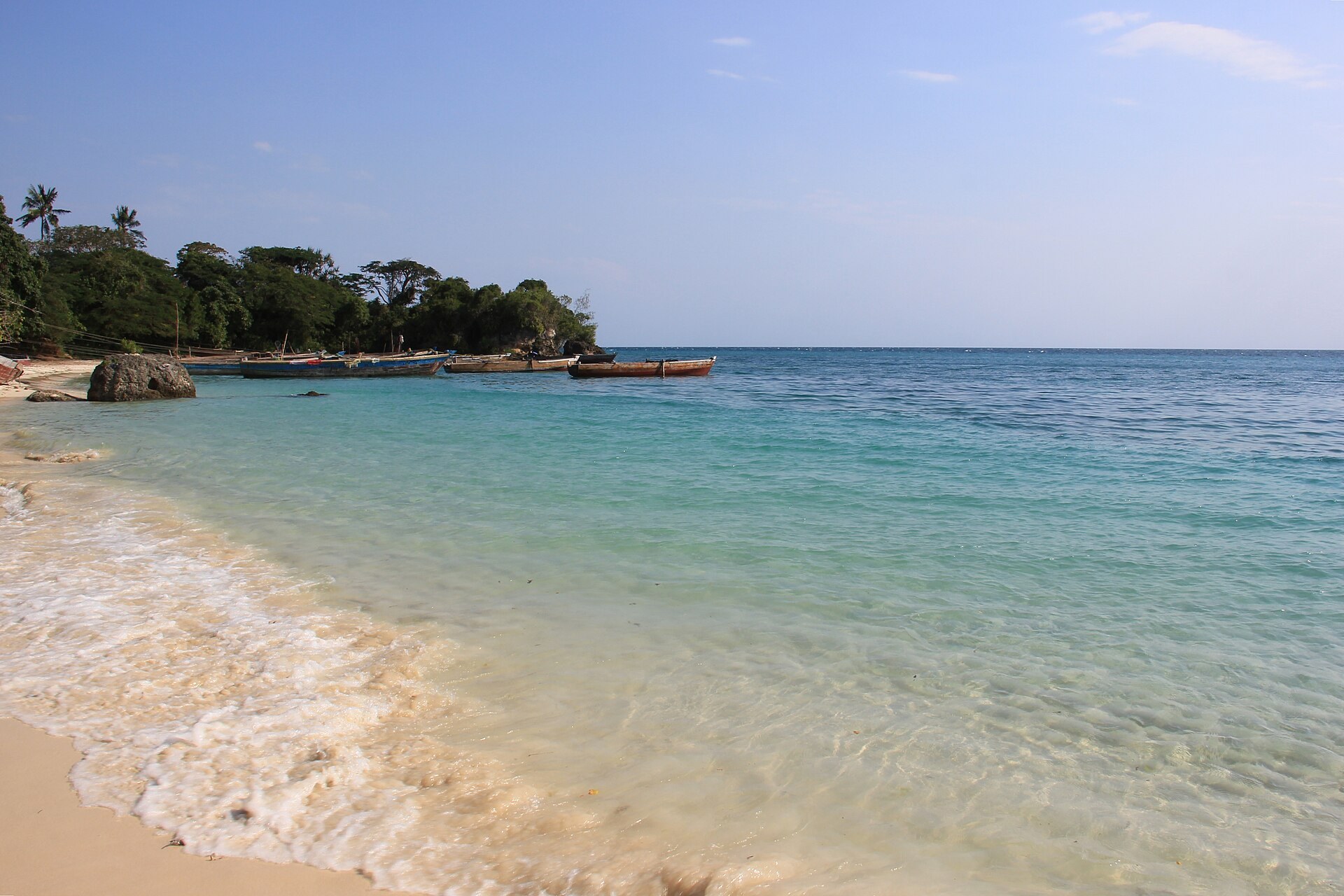
Mangapwani is a stretch of coast roughly twenty kilometres north of Zanzibar Town, on the western side of Unguja. It faces the channel rather than the open ocean, which makes it sheltered, and it is one of the island’s more substantial settlements outside the urban region.
It is visited almost entirely for two structures, and the most important thing this page can do is keep them apart. They are routinely merged into one story by tour narratives, and separating them is the whole of understanding the place.
Two separate places
The first is a large natural coral cavern, entered through a small opening, with masonry steps leading down to a pool of fresh water. Those steps were already in place when the British administrator Major Pearce visited in around 1920. The Zanzibari heritage authority’s own account describes the cave’s use in connection with the slave trade as a suggestion rather than an established fact.
The second, a short distance away, is a man-made chamber: a rectangular pit cut into the stone, roughly three metres by fourteen and three and a half metres deep, with masonry roofing at ground level. The Zanzibar Department of Museums and Antiquities attributes its construction to slave traders, and it is commonly credited to a trader named Mohammed bin Nassor al-Alawi. The reading usually offered — that it was used to conceal people after the seaborne trade was prohibited — is plausible and is the account given locally, but historians present it as a suggestion rather than as proven.
So: the chamber is man-made and attributed by the heritage authority to slave traders; the cave is natural and its connection to the trade is less certain. The single dramatic story that fuses the two is not what the custodians actually say, and a visitor is better served by the distinction than by the version that gets told.
Why the chamber exists at all
The gap between prohibition and abolition is the thing this site is really about, and it is what makes Mangapwani intelligible.
The seaborne trade was prohibited, and the market in Zanzibar Town closed, decades before slavery itself was finally ended in the islands. Thirty-six years separate the closing of the market from the last of the legal steps that ended the institution. A structure built to conceal people after the trade was formally abolished belongs to that gap. That is why the remains at Mangapwani exist, and why they are a more useful thing to look at than a dramatised cave.
The fuller history — the shape of the Indian Ocean trade, the clove plantations on Unguja and Pemba that consumed labour on a large scale from the 1820s, the sites in Stone Town and on the mainland, and what is documented versus what is repeated — is set out in the slave trade history guide.
Visiting
Mangapwani has far less interpretation in place than the Stone Town site does, which means a guide adds a great deal here rather than being optional. Ask how they know what they are telling you; the good ones welcome the question, and this is a subject where a confident narrative is not the same thing as an accurate one.
The site is administered by the Zanzibar Department of Museums and Antiquities. No published statement could be found setting out who receives visitor revenue here or how any of it is used — what is documented is custody rather than distribution. If that matters to you, it is a fair question to ask on the day, and no claim to the contrary should be accepted without it. The same is true at the Stone Town site and at Bagamoyo.
This is not a place to frame as a highlight or fit between a spice farm and lunch. Many people find the transition from one to the other uncomfortable, and that discomfort is reasonable. Give it its own part of the day.
The Zanzibar museums authority’s own website could not be reached at all during this research — it refused connections outright — so opening times and current arrangements cannot be confirmed here and should be checked locally.
The coast here
Mangapwani’s shore faces west across the channel, which means sheltered water and sunsets over the sea, in contrast to the long draining reef flats of the east coast. It is a quiet, largely undeveloped stretch with fishing villages on it. There is a resort on this coast with a golf course, at Kama Village near Mangapwani, though its own published material does not set out the hole count, par, length or designer — the golf guide covers what is and is not established about it.
Beyond that there is little organised visitor activity on this part of the coast. Dhow sailing and sandbank trips mostly work out of Stone Town and the islands off it, a short distance south. Mangapwani is a half-day trip from there rather than a base, and getting to it means a taxi or a tour vehicle — the guide to transport on Unguja and beyond covers island transfers.
Practical notes
Bring a torch. The cave is dark and the chamber more so.
Footwear with grip: the steps into the cavern are old, uneven and wet.
Dress covered. This is a village area and a memorial site, not a beach.
Rainfall is bimodal: long rains, masika, about March to May; short rains, vuli, about October to December. How the islands’ two wet seasons sit against the mainland’s is set out in the seasonal breakdown for Tanzania.
Common questions about Mangapwani
Was the coral cave used to hold enslaved people?
That is a suggestion rather than an established fact, and the Zanzibari heritage authority’s own account presents it that way. The cave is a natural cavern with masonry steps that were already in place by around 1920. The man-made chamber nearby is the structure attributed by the heritage authority to slave traders.
What is the difference between the cave and the chamber?
The cave is natural: a coral cavern with a freshwater pool and masonry steps down to it. The chamber, a short distance away, is man-made — a rectangular pit cut into the rock, roughly three by fourteen metres and three and a half metres deep, roofed with masonry at ground level. They are separate places and separate stories, though tour narratives routinely merge them.
Why would a chamber be built after the trade was abolished?
Because prohibition of the seaborne trade and the end of slavery in the islands were separated by decades — thirty-six years between the closing of the market and the last of the legal steps. A structure built to conceal people belongs in that gap. It is the most useful thing to take from the site.
Do I need a guide?
A guide adds a great deal here, because there is far less interpretation in place than at the Stone Town site. Ask how they know what they are telling you — this is a subject where confident narration is common and accuracy is not guaranteed by it.
Where does the entrance money go?
Nobody publishes it. The site is administered by the Zanzibar Department of Museums and Antiquities, but no statement of how visitor revenue is used could be found. It is a fair thing to ask on the day.
Can I combine Mangapwani with a spice farm?
Geographically, easily — both are north of Zanzibar Town. Whether you should is a different question, and many people find the transition from one to the other uncomfortable. Giving this site its own part of the day is the better arrangement.