
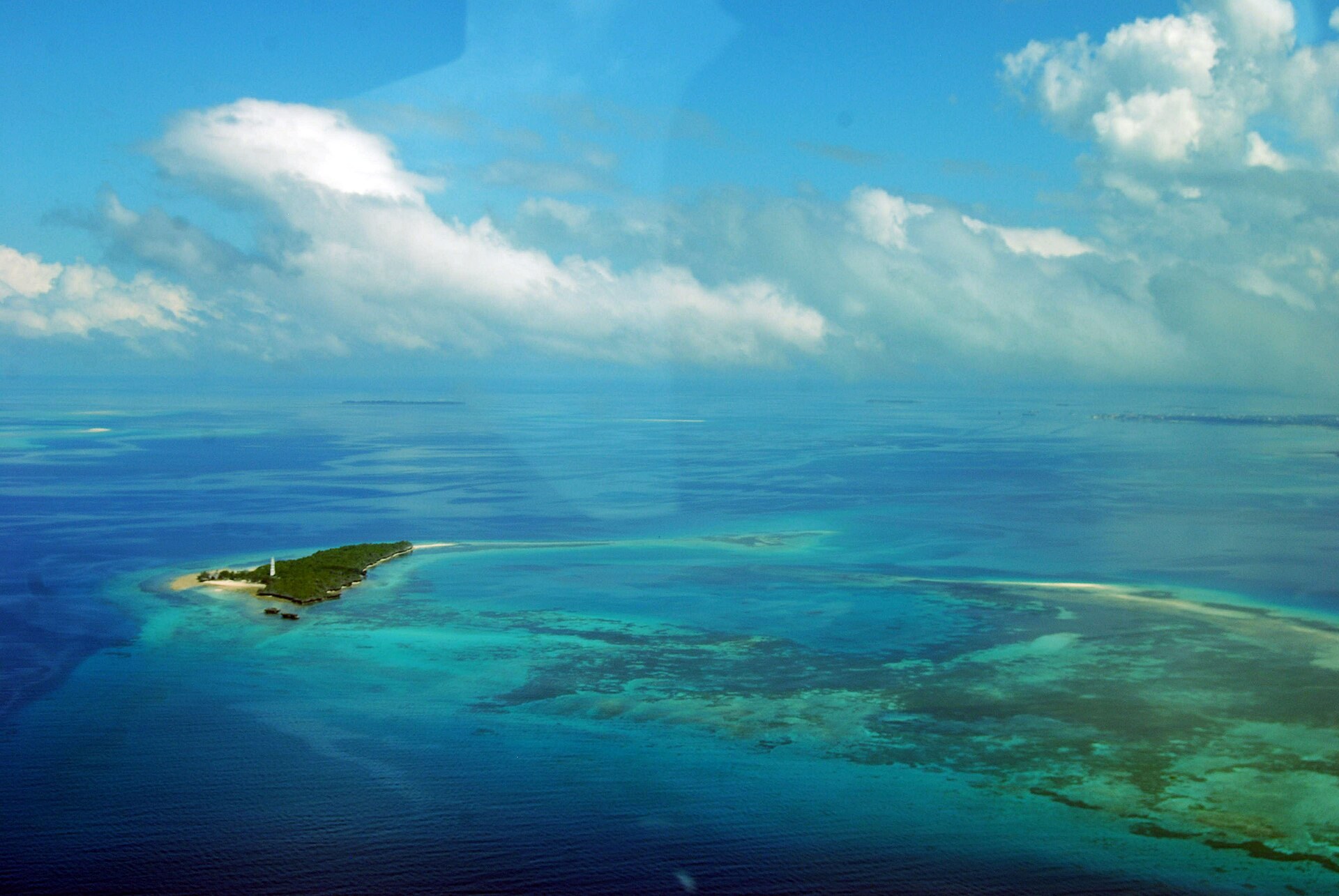
A small island run as a coral park
Chumbe is a small private island in the Zanzibar Channel, south-west of Stone Town and off the west coast of Unguja. It is managed as a coral park, with a fully protected reef sanctuary, a closed forest reserve, two historic buildings and a small eco-lodge, and the number of people allowed on it at any one time is deliberately capped.
That cap is not an inconvenience attached to the product. It is the product. Chumbe’s reef is in the condition it is precisely because access to it is controlled, and the island is the clearest example in Tanzania of what protection actually does to a reef over thirty years.
How it was protected
The fringing reef west of the island was officially closed to fishing, boating and diving in 1992. In 1994 the island and its surrounding waters were declared the Chumbe Island Coral Park, containing the reef sanctuary and a closed forest reserve, and management rights were given to a private non-profit company, Chumbe Island Coral Park Ltd. It was the first marine protected area of its kind in Tanzania and its governance has been analysed in peer-reviewed literature rather than only described by its own operators — which is unusual and is why this site treats it as the clearest case available.
Part of the reef’s head start is accidental. The island sat inside a military zone for years beforehand, which limited human impact on it long before anyone set out to protect it deliberately.
The sanctuary itself is small — its managers publish 55.06 hectares, about 0.55 square kilometres — which is worth knowing before arriving. This is a precisely bounded place, not a marine park on the scale of Mafia‘s.
The reef, and what protection has produced
At least ninety per cent of all the hard coral species recorded on East African reefs have been found around Chumbe. The managers record 474 reef fish species there, including rarer species such as the giant grouper.
The bleaching record is the part that matters most, because it is measured. Monitoring records mass bleaching around Zanzibar in 1998, 2007 and 2016, with a long decline in branching corals across the region. In the 2016 event, sea surface temperature at Chumbe went above thirty degrees and something close to eighty per cent of its hard coral bleached — a worse hit than Mafia’s forty to sixty per cent. And yet more than seventy per cent of Chumbe’s hard coral subsequently recovered, with strong recruitment of new coral afterwards.
That is the argument for access control stated as a number rather than as a sentiment. The diving and snorkelling guides set the island in the context of the rest of the coast, and the conservation tours guide covers Chumbe as a governance model.
On the island
Chumbe carries two historic buildings: a small mosque and a lighthouse, both dating from around the beginning of the twentieth century. The mosque is Indian rather than Swahili in architecture, built for the first lighthouse keeper, and its managers call it one of very few such mosques in Zanzibar. There are nature trails through the closed forest reserve, a visitor and education centre, and a small number of eco-lodge rooms.
The buildings and the operation are run on low-impact technology throughout — rainwater catchment, photovoltaic power and solar water heating, composting toilets, vegetative greywater filtration — because the island has no fresh water and no mains anything. That is a genuine feature of staying here rather than a marketing line, and it shapes what a night on Chumbe is actually like.
The forest holds coconut crabs, which are seen frequently and are the island’s best-known land animal. Roseate terns have bred successfully on Chumbe; a breeding colony of some 750 pairs was estimated there in 1994. A 4,000-hectare site taking in Chumbe and the adjacent Kombeni and Kiwani bays on the south-west of Unguja is designated an Important Bird Area by BirdLife International, supporting Terek sandpipers and crab plovers as well as the terns — covered in the birdwatching guide — and the island’s trails in the forest walks guide.
Visiting
Chumbe takes both day visitors and overnight guests, and both have to be arranged in advance. It cannot be added to a boat’s route on the day. Visitor numbers are capped and there is a booking process, and a boat that offers to drop in at Chumbe as part of a sandbank circuit is offering something that does not happen.
That distinguishes it from the small islands off Stone Town — Changuu and Bawe among them — which are easy, sheltered and heavily visited, with reef condition to match. Those are covered in the sandbank trips and island hopping guide. Getting out here at all means getting to Zanzibar first, which the guide to flying or sailing to Zanzibar and moving around it covers.
Conditions are calmest and clearest under the lighter north-easterly kaskazi from roughly December to March. The stronger south-easterly kusi from about June to September makes the crossing choppier. Rainfall on this coast is bimodal — long rains, masika, about March to May, and short rains, vuli, about October to December. The seasonal guide to Zanzibar and the coast sets those winds and rains out month by month.
Common questions about Chumbe Island
Can I visit Chumbe on a day trip?
Yes, but it has to be booked in advance. Visitor numbers are capped and there is a booking process; it cannot be added to a boat’s itinerary on the day. The access controls are the reason the reef there is in the condition it is.
Why is the reef at Chumbe better than elsewhere?
Because it has been fully protected since 1992, when the fringing reef was closed to fishing, boating and diving, and because the island sat inside a military zone before that, which limited impact for years. The measurable result: around eighty per cent of its hard coral bleached in 2016, and more than seventy per cent of it subsequently recovered, with strong recruitment afterwards.
Can I dive at Chumbe?
Treat it as a snorkelling destination. The fringing reef west of the island was officially closed to fishing, boating and diving in 1992, and that closure is a large part of why the reef is in the condition it is. What is permitted inside the sanctuary today is set by its managers rather than by a marine park authority, so confirm with them when you book rather than assuming. Divers wanting a dive day are better served elsewhere on the coast.
Is Chumbe a marine park like Mafia’s?
No, and the difference matters. Mafia Island Marine Park is a state marine park of roughly 820 square kilometres run by Tanzania’s Marine Parks and Reserves Unit. Chumbe is a small privately managed coral park, with a reef sanctuary its managers publish as 55.06 hectares, about 0.55 square kilometres, run by a non-profit company under management rights granted in 1994.
Can you stay overnight on Chumbe?
There is a small eco-lodge, and the number of guests is capped. The island has no mains services — power is solar, water is caught from the roof, and sanitation is composting — which is a real feature of a stay rather than a marketing claim.
What is there on the island besides the reef?
A closed forest reserve with nature trails, a small mosque — Indian rather than Swahili in architecture — and a lighthouse, both dating from around the start of the twentieth century, a visitor and education centre, coconut crabs in the forest, and a bird list good enough that the island and the bays beside it are designated an Important Bird Area.