
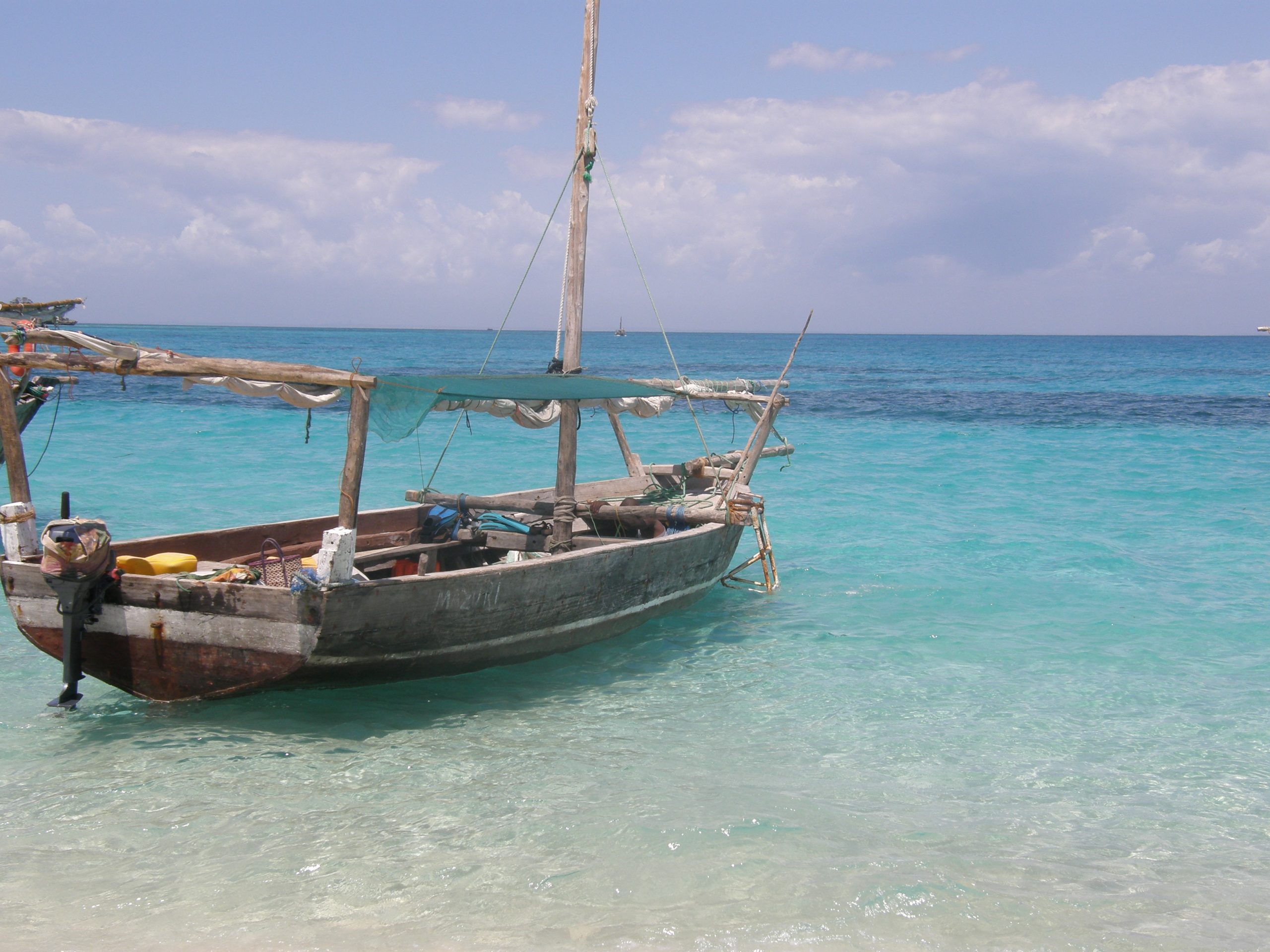
Where Fumba is
Fumba is a peninsula on the south-west corner of Unguja, a short drive south of Stone Town and the airport, reaching down into Menai Bay. It is not really a beach destination in the way the east coast and the northern tip are. It is a departure point, and the thing it departs for is the best sheltered water on the island.
Menai Bay
Menai Bay is a large protected bay in the south-west of Unguja, scattered with islands, sandbanks and mangrove creeks, and carrying considerably less boat traffic than the north of the island. Together with Chole Bay on Mafia it is one of the two standout sheltered bays on the Tanzanian coast.
Because it faces the channel rather than the open ocean, the water here behaves differently from the east coast. The huge reef-flat drainage that governs a day at Paje or Jambiani is not the defining feature; the tide still decides when boats leave and when a sandbank appears, but the sheltered west is calmer and less dramatic than the exposed east.
The standard use of Fumba is a full day on the water: a dhow out into the bay, snorkelling stops on the reef, a sandbank at the right state of the tide, and lunch. It is covered in the sandbank trips and island hopping guide and the dhow sailing guide. The bay’s mangrove creeks and its islands also make it among the best sea kayaking water in the country, and the creeks themselves are covered in the mangrove tours guide.
The dolphins, and the thing to know about them
Menai Bay holds two resident dolphin species year round: the Indo-Pacific bottlenose dolphin, Tursiops aduncus, and the shyer and considerably rarer Indian Ocean humpback dolphin, Sousa plumbea. A study published in 2016 estimated the bay’s populations at about 136 bottlenose, with a confidence interval of 124 to 172, and about 63 humpback dolphins, with an interval of 57 to 95.
Those are small numbers, and they matter. These are not passing pods drawn from an ocean-wide population but a small, resident, identifiable community living in one defined bay, and the same individuals are encountered repeatedly.
Most of the organised dolphin boat trade on this bay runs from Kizimkazi at the southern tip rather than from Fumba, and the research on how that industry affects these animals is set out in full in the dolphin watching guide. It is worth reading before getting on any boat that offers to find dolphins, including one leaving from here.
The alternative that this page would put first: dolphins are encountered regularly and incidentally from boats that are not looking for them — a snorkelling trip, a dhow sail, a fishing morning. Watching animals that are not being pursued is a different and generally better experience.
The beach and the peninsula
Fumba’s own shore is sheltered, quiet and faces west across the channel, which means sunsets over water — something the east coast cannot offer. It is a working part of the island with fishing villages on it rather than a resort strip, and development here is recent and concentrated rather than general.
Its proximity to the airport and to Stone Town makes it a practical first or last night on the island for anyone who does not want to spend a transfer day getting to the far coast. The guide to arriving on Zanzibar and crossing it covers the ferry, the flights and how long an island transfer really takes.
One piece of history
Siti binti Saad, the foundational figure in Zanzibari taarab and the first East African singer to record commercially, was born Mtumwa binti Saadi at Fumba, in about 1880, into slavery. Her father was Nyamwezi from Tabora and her mother Zigua from Tanga, both born in Zanzibar to enslaved families working the clove plantations. She moved to Zanzibar Town in 1911 and settled in Ng’ambo. The music she shaped is covered in the traditional music and dance guide, and the world she was born into in the slave trade history guide.
Practical notes
Boat days here run on the tide, not the clock, and a sandbank is only a sandbank at certain states of it. An operator offering a fixed departure regardless of the tide is offering you something other than what was advertised.
Reef shoes for any wading. Sun cover on an open boat: there is no shade on a dhow and the glare off the bay is considerable.
Zanzibar is administered separately from the mainland for entry purposes and has a compulsory travel insurance requirement of its own, which catches out people arriving at the airport a few kilometres up the road from here. Both are set out in the guide to what Tanzania and Zanzibar require on arrival.
On a sandbank, walking through a seabird roost or nesting area does real damage for no gain. Several of these bars are roosting sites.
Rainfall is bimodal here as across the islands: long rains, masika, about March to May; short rains, vuli, about October to December. The lighter kaskazi wind runs roughly December to March and gives the calmest boat days; the stronger kusi runs roughly June to September. The seasonal guide to the islands covers how those winds and the two rainy seasons shape a week here.
Common questions about Fumba
What is Fumba for?
Boats. It is the departure point for Menai Bay — sandbanks, islands, snorkelling, mangrove creeks and sheltered paddling — and a practical base close to Stone Town and the airport. It is not a beach strip in the east coast or northern tip sense.
Will I see dolphins from Fumba?
Menai Bay holds two resident dolphin species year round, so they are in the water. Most organised dolphin trips run from Kizimkazi at the southern tip, and how that industry affects these small resident populations is a subject worth reading about before booking one. Dolphins are also encountered incidentally from boats that are not chasing them, which is the better encounter.
Is the swimming good at Fumba?
It is sheltered, calm channel water rather than a big open beach. The reef-flat drainage that dominates the east coast is not the issue here, but the appeal is the bay and the boats rather than the shore.
Is Fumba a good first or last night on Zanzibar?
It works well for that, being close to both the airport and Stone Town and avoiding a long transfer at either end of a trip.
Do sandbank trips always run?
They run on the tide. A sandbank exists as a sandbank only at certain states of it, and the timing shifts about fifty minutes later each day. Departure times move accordingly, and any operator offering a fixed slot regardless of the tide should be questioned.