
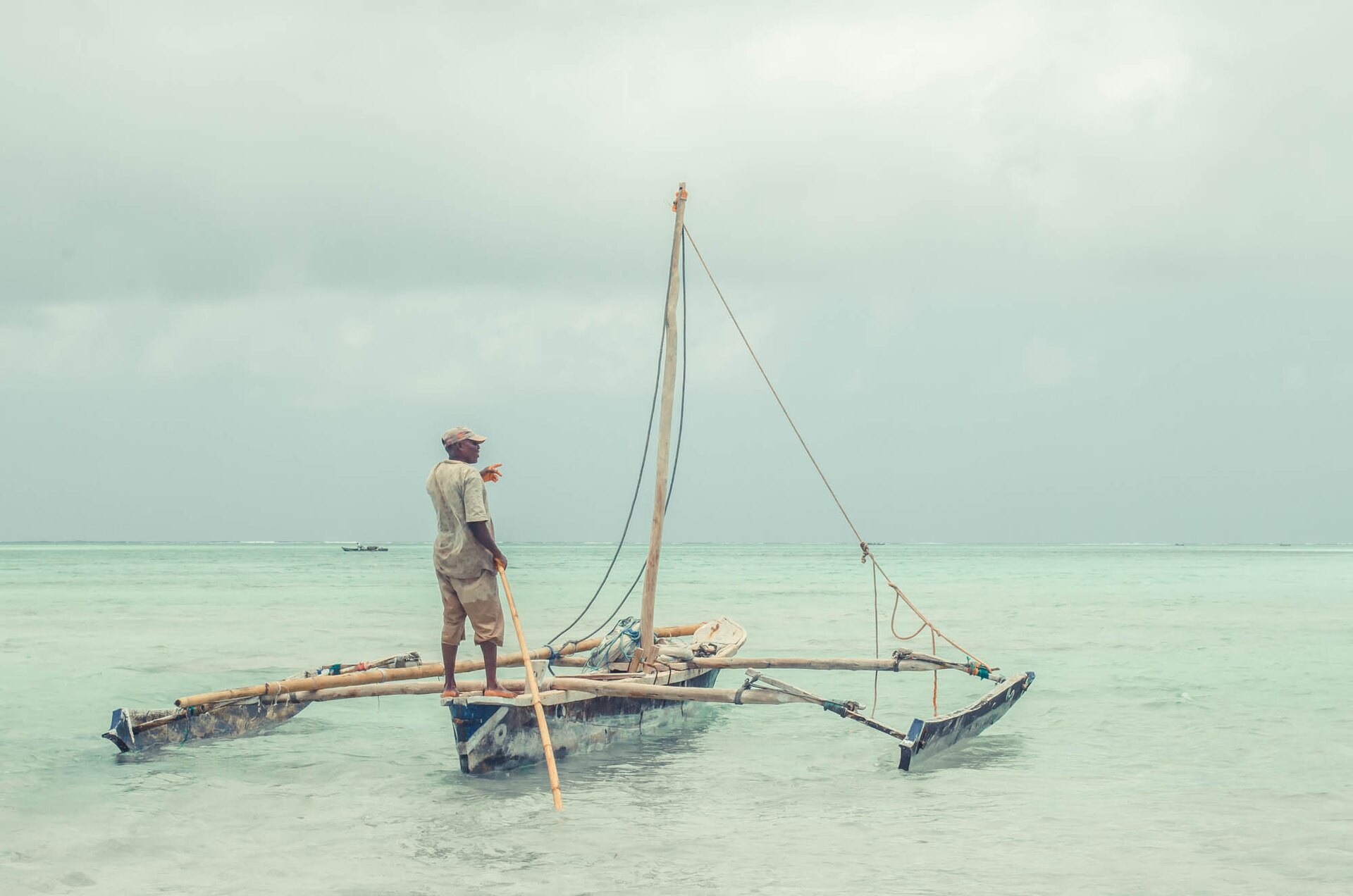
Where Makunduchi is
Makunduchi is a town on the southern coast of Unguja, in the Kusini District of Unguja South Region, and it is the district capital. It is two settlements about two kilometres apart rather than one: Old Makunduchi on the east, a fishing village on the ocean shore, and New Makunduchi, with shops, modern buildings and blocks of flats built in the 1970s with East German assistance.
It is not a resort town and has very little tourism infrastructure. What makes it worth a page is that it is one of the oldest continuously inhabited places on the island and the home of the archipelago’s best-known festival.
The Wahadimu
Makunduchi’s residents are Wahadimu, among the island’s original inhabitants, and the settlement on the south-eastern shore is their old one. The name is said locally to come from Kunduchi, a place on the mainland opposite the southern end of the island that they hold they came from.
A few details survive from the colonial record that give a sense of the place. A British native census in 1924 counted 3,911 people living there in 1,579 cottages. Makunduchi was the only place in the Zanzibar Sultanate where camels were still used for transport into the 1920s. And the women of Makunduchi and Jambiani make coloured mats from the fronds of the wild date palm with a fringe, known as ndevu — “beard” — which is not made on the mats of other villages.
The town is also the birthplace of the novelist Muhammed Said Abdulla, of Tanzania’s president Samia Suluhu Hassan, and of Zanzibar’s fourth president Idris Abdul Wakil, who is buried there.
Mwaka Kogwa
Makunduchi is best known for Mwaka Kogwa, the new year festival of Shirazi and Swahili heritage held here each year.
It marks the new year on the old solar calendar the islands inherited from Persia rather than on the Gregorian or the Islamic one, which is why the date does not move with Ramadan and also why sources disagree slightly about the month: it is usually given as July, and some accounts give July or August. If you are planning a trip around it, check the date for your year rather than relying on a general description.
The festival’s best-known elements are a ritual battle, fought with banana stems, and the burning of a hut built of dried coconut leaves, after which predictions for the year are read from the direction the smoke takes. Two men are notionally inside the hut when it is lit and slip out the back of it. Elders dance around the grave of a long-departed patriarch whose name has been lost.
Alongside those, the wider new year customs observed by the Wahadimu, Watumbatu and Wapemba include putting out fires, scattering ashes at crossroads, dusting floury ash against the outsides of houses, ceremonial bathing in the sea and feasting. The original purpose of all of this was to invoke the protection of spirits for the year ahead, as one element in a larger set of agricultural ceremonies; Mwaka Kogwa is the part that survives, and in recent years it has grown in significance rather than faded.
Tours are organised to the festival, and it is a genuine community event rather than a performance laid on for visitors — which is an argument for attending with some care about how you do it. The traditional music and dance guide covers the difference between a ceremony and a show, and the village tours guide covers what is and is not verifiable about community programmes on this island.
The coast here
Makunduchi sits on the southern shore, round from the long east-coast lagoons. This is a working fishing coast with a rocky, tidal shoreline rather than a resort strip; the first international tourism hotel here was built on the beach in 2006, which gives a sense of how recent and how limited tourism development has been.
Zanzibar’s tidal range — close to a metre at neaps, over three metres at springs — governs the shore as it does everywhere on the island, and swimming is easier at high water. Anyone whose priority is a swimming beach at any hour should look at the northern tip at Nungwi and Kendwa; the beach holidays guide covers the coasts in full.
Kizimkazi, at the southern tip and the centre of the island’s dolphin boat trade, is a short distance west along the same coast, and its complications are set out on its own page.
Practical notes
Makunduchi is a conservative town with little tourism and correspondingly little habituation to visitors. Dress covered, ask before photographing people, and expect to be a curiosity rather than a customer.
At Mwaka Kogwa specifically: it is somebody’s new year, not a show. Ask before filming, stay out of the way of the ritual battle, and take a local lead on where visitors are welcome to stand.
Accommodation is limited. Most people visit from elsewhere on the island rather than staying.
Rainfall is bimodal: long rains, masika, about March to May; short rains, vuli, about October to December. How the islands’ two wet seasons sit against the mainland’s is set out in Tanzania’s month-by-month seasonal guide.
Anyone timing a trip around Mwaka Kogwa should also allow for the island’s separate arrival formalities: Zanzibar runs its own immigration administration and requires compulsory inbound travel insurance bought through the government portal. The guide to Zanzibar’s entry rules covers both.
Common questions about Makunduchi
When is Mwaka Kogwa?
It is held annually and is most often given as July, though some accounts say July or August. The date follows the old Persian solar calendar the islands inherited rather than the Gregorian or Islamic one, so check the date for your specific year rather than relying on a month.
What actually happens at Mwaka Kogwa?
A ritual battle fought with banana stems, and the burning of a hut of dried coconut leaves, after which predictions for the coming year are read from the direction the smoke takes. Around those sit older new year customs: extinguishing fires, scattering ash at crossroads, ceremonial bathing in the sea and feasting.
Can visitors attend?
Tours are organised to it and visitors do attend. It is a community event rather than a performance, so it is worth going with some care: ask before filming, keep clear of the ritual battle, and take a local lead on where to stand.
Is Makunduchi a beach destination?
Not in the resort sense. It is a working fishing town on the southern coast with very little tourism infrastructure — the first international hotel on the beach here was built in 2006. Most visitors come for the festival or pass through on the way to the southern tip.
What is the town’s history?
It is one of the old settlements of the Wahadimu, among Unguja’s original inhabitants. A British census in 1924 counted 3,911 people in 1,579 cottages, and it was the last place in the Zanzibar Sultanate where camels were used for transport. It is also the birthplace of Tanzania’s president Samia Suluhu Hassan and of the novelist Muhammed Said Abdulla.