
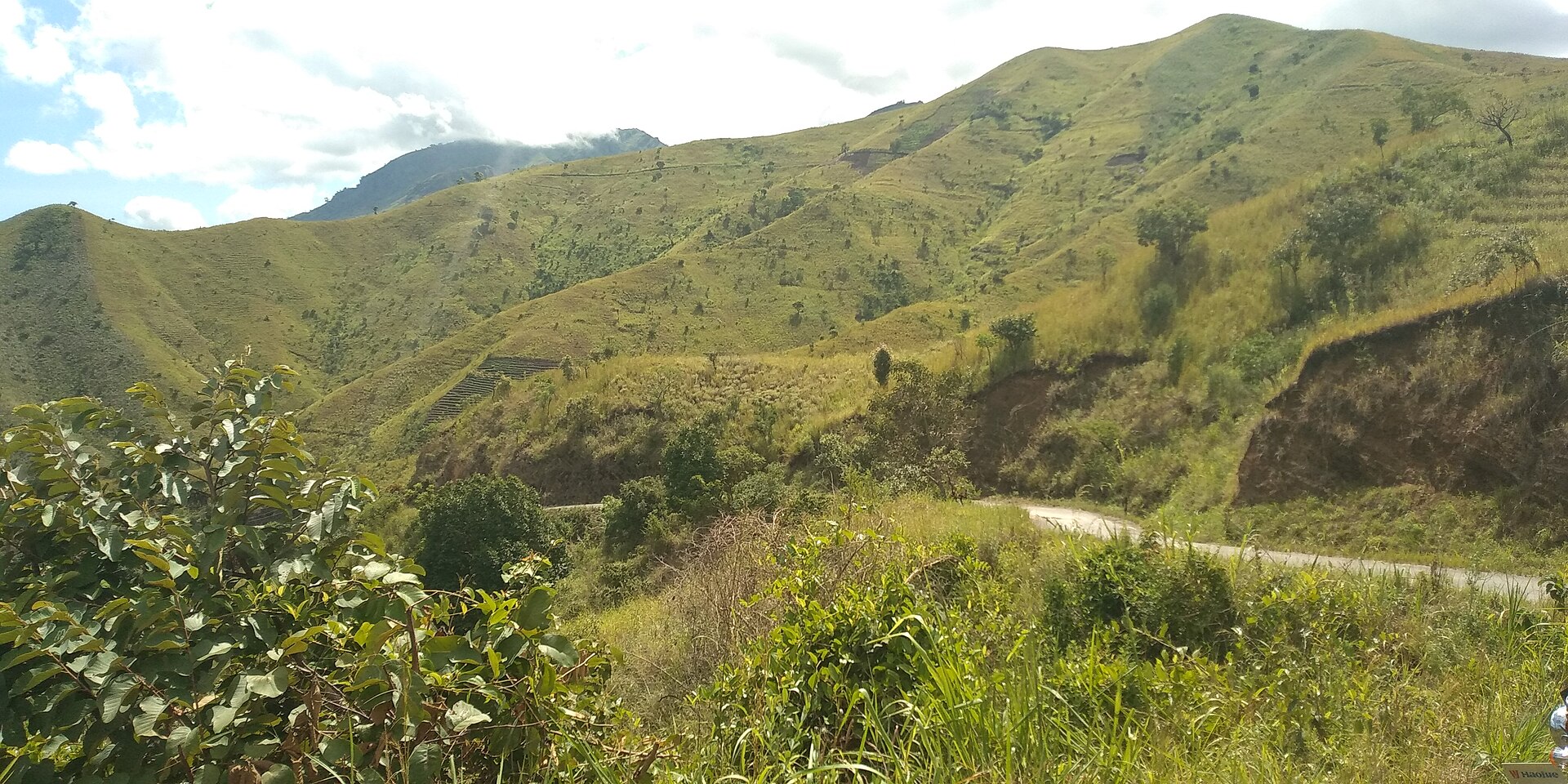
The mountains behind Morogoro
The Uluguru Mountains rise directly behind Morogoro town, close enough that the massif fills the southern sky from the main street. They are an Eastern Arc block, part of the chain of ancient crystalline massifs that runs from the Pare and Usambara ranges in the north-east, through the Nguru, Uluguru and Rubeho, to the Udzungwa in the south.
Those ranges are forest islands, isolated from each other for millions of years. The isolation has produced species that occur on one massif and nowhere else on earth, and the Ulugurus carry as deep a set of endemics as the Usambaras with a fraction of the visitors. That combination — internationally significant biodiversity, an hour from a regional capital, almost nobody there — is the whole argument for coming.
What the mountains hold
Tanzania Forest Services, which manages the protected forest core, headlines the range with the Uluguru bushshrike, known locally as kurumbizi, a bird confined to these mountains. It also names the chameleons here, which carry one to three horns depending on species, and Panicum lukwangulensis, a grass found only on the Lukwangule plateau at the top of the range.
The forest itself changes with altitude, from cultivated lower slopes through submontane forest to the high grassland of Lukwangule. Wild berries, cinnamon and other spices grow in the forest margins, and TFS lists berry picking among the things visitors do. For anyone whose interest is the forest rather than large mammals, this is a rewarding forest walk and a serious birding destination; it is not a wildlife-viewing destination in the safari sense and does not pretend to be.
The Luguru, and the terraces
The mountains are farmed as well as forested. The Luguru are the indigenous people of the range and the reason Morogoro carries its name, and the terraced cultivation on the slopes is one of the sights of the place: hand-built terracing running up gradients that look unworkable, growing vegetables for the town below.
TFS lists cultural tourism among the reserve’s activities and names the headquarters of the Waluguru traditional leader, Chief King’alu, among the range’s attractions. Hululu waterfalls and the ritual sites around them are places of worship and meditation as well as scenery, and the reserve’s own material treats them that way. Visitors should too. Village visits in the range are arranged locally rather than booked from a distance.
Walking the range
Walking is what people come to the Ulugurus for. The obvious names are the Lukwangule plateau at the high end of the range, Kimhandu, Lupanga and Bondwa — Bondwa being the peak most often walked as a day out from Morogoro, with Morning Side on the way up.
Published elevations for these peaks vary, and the one local-government source that lists them all also contains demonstrable errors elsewhere on the same page, so this guide names the peaks without giving heights rather than repeating figures it cannot stand behind. What matters for planning is the shape of the day rather than the number: Morning Side and the lower slopes give a straightforward outing from town, and the higher peaks and the plateau need longer and, in most cases, a night out.
Morning Side itself is a German-built rest house dating from the 1900s, now a ruin and a viewpoint, and it is the usual turnaround for a half-day walk. Beyond it the ground steepens quickly.
The short-walk-versus-trek distinction matters here. A walk up to Morning Side and back is day hiking. Reaching Lukwangule involves sleeping somewhere you had to walk to, which makes it mountain trekking, with everything that implies for guides, food and gear.
Guides and arrangements
Uluguru walking is organised locally, through tourist offices and village guides in Morogoro, and generally cannot be booked far ahead. Tanzania Forest Services describes guiding for its nature forest reserves as arranged rather than as a published blanket requirement, which is a different position from the national parks, where a guide is compulsory by regulation. In practice nobody should walk the higher ground here without one: the paths are farm paths and forest paths rather than waymarked trails, and they fork constantly.
Getting there
Morogoro is the base for everything. TFS describes four road routes into the reserve from the town: Morogoro to Kibaoni, Bunduki and Vinile; Morogoro to Morningside and Bondwa; Morogoro to Kinole; and Morogoro to Kibaoni, Nyandira and Tchenzema for Lukwangule. Which one you use depends entirely on which part of the range you are heading for, and the choice is best made with a local guide rather than a map.
Morogoro itself sits 195 kilometres from Dar es Salaam on the A7 and is served by the standard-gauge railway, which makes the Ulugurus one of the more easily reached mountain ranges in the country — see the guide to rail and road travel in Tanzania for what the new railway does and does not cover.
When to go
Northern Morogoro Region sits on the boundary between Tanzania’s two rainfall regimes. The Tanzania Meteorological Authority treats the north-eastern highlands and the northern coast as bimodal, with a short season from October to December and long rains from March to May, and the rest of the country — including the southern circuit — as unimodal, with a single season from November into April or May. The Ulugurus fall close enough to that line that local rainfall does not follow either pattern cleanly, and the massif makes its own weather regardless.
The practical version: the drier months from roughly June to September give the most reliable footing and the best chance of a view from the top, and are the usual walking season. The wet months are better for amphibians, chameleons, fungi and flowering plants, and much worse for steep, wet, red soil. Cloud sits on the high ground a great deal of the year whatever the season. The guide to Tanzania’s seasons covers the boundary between the country’s two rainfall regimes, which runs through this region.
Where it fits in a trip
The Ulugurus are a two-to-four-day addition to a southern circuit rather than a destination people fly in for. They pair naturally with Morogoro as a base and with Mikumi an hour up the road, which gives a savanna park and an Eastern Arc massif in the same few days.
The Uluguru Nature Forest Reserve is the protected core of the range and has its own guide. Travellers whose interest is Eastern Arc forest specifically will want to continue to the Udzungwa Mountains, which is the same biogeographic story in a national park with proper trails.
Common questions
How high are the Uluguru peaks?
This guide gives no figures. Published heights for Lukwangule, Kimhandu, Lupanga and Bondwa vary between sources, and the one accessible local-government listing that covers all four contains obvious errors elsewhere on the same page. The peaks are named here; the numbers are not.
Can you walk the Ulugurus in a day?
Parts of them. Morning Side and the lower slopes above Morogoro make a straightforward day walk. Lukwangule and the higher peaks need at least one night out and a guide who knows the paths.
Do you need a guide?
Tanzania Forest Services treats guiding in its nature forest reserves as arranged rather than as a stated compulsory rule, unlike the national parks. In practice a local guide is necessary on the higher ground, where the paths are unmarked and fork repeatedly.
What is the main thing to look for?
The Uluguru bushshrike, which TFS uses as the reserve’s emblem and which occurs only in these mountains, plus the horned chameleons and the forest itself. Large mammals are not the point here.
Can you book Uluguru walking in advance?
Arrangements are made locally in Morogoro, through tourist offices and village guides, and are generally not bookable far ahead. Build flexibility into the plan.