
Where Kiwengwa is
Kiwengwa is a long beach on the east coast of Unguja, between Pwani Mchangani to the north and Pongwe to the south. It carries the heaviest concentration of large resorts on the island, and that is the single most useful thing to know about it.
Where Matemwe and Jambiani are villages with accommodation threaded through them, Kiwengwa is closer to a resort coast: bigger properties, more of them, more self-contained. If an all-inclusive week with a lot of sand in front of it is the plan, this is where the island supplies that. If village life and small places are the point, it is not.
The tide
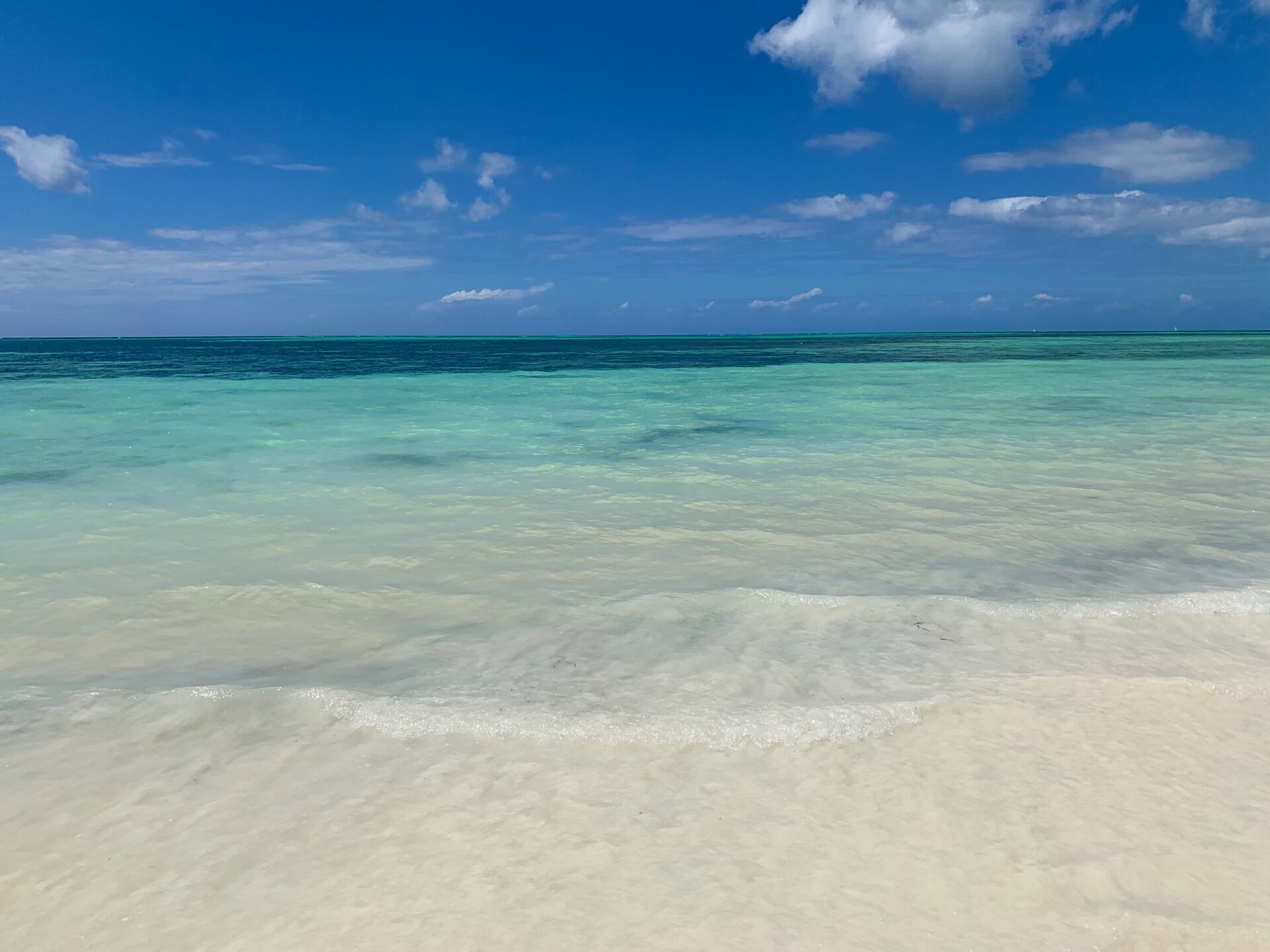
Kiwengwa is an east-coast beach and works the way the whole east coast works. A wide reef flat sits between the sand and the reef edge, and Zanzibar’s tidal range — close to a metre at neaps, over three metres at springs — empties it twice a day.
At high water it is a shallow, warm, turquoise lagoon and swimming is easy. At low water the sea withdraws a long way and what is left is exposed sand, seagrass and rock. Swimming here is a high-water activity, and because high water arrives roughly fifty minutes later each day, the good hour moves across a stay.
This catches out more people at Kiwengwa than almost anywhere else on the island, precisely because the properties here are the ones most often sold on a beach photograph. It is not a defect and it is not hidden — it is how this coast is built — but it decides what your afternoons look like. If swimming at any time of day matters more than the resort does, the northern tip at Nungwi and Kendwa is where that happens. The beach holidays guide covers the mechanics across the coast.
The caves, and what this site will not tell you about them
A set of limestone caves inland from Kiwengwa is widely sold as an excursion and is frequently described as being in ritual use.
No authoritative description of them could be found. What circulates comes from excursion listings rather than from any heritage body, research or institutional source, and excursion listings are not evidence that a site exists as described. This site’s position is that empty beats plausible, so the caves are named here and not written up. If you are offered the trip, ask who is guiding it, what their relationship with the site is, and — if ritual use is part of the pitch — whether the community concerned has any say in visitors being brought there.
Caves elsewhere on the island and the coast that do have authoritative descriptions behind them are covered in the cave exploration guide.
What runs from here
Boat trips on this coast run on the tide rather than the clock. Snorkelling trips run out to the reef and north towards the Mnemba water, which is the island’s best-known and busiest snorkelling ground — and, as elsewhere, worth repeating: Mnemba is a private island, non-guests may not land, and a Mnemba trip is a trip to the water around it. Diving, sea kayaking at high water and sandbank trips all run from this coast.
Seaweed is farmed on the flats here as it is along the rest of the east coast, and visits are governed entirely by the tide; the seaweed farm tours guide sets out the industry and how to visit it honestly.
Kiwengwa has wind but very little kite infrastructure compared with Paje further south, which is covered in the kitesurfing guide.
Practical notes
Reef shoes for the flat. Urchins sit invisibly in rubble and stonefish sit camouflaged in the shallows.
Beachwear on the hotel beach, shoulders and knees covered in the village and on the road. The resort coast makes this easier to forget and no less true.
The east coast faces the wrong way for sunsets over water.
Getting to this coast, and to the island, is covered in the guide to reaching Zanzibar and crossing it.
Rainfall is bimodal: long rains, masika, about March to May, when a good number of operations close for part of the season; short rains, vuli, about October to December — October, not the November of the tourism shorthand. The seasonal guide to Zanzibar and the coast sets out the whole calendar.
Common questions about Kiwengwa
Can I swim at Kiwengwa all day?
No. It is a wide reef flat and it drains. Swimming is a high-water activity and the swimmable hour moves about fifty minutes later each day. Hotel pools cover the rest; if swimming in the sea whenever you like is the point of the trip, the northern tip of the island is the answer.
What is Kiwengwa like compared with the rest of the east coast?
More developed and more resort-led, with the island’s heaviest concentration of large properties. Matemwe to the north and Bwejuu, Paje and Jambiani to the south are all more village than resort.
Are the Kiwengwa caves worth visiting?
This site cannot say, and says so rather than guessing. No authoritative description of them could be found — what circulates comes from excursion listings rather than from any heritage or research source. If you are offered the trip, ask who is guiding it and what their relationship with the site is.
Can I kitesurf at Kiwengwa?
There is wind, but almost none of the schools, rental or rescue cover that make the Paje and Jambiani stretch work. Treat it as independent-rider water rather than a place to learn or hire.