
Where Mafia is, and what it is not
Mafia lies off the east coast of Tanzania opposite the delta of the Rufiji River, about twenty kilometres of water — the Mafia Channel — separating the two. It is the main island of a small archipelago, with an area of about 394 square kilometres and a population of over sixty-five thousand. Figures for “Mafia” vary because two different things are being measured: the island itself is the 394 figure, while the district council’s 407 square kilometres of land covers all eight islands in the group.
Two things it is not. It is not part of Zanzibar: Mafia sits in the Pwani Region of mainland Tanzania and has been administratively separate from the archipelago since 1890. And it is not a beach resort island. The economy runs on fishing, subsistence farming and the market at Kilindoni, the main town on the west coast; visitors are a small part of it. People come here for the water, not the sand, and anyone arriving expecting the Unguja beach product will be disappointed by a place that was never trying to supply it.
Mafia District, founded in 1959, is one of nine districts in Pwani Region and takes in eight islands: Mafia itself, Jibondo, Juani, Chole, Bwejuu, Nyororo, Mbarakuni and Shungimbili. Its council puts the district at 972 square kilometres in total, of which 407 are land and 565 are Indian Ocean, and places it 195 kilometres south of Dar es Salaam. Nyororo, Mbarakuni and Shungimbili carry only seasonal fishing camps rather than permanent settlement.
One name to watch. There is a Bwejuu island in the Mafia group and a Bwejuu beach on the east coast of Unguja, several hundred kilometres away. They are unrelated places that share a name, and itineraries occasionally confuse them.
Like the rest of this coast, Mafia sits beside Tanzania’s safari country rather than inside it.
The marine park
Most of the island’s water lies inside Mafia Island Marine Park, gazetted in April 1995 as mainland Tanzania’s first marine park, under the Marine Parks and Reserves Act passed in November 1994. It covers roughly 820 square kilometres of coral reef, mangrove, seagrass, soft bottom, raised Pleistocene reef islands, cays and coastal forest, most of it below the high water mark, which makes it one of the larger marine protected areas in the Indian Ocean.
A note on that figure, because it matters. The widely republished number is 822 square kilometres; the study this page draws on gives 821. Because two figures circulate and neither is obviously authoritative over the other, this site says roughly 820 rather than pretending to a precision the sources do not support.
The park is run by Tanzania’s Marine Parks and Reserves Unit rather than by the national parks authority, which is a practical distinction as well as an administrative one: fees are payable to that unit, and its rules — including no-take zones where fishing is prohibited outright — are what govern activity on the water. The unit is authoritative on which marine parks exist. Its per-park pages, however, carry no descriptive content, so it cannot be used as a source for areas, dates or species.
That split has a practical edge: the marine park charges its own entry fee, payable to the Marine Parks and Reserves Unit rather than to TANAPA or TAWA, under a separate regime from the national park tariff. The Unit publishes no figure on its per-park pages, so none is quoted here rather than a plausible one — ask for it as a named line in any quote. The guide to which Tanzanian authority charges what sets out how the regimes differ.
The diving and snorkelling
Chole Bay is the centre of it: a large, sheltered, shallow bay that is the island’s protected deep-water anchorage and original harbour, studded with islets, sandbanks and beaches, and protected from the east by reefs and Juani Island. The reef sits around its edges and the passes that drain it run current on the tide. Kinasi Pass is the bay’s best-known dive.
Because the bay is sheltered, Mafia keeps working through weather that closes exposed sites elsewhere on this coast, which is the single most useful practical fact about diving here. Outside the bay, the ocean-facing reefs are more exposed and much more seasonal.
Reef condition here is better than on unprotected coast and has a measured record behind that claim: in the 2016 bleaching event, forty to sixty per cent of Mafia’s hard coral bleached, against around eighty per cent at Chumbe, where more than seventy per cent later recovered. The detail sits in the diving guide and the snorkelling guide.
Whale sharks
Mafia is the only place in Tanzania where whale sharks aggregate predictably enough to plan a trip around. They are recorded elsewhere on this coast, off Unguja and Pemba among other places, but as chance encounters.
The reason they are here is the Rufiji. The delta pushes nutrient-rich water into the channel beside the island, that drives plankton production, and the plankton is what the sharks come for. Sea Sense, the Tanzanian marine conservation organisation working on the aggregation, describes the feeding grounds as lying roughly ten to fifteen kilometres offshore of the central Tanzanian coast, and puts the season at roughly October to April.
Two things follow that catch people out. The water is frequently green rather than blue, because the plankton that brings the sharks is the same thing that reduces visibility — photographs showing a whale shark in clear blue water were mostly not taken here. And the tail of that season overlaps with the wet end of the long rains, when a number of Mafia lodges and dive operations close, so late-season plans need checking rather than assuming.
Research by the Marine Megafauna Foundation, working at Mafia since 2012 with WWF Tanzania, the Tanzania Fisheries Research Institute and King Abdullah University of Science and Technology, has found high residency and strong site fidelity in this population. That is good news for anyone hoping to see one. It is also why the researchers describe the population as uniquely susceptible to local human pressures: the same individuals return to the same water, so boat strike, entanglement and crowding land on a known group rather than being diluted across an ocean.
A code of conduct applies, produced by Sea Sense with the Marine Megafauna Foundation, held at island hotels and carried on the boats. Encounters are on snorkel — scuba is excluded — and the briefing you are given on the boat is the operative version. The whale shark guide sets out the shape of the code and is honest about which parts of it could and could not be verified against the primary document.
The islands off Mafia
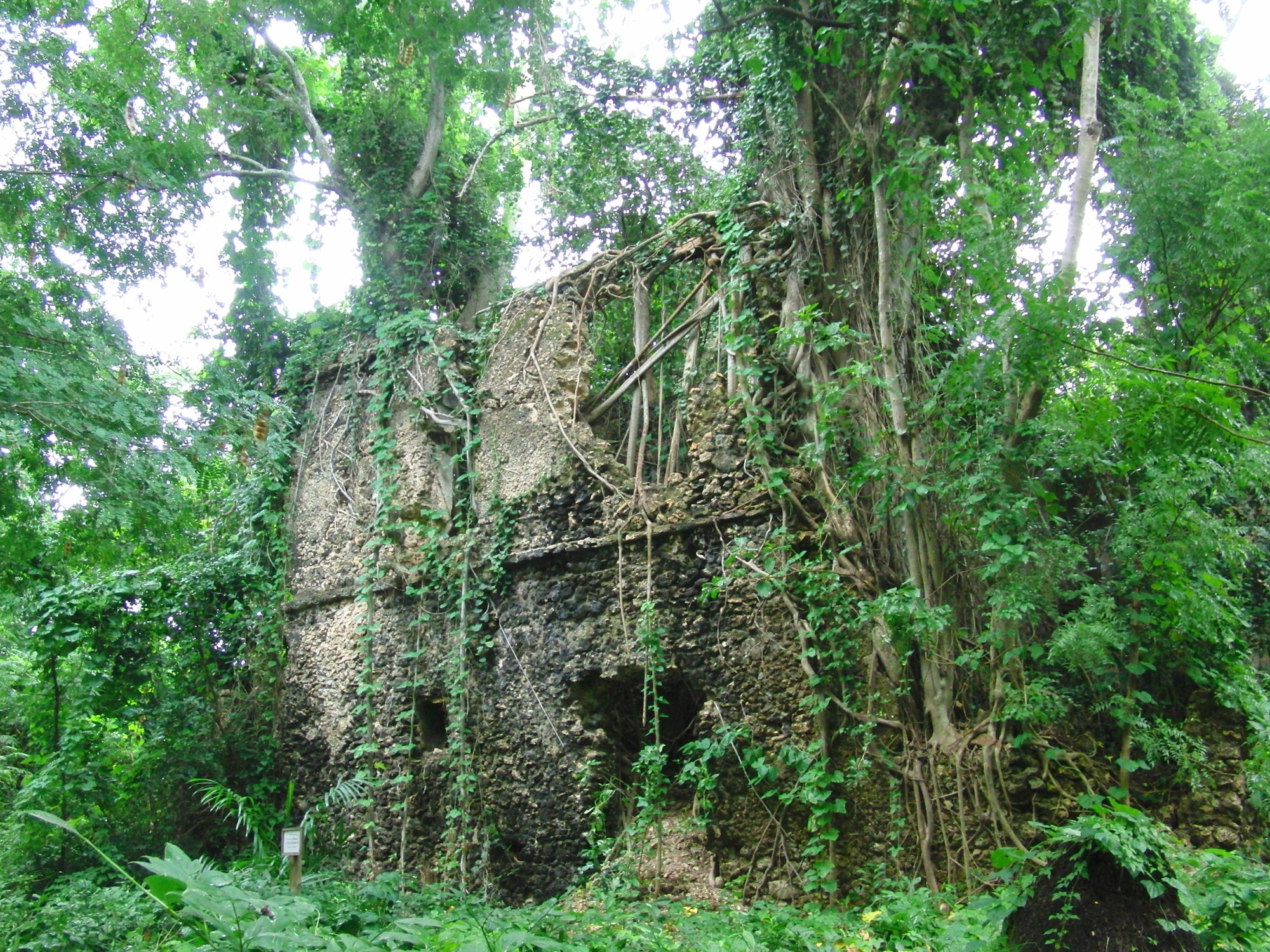
Chole Island, in the bay, carries the ruins of a nineteenth-century settlement standing under enormous fig trees, and is easily reached. Juani, further out, has the Kua ruins and is the most important green turtle nesting beach in Tanzania — Juani and Kigamboni south of Dar es Salaam are the country’s two largest green turtle rookeries — which brings real access restrictions in season. Peak green turtle nesting is April to June, with April and May the peak months, and hatching follows roughly two months later, so June to September is when hatchlings emerge. Community conservation officers run daily foot patrols and relocate nests at risk. The sea turtle guide covers how access works.
Island hopping and sandbank trips are a standard day here and are covered in the sandbank and island hopping guide. Dhow sailing runs from the bay, boats are still built on the island on a small scale, and the mangrove systems around the archipelago and in the neighbouring Rufiji delta are covered in the mangrove tours guide. Sea kayaking in Chole Bay is among the best sheltered paddling in the country.
The northernmost point of Mafia is a coral cliff, Ras Mkumbi, rising about four and a half metres above the sea with a lighthouse on it, beyond which the land climbs gradually to around twenty-four metres. That is the island’s high ground, which gives a fair sense of the topography.
Other water
The grounds off Mafia fish, and see far fewer boats than the Pemba Channel does; the deep-sea fishing guide covers what is caught and why published month windows for billfish on this coast should be treated with suspicion. Humpback whales are seen off the island, with Chole Bay and the water off the northern point the places most often named, but every source for the timing is an operator page — the whale watching guide explains why no hard window is given. Bottlenose dolphins occur without an organised industry attached, which is covered in the dolphin watching guide. Mafia’s dark skies and sea horizon make it one of the better places in Tanzania for stargazing.
The working island
It is worth knowing what the island actually does, because it is not tourism and because the visitor economy sits inside it rather than over the top of it.
Fishing is the major sector. Mafia District Council records 5,133 fishermen and 700 buyers and processors, with more than twelve thousand tonnes of fish and fresh sprats produced in a year and more than six thousand tonnes once processed. Fish goes to Dar es Salaam and abroad; dried sprats go inland and to Congo, Rwanda, Zambia and Burundi; octopus goes mostly to Asia and prawns mostly to Europe.
Seaweed is the other. The council records more than 1,500 seaweed farmers working plots at Jibondo, Juani, Chole, Utende, Kanga and Banja, producing over six thousand tonnes fresh and over six hundred tonnes dried each year, with more than ninety per cent of it bought by a single processor based on Jibondo and exported via Kilwa to Europe and Asia. The industry, and what the work costs the people who do it, is covered in the seaweed farm tours guide.
The council also runs a Mafia Island Festival, held in 2023 and 2024, built around the island’s tourism, cultural heritage and blue-economy potential.
Its own list of the island’s attractions is a useful corrective to the whale-shark-only version: the sharks, the ruins at Kua, Chole and Masunda, sandbanks, beaches, the Ras Mkumbi lighthouse, the Blue Lagoon, Mwatiko Lagoon, Mlola forest, hippos, coral reefs, sea turtles, whales, more than four hundred fish species, and the island’s own food, seaweed and coconut culture. The council additionally lists submerged settlements, including Rhapta — a port named in Greco-Roman sources whose location remains unresolved in scholarship, so treat any claim that it has been found off Mafia as a claim rather than a finding.
Getting here and when to come
Mafia is reached by a short flight, most commonly from Dar es Salaam, to the airstrip near Kilindoni. The island is small, quiet and short on options, and that shapes a trip here as much as the marine life does. Scenic flights over the delta and the archipelago are a genuine draw on the way in and out.
Mafia sits on Tanzania’s bimodal northern rainfall calendar rather than the southern one, which is the mistake most often made about it. The Tanzania Meteorological Authority puts the long rains, masika, at March to May and the short rains, vuli, at October to December. April and May are the wet end of masika, when a number of the island’s lodges and dive operations close.
The kaskazi, the lighter north-easterly, runs roughly December to March and gives the calmest, clearest conditions. The kusi, the south-easterly, runs roughly June to September and makes the ocean-facing reefs rough — though Chole Bay keeps working through it, which is Mafia’s structural advantage over the rest of the coast.
Mafia gets wind but has almost no kite schools, rental or rescue cover, so it is not an alternative to the east coast of Unguja for wind sports. Flights are the practical way on and off the island, which the guide to Tanzania’s flights, ferries and roads covers alongside the ferries and road routes that do not serve it.
Practical notes
Marine park rules apply across most of the island’s water, and a boat should be able to tell you which zone you are in and what is permitted there. No-take zones prohibit fishing outright.
Whale shark encounters and dive trips are separate activities, usually on separate boats and often on separate days. A trip built to do both needs the days planned rather than hoped.
Reef shoes for wading, as everywhere on this coast. Schistosomiasis is a freshwater infection and does not apply to the sea.
Dress covered away from a hotel beach. Mafia is a conservative, largely Muslim island with very little tourism infrastructure and correspondingly little habituation to visitors.
Common questions about Mafia Island
Is Mafia part of Zanzibar?
No. Mafia is in the Pwani Region of mainland Tanzania and has been administratively separate from the Zanzibar archipelago since 1890. Its district council places it 195 kilometres south of Dar es Salaam, which is where it is reached from rather than from Unguja.
How big is Mafia Island Marine Park?
Roughly 820 square kilometres. The widely republished figure is 822 and the study this site relies on gives 821; because two numbers circulate, the honest answer is the rounded one. It was gazetted in April 1995 under the Marine Parks and Reserves Act passed in November 1994.
When can I see whale sharks at Mafia?
Sea Sense puts the season at roughly October to April, with the sharks feeding ten to fifteen kilometres offshore. The late part of that window overlaps with the wet end of the long rains, when some lodges and dive operations close, so late-season dates need confirming rather than assuming.
Can I scuba dive with the whale sharks?
Not at Mafia. The code of conduct followed there is snorkel only. Bubbles and depth change how the animal behaves, and the activity is built around interfering with its feeding as little as possible. It is a separate trip from a dive, usually on a separate boat.
Why is the water green rather than blue?
Because of the plankton the sharks are feeding on. The Rufiji delta’s nutrient-rich outflow is what draws them and it also reduces visibility. Clear blue whale shark photographs are usually from somewhere else.
Is Mafia good for a beach holiday?
Not in the resort sense. There is very little beach infrastructure and the island’s appeal is the marine park, the sheltered bay and the quiet. People who come for the water are well served; people who come for a beach strip are not.
When is the diving best?
Broadly the lighter kaskazi months, around December to March, for the exposed sites. The kusi from roughly June to September makes them rough, but Chole Bay stays sheltered and keeps diving through weather that shuts sites elsewhere on the coast.
Can I visit the turtle nesting beaches?
Juani is Tanzania’s most important green turtle nesting beach and carries genuine restrictions in season. Access, where it exists at all, runs through the monitoring programmes rather than as a signposted attraction. Peak nesting is April to June and hatchlings emerge roughly June to September.