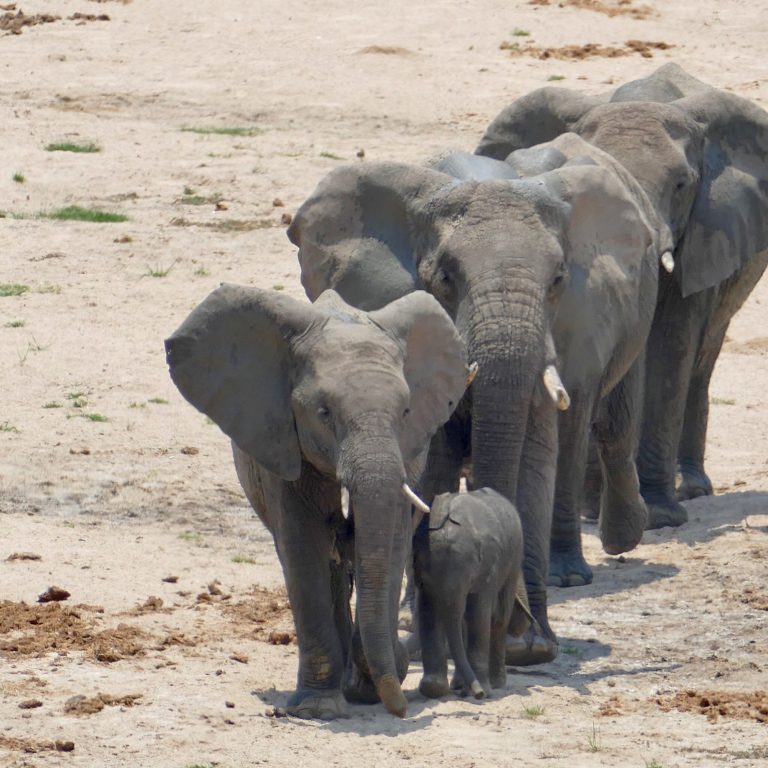
Most of Nyerere National Park is wilderness that visitors never drive through. Its camps and boat safaris cluster on one stretch of the Rufiji River and the lakes north of it, inside a 30,893 km² park in southern Tanzania carved from the northern part of the old Selous Game Reserve. TANAPA runs it, and it is best known for Rufiji boat safaris and African wild dogs, with walking safaris as a bonus few northern parks allow.
Nyerere Wildlife: Wild Dogs, Hippos and Elephants
Nyerere National Park is best for hippos, Nile crocodiles, elephants, buffalo, giraffe and African wild dogs, with lions found regularly over a stay of three nights or more. TANAPA calls the park one of East Africa’s strongholds for wild dogs. It also lists sable antelope, Lichtenstein’s hartebeest and the brindled wildebeest among the woodland species that the northern parks rarely show.
Wildlife viewing here works differently from the Serengeti. Game crowds around the Rufiji and the lakes in the dry months and thins quickly away from the water, so 30 minutes along a lake shore can produce more than an hour in open woodland. Sightings are never guaranteed.
African Wild Dogs in Nyerere
African wild dogs are the species that sets Nyerere apart, and the dry season gives the best odds. Packs den from roughly June to August, which can hold a pack in one area for several weeks. For the rest of the year they range over long distances each day, so a sighting depends on where a pack happens to be. Treat a wild dog sighting as a strong day, not something a camp can promise, and ask your camp where dogs were seen in the last fortnight before you book.
Hippos and Nile Crocodiles of the Rufiji
Hippos and Nile crocodiles are close to certain on any Nyerere boat safari. TANAPA describes the Rufiji as the largest river in East Africa, slow and wide, with oxbow lakes on its northern floodplain. In the dry season hippos pack into the shrinking pools, and crocodiles that eat mainly catfish in the rains start taking animals that come down to drink. Trip reports from Lake Siwandu describe crocodiles hauled out on almost every bank.
Elephants, Buffalo and Giraffe on the Lake Circuit
Elephants and buffalo herds are the everyday big game of the northern lakes. Elephants come down cut banks to drink through the afternoon. Buffalo herds of 50 to 100 are reported on full day drives, and giraffe browse the woodland edges. One detail travellers mention: elephants waiting under doum palms while baboons in the crown knock down fruit.
The elephant story has a hard side. Ivory poaching across the old Selous ecosystem was severe enough for UNESCO to place the Selous Game Reserve on its List of World Heritage in Danger in 2014, and the site is still on that list. Elephants are common on the lakes today, but numbers are well below what older guidebooks describe.
Lions, Leopards and Other Predators
Lions are seen regularly in Nyerere, usually after guides read tracks rather than follow a radio call. One trip report describes a pride resting under palms in a dry riverbed and a male asleep beside a buffalo kill, with only one other vehicle arriving all morning. Leopards keep to riverine thicket and are a matter of luck. Spotted hyena are widespread. Black rhino survive in very small numbers in the wider ecosystem but are not a realistic sighting, so include the Ngorongoro Crater elsewhere if rhino matter to you.
Birds of the Rufiji and the Lakes
Birding is one of Nyerere’s strengths, with more than 430 species on TANAPA’s count. From the boats, regular sightings include African skimmers, white fronted bee eater colonies in the river banks, fish eagles, goliath herons and yellow billed storks, plus malachite and pied kingfishers. TANAPA singles out Pel’s fishing owl and the white backed night heron along the wooded banks. Migrants arrive from November, when the green season makes the birding even better.
What to Do in Nyerere National Park Besides Game Drives
Besides game drives, Nyerere National Park offers boat safaris, guided walking safaris, fly camping, birding trips and sport fishing, and TANAPA lists night game drives too. Its tariff charges each of these separately on top of the daily conservation fee. Few Tanzanian parks let you drive, walk and go out on the water in one stay, and that mix is the main reason travellers who have done the northern circuit come south.
Check one thing before you book: which of these your camp can actually run. Activities depend on where the camp sits and on the season, and some camps include them while others charge per outing.
Boat Safari on the Rufiji and the Lakes
A boat safari on the Rufiji is the activity that defines Nyerere. It usually runs for two to three hours in the afternoon in a small open boat, often a flat pontoon, ending near sunset. Trip reports describe a 2.5 hour outing from a beach near Mloka village, with the family of four alone in the boat. Most of the time is spent drifting past sandbanks with hippos at eye level, crocodiles on the sand and elephants drinking at the bank.
TANAPA charges a boating fee of USD 20 per person on top of conservation fees, and TANAPA’s safety rules require lifejackets. Water levels decide which channels are open, so a route that worked last month may not work this month. The boat is also a steady platform for a long lens. Some camps on Lake Siwandu and Lake Nzerakera launch boats from camp, while others drive you to the river first.
Guided Walking Safari with an Armed Ranger
A walking safari in Nyerere is a guided walk with an armed park ranger, usually early in the morning, lasting two to three hours. It focuses on tracks, birds, plants and smaller life rather than approaching big animals. TANAPA charges USD 20 per adult for walks of one to four hours and USD 25 for longer walks. Children may walk from age 12. Wear muted colours and closed shoes, and follow the ranger’s briefing exactly.
Fly Camping Trips on a Rufiji Sandbank
Fly camping means a night out in a light camp on a sandbank or in the bush, usually reached on foot or by boat from a main camp. TANAPA lists guided walking safaris with overnight stays in light fly camps as one of the park’s popular activities, and it charges a fly camping fee per person per night that must be booked in advance. Facilities are basic: a small tent or bedroll, a mosquito net and an armed scout by the fire. It suits adults who want a night with nothing between them and the river.
Night Game Drives in Nyerere
Night game drives look for genets, civets and bushbabies after dark, with the odd aardvark or hunting leopard. TANAPA’s brochure lists them, and its tariff charges USD 50 per adult plus a ranger. Availability is the catch. Some independent guides report that night drives run only in the adjoining Selous Game Reserve blocks, while some camps at Mloka advertise them, so confirm in writing where your night drive will take place.
Birdwatching Trips by Boat and on Foot
A birding trip in Nyerere works best from a boat in the early morning, when the river is still and the birds are most active. Bring one pair of binoculars per person, because sharing a pair on a moving boat wastes the best moments. November to April brings migrants and breeding plumage.
Tigerfish Sport Fishing on the Rufiji
Sport fishing on the Rufiji targets tigerfish, which TANAPA names as the most prized game fish in the park. TANAPA’s tariff sets a USD 25 sport fishing fee per adult per day, with boat and rod hire charged separately. Few camps offer it, so ask before you plan around it.
Nyerere National Park Weather and Seasons
The best time to visit Nyerere National Park is the dry season from June to October, when animals gather at the Rufiji and the lakes, and when July and August each average about 5 mm of rain. TANAPA describes two rains: short rains in November and December, a partial drying in January and February, then long rains that end in early May.
The long rains are the real constraint. Many camps close from late March to early June, and Rufiji River Camp states that it closes for that period. Tracks turn to mud and the drive from Dar es Salaam slows sharply. Earlier TANAPA tariffs cut the conservation fee from USD 70 to USD 60 between 15 March and 15 May, and the current tariff still dates its peak rate from 16 May to 14 March, which shows how quiet those weeks are. Boat safaris keep running all year because the river and lakes hold water, which makes November, December and June good shoulder months.
Heat is the trade off. Most of the northern park sits below 100 m above sea level, and TANAPA gives a temperature range of 13°C to 41°C. Average highs reach 33°C in October and November, so the best wildlife months are also the hottest.
| Month | Rain (mm) | Season | Camps |
|---|---|---|---|
| January | 74 | Green | Some open |
| February | 99 | Green | Some open |
| March | 135 | Long rains | Many close |
| April | 144 | Long rains | Most closed |
| May | 38 | Long rains end | Most closed |
| June | 15 | Dry | Reopening |
| July | 5 | Dry, peak | All open |
| August | 5 | Dry, peak | All open |
| September | 7 | Dry, peak | All open |
| October | 18 | Dry, hot | All open |
| November | 33 | Short rains | Most open |
| December | 71 | Short rains | Most open |
Rainfall figures are long term climate averages for the lake area, and a wet July or a dry January still happens. For a first visit, July to September gives the most concentrated game. For birds and green scenery, aim for November or January.
Nyerere Highlights: Lakes, Gorges and the Rufiji
The main places to see in Nyerere are the Rufiji River with its oxbow lakes, plus Stiegler’s Gorge in the west and the Beho Beho hills, where Frederick Selous is buried. Most visitors spend all their time on the lakes, because that is where the camps and the densest game are.
Rufiji Oxbow Lakes: Tagalala, Manze, Siwandu and Nzerakera
The oxbow lakes north of the Rufiji are the heart of the Nyerere game circuit. Lake Tagalala, Lake Manze, Lake Siwandu, Lake Nzerakera and Lake Mzizimia are linked to the river by channels lined with borassus palms. In the dry months they are the most reliable places in the park to find elephants and lions, often close to each other along the same shore.
Stiegler’s Gorge and the Julius Nyerere Hydropower Dam
Stiegler’s Gorge is the narrow rocky stretch of the Rufiji in the west of the park. It is now the site of the Julius Nyerere Hydropower Station, a 2,115 MW dam that Tanzania has brought into operation. UNESCO repeatedly raised concerns about building it inside the World Heritage property. Visitors staying at the western lodges near the gorge should expect to see the dam’s effect on the river and on construction traffic through Mloka.
Beho Beho Hills and the Grave of Frederick Selous
The Beho Beho hills rise above the floodplain in the north of the park. Frederick Courteney Selous, the hunter and soldier who gave the old reserve its name, was killed near here in 1917 during the First World War, and his grave lies in the area. The higher ground is noticeably cooler than the lakeshore.
What Sets Nyerere Apart from Ruaha and the Serengeti
Nyerere differs from Ruaha and the Serengeti in one way above all: it is a river park, where boat safaris and walking sit beside game drives. The fee band surprises some travellers, though. TANAPA charges Nyerere at the same top rate as the Serengeti, more than double Ruaha’s.
| Factor | Nyerere | Ruaha | Serengeti |
|---|---|---|---|
| Adult fee | USD 70 | USD 30 | USD 70 |
| Boat safari | Yes | No | No |
| Migration | No | No | Yes |
| Main draw | River, wild dogs | Dry country | Open plains |
Fees are the TANAPA conservation fee per non resident adult per 24 hours in peak season on the current TANAPA tariff. Choose Nyerere for water based safaris, walking and a short hop to Zanzibar. Choose Ruaha for drier, wilder game country at a lower daily fee, or combine both on one southern circuit. On a first trip where the wildebeest migration is the goal, the Serengeti remains the better choice.
Nyerere National Park at a Glance: Size and Selous History
Nyerere National Park covers 30,893 km² and was created when Tanzania took the northern photographic zone of the Selous Game Reserve and made it a national park under TANAPA. It is named after Julius Kambarage Nyerere, Tanzania’s first president. The rest of the old reserve, mostly south of the Rufiji, remains a game reserve under the Tanzania Wildlife Management Authority and is still used for hunting.
The Selous became a game reserve in 1922 and was named after Frederick Selous. UNESCO inscribed it as a World Heritage Site in 1982 for its wildlife and undisturbed ecosystems, and the listed property covers about 51,200 km². Older guides that call Nyerere “50,000 km²” are describing the whole reserve, not the national park.
Nyerere National Park Location and Nearest Towns
Nyerere National Park lies in south eastern Tanzania, about 250 km by road south west of Dar es Salaam. It spans parts of the Pwani (Coast), Morogoro, Lindi and Ruvuma regions. The nearest settlement to the main Mtemere gate is Mloka, a riverside village with a cluster of small camps. Mikumi National Park lies to the north west, and the remaining Selous Game Reserve continues south. The Rufiji itself runs on east to the coast, where the Rufiji Delta lies outside the park.
Nyerere National Park is not the same place as Mwalimu Julius Nyerere Conservation Centre or Julius Nyerere International Airport in Dar es Salaam, which share the name.
Travelling to Nyerere National Park from Dar es Salaam
The quickest way to reach Nyerere National Park is a scheduled light aircraft flight of about 45 minutes from Dar es Salaam or Zanzibar to an airstrip inside the park. The alternative is a road trip of about 250 km via Kibiti that takes most of a day. TANAPA’s own visitor guide also mentions road access from Morogoro and Ifakara for the western and northern gates, and recommends a 4×4, especially in the rains.
Scheduled Flights from Dar es Salaam and Zanzibar
Most visitors arrive on scheduled flights. Coastal Aviation says it flies to every airstrip in the park three times a day, and Auric Air and Safari Air Link also serve the route. Mtemere airstrip by the main gate serves the river camps. Siwandu serves the central lake camps, and Kiba serves the west. Flights often stop at more than one strip, and a Dar flight may call at Zanzibar first.
Light aircraft need soft bags and enforce limits of roughly 15 to 20 kg per person including hand luggage, so check your carrier’s allowance. Some visitors fly in from Zanzibar for a day trip and fly out the same afternoon.
Road Route via Kibiti to Mtemere Gate
The road route runs south from Dar es Salaam on tarmac to Kibiti, then on an unpaved final stretch to Mtemere gate, for about 250 km in total. Independent guides put it at five to seven hours, slower after rain. Fill up with fuel in Dar es Salaam, leave early because the gate closes at 18:00, and carry recovery gear in the wet months. The road suits budget travellers and residents with time to spare.
TAZARA Train to Kisaki for the Matambwe Side
The TAZARA railway runs along the north western edge of the park with a station at Kisaki near Matambwe gate. A few lodges on that side collect guests from the train, which makes it a slow but scenic option for travellers with flexible dates. Confirm the timetable and the lodge transfer before you rely on it.
Nyerere Park Fees and Boat Safari Prices
Nyerere National Park charges non resident adults USD 70 per 24 hours in conservation fees from 16 May to 14 March on the current TANAPA tariff, which runs from 1 July to 30 June and lists the fee as TSh 178,850. Guests staying inside the park also pay a hotel concession fee of USD 60 (TSh 153,300) per adult per night from July to September. Boat safaris and walks are extra. TANAPA says its fees include VAT where applicable, but an older printed tariff listed them before 18% VAT, so ask your operator or camp whether VAT is added to your quote.
| Fee | Adult | Child 5 to 15 | Resident |
|---|---|---|---|
| Entry, 16 May to 14 Mar | USD 70 | USD 20 | USD 35 |
| Concession, Jul to Sep | USD 60 | USD 10 | USD 60 |
| Boat safari | USD 20 | USD 20 | USD 20 |
| Walk, 1 to 4 hours | USD 20 | USD 10 (12+) | USD 20 |
| Night game drive | USD 50 | USD 25 | USD 50 |
All figures are per person from TANAPA’s current tariff, which lists them in Tanzanian shillings at about TSh 2,555 to the dollar. The resident column is for expatriates and Tanzania residents. Children under five enter free, and East African citizens pay TSh 10,000 per adult per day. TANAPA also charges USD 40 (TSh 102,200) per group per day for a guide or ranger, USD 30 per adult per night at a public campsite and USD 40 per day for a foreign registered vehicle up to 2,000 kg. The current listing gives no separate low season rates; earlier tariffs charged USD 60 for entry from 15 March to 15 May and a USD 50 concession fee from October to June, so confirm those with your camp. Gates are cashless, so pay by Visa or Mastercard, mobile money or through TANAPA’s online system.
The biggest variable is where you sleep. A camp inside the park adds the concession fee every night, while a camp outside the gate at Mloka avoids it, and you pay entry only on the days you go in. Most in park camps fold these fees into an all inclusive rate, so compare safari quotes on the same basis.
Nyerere Park Fee Calculator
Add up the TANAPA park fees for your group, season and activities in Nyerere National Park, before any lodge, flight or operator costs.
USD 900
About USD 450 per adult. Lodge, flights and operator costs are extra.
| Fee | Rate | Amount |
|---|---|---|
| Conservation fee, adults | USD 70 x 2 x 3 days | USD 420 |
| Concession fee, adults | USD 60 x 2 x 3 nights | USD 360 |
| Boat safari | USD 20 x 2 x 1 | USD 40 |
| Short walking safari | USD 20 x 2 x 1 | USD 40 |
| Guide or ranger, per group | USD 40 x 1 outing | USD 40 |
Fees are TANAPA’s published tariff for Nyerere National Park, valid 1 July to 30 June, listed in Tanzanian shillings at about TSh 2,555 to the dollar. Children under five are free. The calculator counts one 24 hour entry per night for camps inside the park. TANAPA says its fees include VAT where applicable, while an older printed tariff listed them before 18% VAT, so confirm with your camp. Many camps fold these fees into an all inclusive rate. Indicative only. Last checked November. Source: tanzaniaparks.go.tz tariff.
Accommodation In and Near Nyerere National Park
Accommodation in Nyerere National Park falls into four groups: tented camps on the northern lakes, river camps near Mtemere gate, budget lodges at Mloka just outside the park, and a few lodges in the quieter west near Stiegler’s Gorge. Location matters more than category here, because it decides how fast you reach the water and whether you pay the nightly concession fee. TANAPA also runs public and special campsites inside the park.
Tented Camps on the Northern Lakes
The lake camps sit on Lake Siwandu, Lake Nzerakera and Lake Manze, the richest game area in the park. Siwandu, Roho ya Selous and Lake Manze Camp are the best known. Several launch boats from camp, which saves a drive to the river. Most close for the long rains and sell all inclusive rates that already contain park fees. Ask each camp for its current rate and closing dates.
River Camps near Mtemere Gate
River camps near Mtemere put you inside the park on the Rufiji, within minutes of the airstrip. Rufiji River Camp, run by the Fox family, has 11 tents on raised platforms and three family suites with plunge pools, and its own site says it closes from late March to early June. Boat safaris can start close to camp rather than after a transfer by road.
Mloka Lodges outside Mtemere Gate
Mloka’s camps are the cheapest beds near the park and the only ones that may stay open through the long rains. Selous River Camp sits on the Rufiji just outside the boundary, with mud hut cottages, bandas and riverfront tents, and it publishes the park fees separately on its own site. Because these camps sit outside the park, you pay conservation fees only on the days you enter and no concession fee.
Lodges in the West near Stiegler’s Gorge
The western lodges are quieter and further from the lake traffic. Serena Mivumo River Lodge overlooks the Rufiji at Stiegler’s Gorge, and its own booking page lists rooms for two from USD 405 per night. Beho Beho, the oldest camp in the area, sits on a hill and has its own private airstrip, about 45 minutes by air from Dar es Salaam or Zanzibar according to the camp. Sand Rivers is also in the west. The hydropower dam lies in this part of the park.
TANAPA Public and Special Campsites
TANAPA’s campsites are the only cheap way to sleep inside Nyerere. A public campsite costs USD 30 (TSh 76,650) per adult per night on the current tariff, and special campsites must be booked ahead. You bring everything, including water and fuel, and you still need a ranger for any walk or boat trip. This suits overlanders in their own 4×4 rather than fly in visitors.
Is Nyerere National Park Worth Visiting?
Yes, Nyerere National Park is worth visiting for travellers who want more than game drives, for anyone pairing a safari with Zanzibar, and for repeat safari goers who have seen the north. The boat safari, walking and the short flight to the coast are the main reasons.
Skip Nyerere if you have only four or five days for a first safari and want the most big game per day, because the northern circuit gives you more for less flying. Skip it too if small boats or light aircraft make you uneasy, since both are central to how the park works.
How Many Days to Spend in Nyerere, with Sample Plans
Three nights is the right length for most Nyerere safaris, because it allows a full day drive, at least one boat safari and a walk without rushing. Two nights works as a short bush add on before Zanzibar, but it gives you only one full day. Four nights or more suits photographers and anyone combining sectors. These plans are built from scheduled flight timings, not from a package price.
Two Night Nyerere Safari from Zanzibar
Fly from Zanzibar to Mtemere in the morning, have lunch in camp, then take an afternoon boat safari on the Rufiji. Spend day two on a full day game drive around the lakes with a picnic lunch. On the final morning take an early drive or walk, then fly back to Zanzibar or Dar es Salaam around midday.
Three Night Nyerere Lakes and River Safari
Day one: fly in and take a sunset boat safari. Day two: full day game drive on the lake circuit, looking for wild dogs and lions. Day three: early walking safari with a ranger, rest in camp through the heat, and a second boat trip on a lake. Day four: morning drive and flight out. Lodges with an optional fly camp can swap one camp night for a night on a sandbank.
Seven Day Southern Circuit with Ruaha
Spend three nights in Ruaha for dry country game drives, then fly to Nyerere for three nights of boat safaris and lake drives, and fly out through Dar es Salaam. Light aircraft connect the two parks, so no long road transfer is needed. Add several nights on Zanzibar at the end if you want a beach finish.
Frequently Asked Questions About Visiting Nyerere National Park
Is Nyerere National Park the same as Selous?
Nyerere National Park is the northern part of the old Selous reserve, not the whole of it. Tanzania made that northern photographic zone, where the camps and boat safaris are, into a 30,893 km² national park. The rest of the reserve, mostly south of the Rufiji, stays a game reserve. When an operator sells a Selous safari today, it almost always means a trip inside Nyerere.
Why was Selous renamed Nyerere National Park?
The park was named after Julius Nyerere, Tanzania’s first president, when it gained national park status. The old name honoured Frederick Selous, a British hunter and soldier killed near the Rufiji in 1917. National park status moved the area to TANAPA management and its rules for photographic tourism.
How many days do you need in Nyerere National Park?
Plan on three nights in Nyerere National Park for a complete safari with a game drive, a boat safari and a walk. Two nights is the minimum that makes sense, while four or more suits photographers and keen birders. A day trip from Zanzibar is possible by plane, with a morning flight in and a mid afternoon flight out, which leaves about six hours on the ground.
Can you see wild dogs in Nyerere National Park?
Yes, Nyerere National Park is one of the better places in Africa to look for African wild dogs, which TANAPA describes as a stronghold here. Packs range widely, so no camp can promise a sighting. The denning months from about June to August usually give the best odds, when a pack stays in one area for a few weeks.
What is a boat safari in Nyerere like?
A Nyerere boat safari is a two to three hour trip in a small open boat on the Rufiji or one of the lakes, usually in the afternoon. You drift close to hippos, crocodiles, drinking elephants and waterbirds, and TANAPA requires lifejackets. The park charges USD 20 per person for each boat outing on its current tariff, unless your camp includes it.
Is Nyerere National Park good for children?
Nyerere suits families with children old enough for boats and long drives. Boat trips break up the day well. Walking safaris are open only from age 12 on TANAPA’s tariff, and children under five enter the park free. Many camps are unfenced, so choose one with family tents and clear rules on supervision.
Do you need malaria precautions for Nyerere?
Yes, plan for malaria in Nyerere National Park, which lies mostly below 100 m above sea level on Tanzania’s warm coastal plain. Ask a travel clinic about antimalarial tablets before you go, use repellent from late afternoon, and sleep under the nets that camps provide. Long sleeves also help on evening boat trips.
Planning a southern Tanzania safari? Tanzania Safari.travel helps travellers plan Tanzania trips with clear, checked information on parks, fees and seasons. Tell us your dates and how you like to travel, and we will help you work out how many nights Nyerere deserves, which side of the park suits you and how it fits with Ruaha or Zanzibar.