
Datoga Cultural Visits near Lake Eyasi
Visits to Datoga pastoralists near Lake Eyasi, whose blacksmiths work brass and scrap metal into arrowheads and jewellery, often combined with a Hadzabe visit.
Datoga visits are usually sold as the second half of a Hadzabe morning near Lake Eyasi, built around a blacksmith at work. This guide covers what the visit involves, the grazing land the Barabaig lost to a state wheat scheme, why no Datoga run tourism enterprise appears to exist, and how to arrange something better than a half hour stop.
Safaris That Include Datoga Cultural Visits
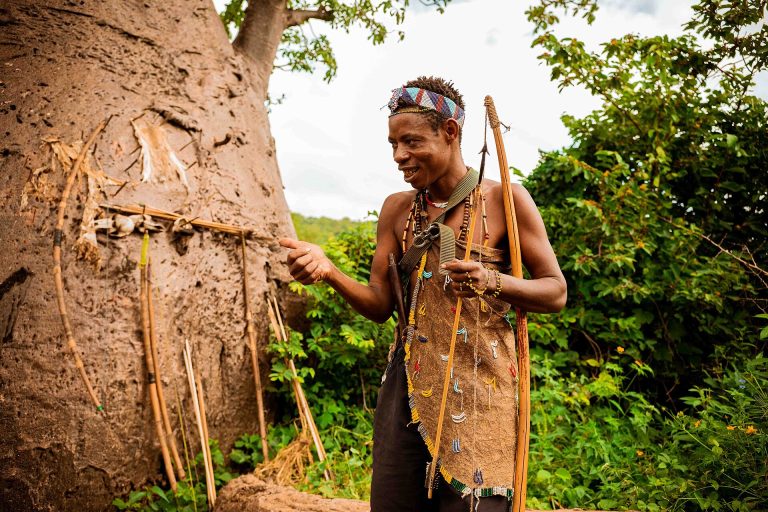

10 Days Wildlife Tanzania & Culture Safari
by Insight Safari Holidays Verified operator
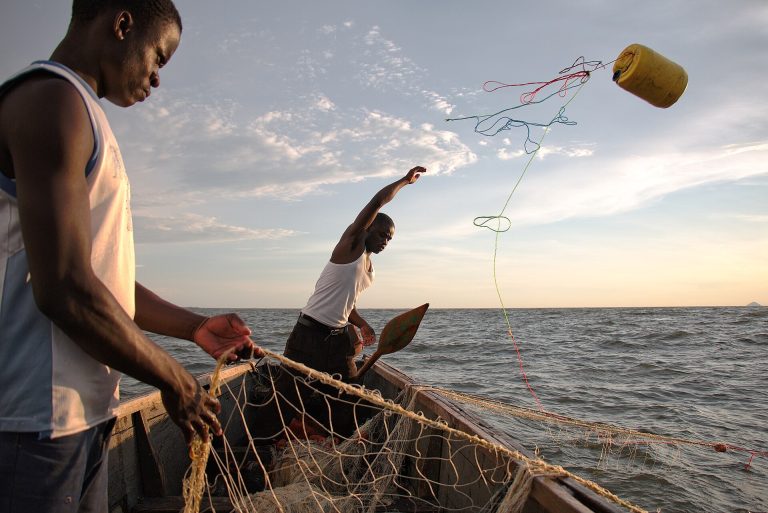
8 Day Fishing Package Tanzania
by Insight Safari Holidays Verified operator
12 Days Wildlife Photography Tour Tanzania
by Insight Safari Holidays Verified operator
12 Day Safari in Tanzania Expedition
by Insight Safari Holidays Verified operator
5 Days Tanzania Cultural Experience
by Insight Safari Holidays Verified operator
Datoga Cultural Visits Guide in Tanzania
Who the Datoga are
The Datoga are Southern Nilotic pastoralists living across the Lake Eyasi basin, the Hanang highlands and parts of the Ngorongoro Conservation Area, where they are one of three peoples the conservation authority names alongside the Maasai and the Hadzabe. The Barabaig are the largest and best documented of the Datoga groups, centred historically on the country around Mount Hanang.
Visitors will also hear them called Mangati. That is an exonym, a name given by neighbours rather than the people's own, and it is not the word to use.
The anthropological literature describes them as semi-nomadic pastoralists, and they are most often studied as the Hadza's neighbours rather than in their own right, which is a fair summary of their position in the tourism industry too. Cattle are the centre of Datoga life in the way they are for most East African pastoralist societies, and the herding calendar rather than the forge is what actually organises a Datoga year.
What a Datoga visit involves
The Datoga visit sold around Lake Eyasi takes place at a homestead near Mang'ola, and the documented content of it is consistent: an explanation of Datoga life and of traditional plants and medications, and a demonstration of blacksmithing. The same Eyasi itinerary often takes in onion farming and traditional methods of storing produce, since Mang'ola is an onion-growing area.
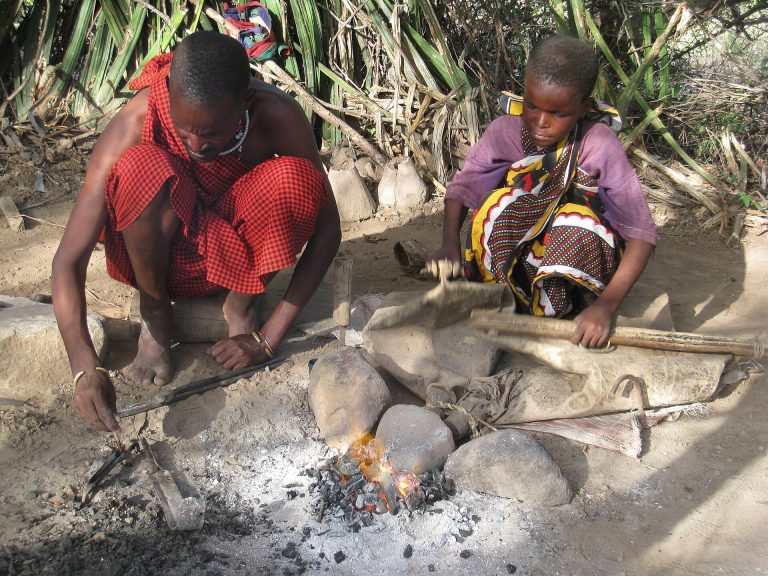
The blacksmithing is what everyone photographs. Datoga smiths work scrap metal over a charcoal fire, drawing air with hand bellows, and make arrowheads, bracelets, knives and ornaments. The arrowheads matter beyond the demonstration, because Datoga smiths have long supplied the Hadzabe, which is a genuine and ongoing economic relationship between the two peoples rather than a piece of tour colour.
One thing worth asking on arrival, and worth asking because nothing in the published record settles it: whether the forge you are watching is a working one or a demonstration set up for visitors. Both exist elsewhere in the region and neither is disgraceful, but they are different things and you are entitled to know which you are looking at.
The grazing land, and what happened to it
The best documented thing about the Barabaig in the English-language record is not their metalwork. It is what happened to their pasture, and it is the context that makes sense of everything else.
The Barabaig had developed a seasonal grazing system on the Hanang plains that moved herds among eight distinct forage regimes, migrating up and down the Rift Valley wall with the seasons and concentrating near persistent vegetation and permanent water when conditions demanded. The country is semi-arid, with around six hundred millimetres of rain a year, and a rotation of that complexity is what makes such a place support cattle at all.
From the 1970s the Government of Tanzania, with Canadian support, established a large mechanised wheat programme on the Basotu Plains of Hanang district, with the aim of raising domestic wheat production and reducing imports. The land it took included the most important element of the Barabaig system, areas they call muhejega. Exclusion from those areas cut off access to the forage species collectively known as nyega nyatka. One particularly valued grass, megojiga, the milk grass, has been completely eradicated.
The consequences followed from there. Traditional institutions for managing pasture had never had to cope with absolute shortage, and according to the Barabaig the result was overgrazing of what remained, with perennial grasses giving way on the poorer ground.
The employment case made for schemes like this is usually the compensation offered for the land. Here it is possible to be precise about it: the wheat farms employ around two hundred and fifty people, of whom fewer than ten are Barabaig. Water, health and education facilities provided alongside the scheme were found not to have greatly benefited the Barabaig, who had limited access to them. The researchers who documented this concluded that the initial economic analysis had been confined to financial examination, and that a full social cost-benefit analysis might have changed what happened.
There is a more recent development on the other side of the ledger. In 2016 the Tanzanian Minister of Lands issued twelve communal land titles in the Lake Eyasi basin, to Hadza hunter-gatherers and to neighbouring Datoga pastoralists. Formal communal title is a real protection and it is worth knowing that some Datoga now hold it.
Why the visit is always attached to something else
Search for a Datoga cultural visit and what comes back is Hadzabe day trips. The Datoga stop is a component of somebody else's itinerary, sold as an add-on to a morning at Lake Eyasi, and it is very difficult to find it offered as a thing in its own right.
That pattern is observable rather than something the research literature measures, so it should be described as what it is: how the trips are sold. But the official record points the same way and is harder to argue with. Hanang District Council, which administers the Barabaig heartland and the land the wheat scheme took, publishes fifty-one pages on its website and not one of them is about tourism. There is no attraction listing and no Barabaig cultural material at all. Neighbouring Mbulu District Council publishes a full tourism page built around Hadzabe cultural tourism. Karatu District Council publishes one naming cultural tourism with the Iraqw and the Hadzabe, and does not name the Datoga.
So there is no officially promoted Datoga tourism product in their own district, and the councils that do promote cultural tourism name other peoples. Nor could any Datoga-owned or Datoga-run tourism enterprise be found to exist anywhere: no named organisation, no cultural centre, no listing. The Datoga appear in Tanzanian tourism almost entirely as an unnamed stop inside an itinerary built around their neighbours.
The practical conclusion is not that the visit is worthless. It is that half an hour tacked onto the end of a Hadzabe morning is a poor way to meet a people whose situation is this specific, and that asking for a longer, separately arranged visit is both possible and better. That needs a night near Lake Eyasi rather than a detour from Karatu, which is a question of trip length: where a fourth element fits on a northern circuit.
Whether your guide is who you are told
There is a documented case that every traveller considering this visit should know, because it describes a failure that a visitor has no way of detecting on their own.
Anthropological fieldwork on Tanzania's cultural tourism programme records what the researcher calls the most flagrant deceit encountered during his research. The entrepreneur running the cultural tourism operation at Babati and Hanang was not local at all, but from the far north-west of the country. The tours took visitors to the Barabaig in the highlands near Mount Hanang. The guide presented to them as local was a Chagga man from the Kilimanjaro region who had grown accustomed to playing the part of a Barabaig.
It came to light only by accident. The visitors happened to be volunteers who spoke fluent Swahili, and noticed that the guide could not speak the local language. When they insisted on hearing from Barabaig people directly, they discovered that a great deal of what they had been told was invented. They filed a complaint with the Tanzania Tourist Board. Neither the Tourist Board, nor the development agency funding the programme, nor its coordinator claimed to have known, which the researcher notes is unsurprising given that they only ever visited with announced official delegations. The tours were, at the time, widely recommended in guidebooks.
This is why the advice to use a guide who speaks the community's language is not a platitude. Ask directly whether your guide speaks Datoga. Ask whether they are from the community you are visiting. And if the answers are vague, ask to be introduced to someone who is, and to hear from them.
Where the money goes
Nothing published establishes who is paid for a Datoga homestead visit, or in what proportion. Not the district councils, not the academic literature, not any project operating in the area. This is the same answer as for the Hadzabe and it should be treated the same way: as a reason to ask rather than a reason to assume.
The academic assessment of tourism in the Lake Eyasi basin is not reassuring on this point. A Tanzanian archaeologist studying heritage management in the basin lists exploitative tourism practice among the challenges facing the minority groups who live there, alongside negligence by local government officials and unmonitored hunting companies.
The one transaction that is not opaque is buying directly from the smith. Datoga metalwork is genuinely skilled, bracelets and knives travel well, and the money goes where you can see it going.
Making it a better visit
- Ask for it separately. A Datoga visit arranged as its own outing, rather than as the second half of a Hadzabe morning, changes what it can be.
- Ask about the herds, not just the forge. Cattle are the centre of Datoga life. Asking about grazing, the seasons and where the animals go opens a far better conversation than asking to watch metal being hammered.
- Ask whether the forge is working. A straight answer is a good sign.
- Ask permission before every photograph, and expect that payment may be requested. Settle it beforehand rather than afterwards.
- Buy from the maker. It is the most direct thing you can do.
- Do not use the word Mangati, and do not repeat a guide's description of the Datoga as warriors or as primitive. Neither is what the record describes.
The wider context of visiting communities in this part of Tanzania, including the collapse of the network that once coordinated these visits, is covered under village tours, and the metalwork itself sits alongside the country's other craft traditions in craft workshops.
Questions travellers ask
Why is the Datoga visit always part of a Hadzabe trip?
Because that is how it is sold. The Datoga have essentially no tourism presence of their own: no confirmed Datoga-run enterprise exists, and their own district council publishes no tourism material at all, while neighbouring councils promote cultural tourism naming other peoples. Asking for a separately arranged visit is the way round it.
Is the blacksmith actually working, or performing for visitors?
Nothing published settles it, and both arrangements exist in the region. It is a fair question to ask on arrival, and the answer tells you what kind of visit you are on. What is not in doubt is that Datoga smiths genuinely supply arrowheads to the Hadzabe, which is a real economic relationship rather than tour colour.
Is my guide actually from the community?
Worth asking directly. There is a documented case of a cultural tourism operation near Mount Hanang where the supposedly local guide was from another region entirely and had learned to play the part, which surfaced only because visitors happened to speak Swahili and noticed he could not speak the local language.
Does the money reach the family?
Nobody publishes the answer. No council, academic or project source documents who is paid for a Datoga visit or in what proportion. Ask on the day, and buy metalwork directly from the smith, which is the one part of the transaction that is transparent.
What should I ask about?
Cattle, grazing and the seasons will get you further than anything about the forge, because that is what organises Datoga life. The land history around Hanang is also a real and live subject, though whether to raise it is a judgement to make in the moment rather than an opening question.
How long should the visit be?
Longer than it is usually sold. A stop of half an hour at the end of another morning is enough to watch a demonstration and no more. An arrangement of two or three hours, ideally made in advance and separately, is the difference between watching and meeting.
Is it better to visit the Datoga or the Hadzabe?
They are not alternatives and the question rather misses the point. If time is limited, doing one of them properly is better than doing both in a morning, which is what most itineraries offer.