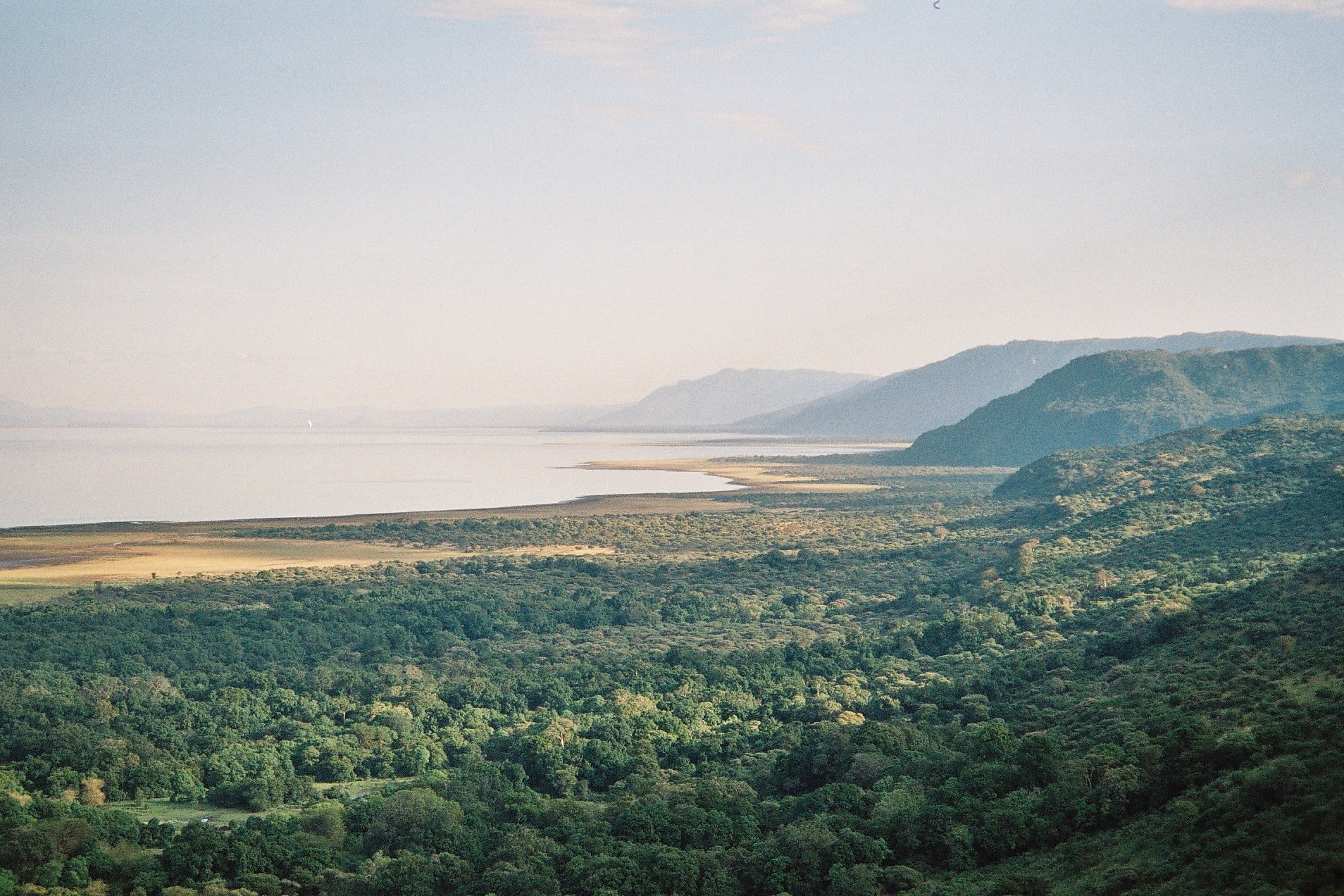
Water covers 262.7 of the 648.7 square kilometres inside Lake Manyara National Park, so every game drive runs along a narrow strip of forest, woodland and floodplain squeezed between a soda lake and the Rift Valley wall. The park sits in northern Tanzania, about two hours by road from Arusha beside the village of Mto wa Mbu, and is known for elephants, big baboon troops, more than 400 bird species and lions that sometimes rest in trees.
Elephants, Primates and Birds of Lake Manyara National Park
Lake Manyara National Park is a safari park for elephants, olive baboons, blue monkeys, buffalo, giraffe, hippos and birds, with lions present but harder to find. TANAPA counts seven distinct habitats along a 30 km stretch of the park, from groundwater forest to acacia woodland, grassland, lake floodplain, rain forest, riverine woodland and the escarpment wall, and each holds a slightly different cast of animals.
That density of habitats in a small space is the reason the park works for a short visit. You will not see the big herds of the Serengeti here. You will see a lot of different country in a three hour drive. That is the trade.
Elephants in Lake Manyara
Elephant viewing in Lake Manyara is the most reliable big mammal sighting in the park. Iain Douglas Hamilton carried out the first scientific study of wild African elephant social behaviour here in the 1960s, and his work still shapes how researchers understand elephant families. Herds move between the groundwater forest near the gate and the acacia woodland further south, and they often cross the main track at close range, so a slow drive through the forest pays off. Africa Geographic describes the park as holding some of Tanzania’s highest elephant densities.
Tree Climbing Lions of Lake Manyara
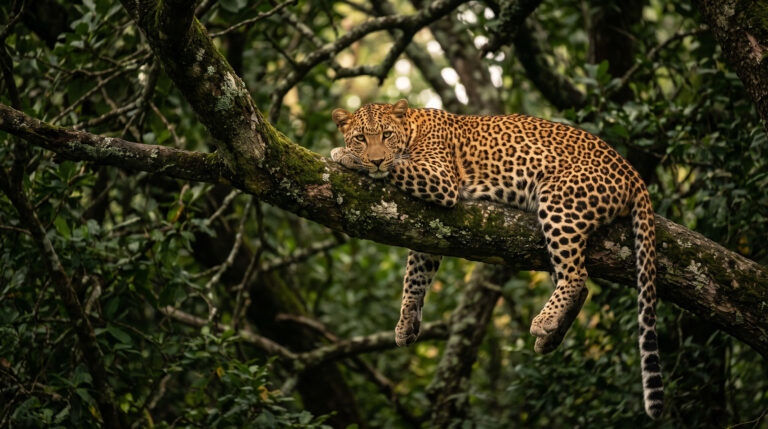
Tree climbing lions are the image used most often to sell Lake Manyara, and a sighting is never certain. TANAPA says lions climb trees in other parks too, but the behaviour is more visible here because of the park’s narrow belt of acacia woodland. Recent trip reports describe lions in the branches as rarer than they once were, and several planners on safari forums advise against booking the park for the lions alone. Treat a lion in a tree as a bonus. The drive is good without one. The big five safari guide sets out where each of the five is more reliable in Tanzania.
Baboons, Blue Monkeys and Forest Primates
Olive baboons are the animal almost every visitor sees in Lake Manyara, often in troops of dozens sitting along the forest track near the entrance. Blue monkeys feed higher in the fig and mahogany canopy of the same groundwater forest, and vervets work the woodland edges. Keep food out of sight in an open roof vehicle, because the baboons here link cars with snacks. Bushbuck also use the forest, and klipspringer pairs live on the rocky escarpment above it. The primate watching guide covers how Manyara compares with Tanzania’s forest primate parks.
Plains Game, Hippos and Night Animals
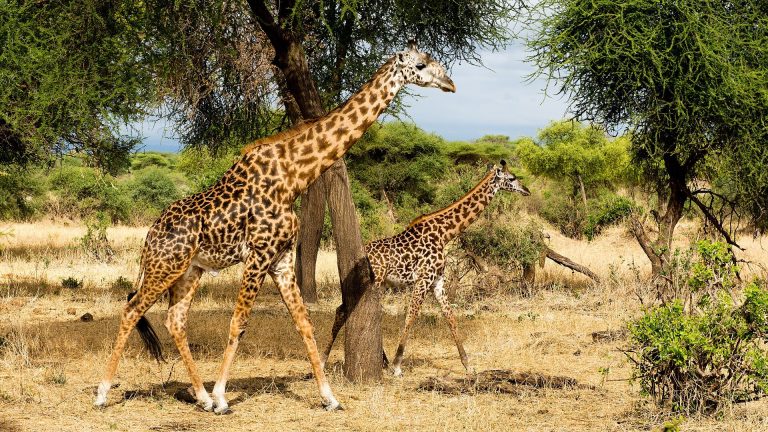
Buffalo, zebra, wildebeest, giraffe, impala and warthog graze the floodplain grassland and the woodland between forest and lake. Hippos gather at the hippo pool and other pools fed by the springs and rivers that run into the lake. After dark, night game drives turn up bush babies, genets, civets, bat eared foxes and honey badgers, according to reports from the park; nocturnal sightings vary a lot from night to night.
Birdlife and Flamingos on Lake Manyara
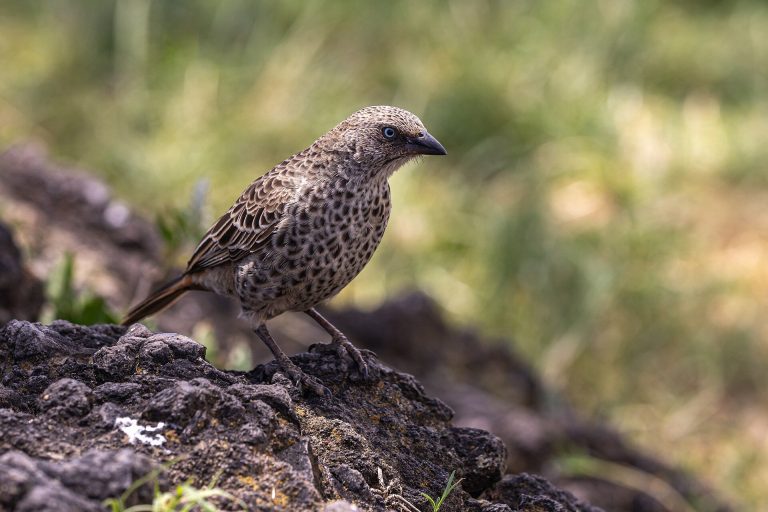
Bird watching is the strongest case for a Lake Manyara safari. TANAPA records more than 400 species and says a first time visitor can expect to see around 100 in a day. The groundwater forest is a good place for the silvery cheeked hornbill and the palm nut vulture, while the lake edge carries pelicans, storks, cormorants and herons, joined by migrant birds from Europe between November and April.
Flamingos are another story. Lake Manyara once drew hundreds of thousands of them, but the lake has risen sharply in recent years and Africa Geographic reports that most of the flocks have moved on. Some flamingos still appear, and numbers swing with water levels, so ask your guide what the shoreline looks like before you build a trip around pink water.
Best Months for a Lake Manyara Safari
The best months for a Lake Manyara safari are late June to October and the shorter dry spell of January and February, when tracks are firm and animals gather near permanent water. TANAPA describes a two rain pattern: short rains in November and December and long rains from March to May, with mean temperatures around 26.5°C and a range of 11°C to 34°C.
The figures below are Weather Atlas averages for the park. Use the rain column to judge track conditions, not as a forecast for your day.
| Month | Rain (mm) | Max temp | Verdict |
|---|---|---|---|
| January | 60 | 30°C | Good |
| February | 80 | 30°C | Good |
| March | 114 | 30°C | Wet |
| April | 161 | 27°C | Wettest |
| May | 36 | 26°C | Mixed |
| June | 2 | 25°C | Very good |
| July | 1 | 25°C | Best |
| August | 1 | 26°C | Best |
| September | 1 | 28°C | Best |
| October | 16 | 29°C | Very good |
| November | 71 | 29°C | Mixed |
| December | 75 | 29°C | Mixed |
June to September is close to rainless, cooler at 25°C to 28°C in the afternoons and the easiest time to drive the southern tracks toward the hot springs. It is also when the northern circuit is busiest, because almost every Ngorongoro and Serengeti itinerary passes the Lake Manyara gate. October stays dry and warmer.
April is the wettest month, with about 161 mm and roughly 19 rainy days in the averages. TANAPA’s own low season runs from 15 March to 15 May, and the entry fee drops from USD 50 to USD 45 before VAT. The saving is small. The cost is muddy tracks and, in some years, closures: in April of a past flood year TANAPA suspended visits when rains swept away a bridge in the park.
November to April is the better window for birders, when the European migrants are present and the forest is at its greenest. Light rain rarely stops a morning drive then. Pack a rain jacket anyway.
How Flooding Has Changed Lake Manyara
Rising water is the biggest change to Lake Manyara National Park in recent years, and many older descriptions of the park have not caught up. After very wet seasons the lake has spread over part of the floodplain, and a trip report from January of this year describes former lakeside tracks and hippo pools now under water, with dead trees standing in the shallows. Africa Geographic notes that the park stays open but some viewing areas are submerged.
Before you book, check these points with your operator or guide:
- Which tracks south of the forest are open this month
- Whether the drive to the Maji Moto hot springs is passable
- Whether canoeing is running, since TANAPA only allows it when the water level suits
- Where flamingos and pelicans have been seen in the last few weeks
The forest, the elephants and the escarpment views are unaffected by the water level, so a short visit still holds its value even in a high water year.
Lake Manyara Tours and Activities
Lake Manyara tours and activities include game drives, a treetop canopy walkway, night game drives, guided walking safaris, canoeing and bird watching, all priced separately on top of the daily entry fee on the TANAPA tariff. Most visitors only do the game drive, which is a shame, because the walkway and the night drive are the two things Tarangire and the Serengeti do not offer in the same way.
Lake Manyara Game Drive Safari
A Lake Manyara game drive follows one main track from the forest at the gate south through woodland and floodplain, under the escarpment, with side loops to the lake shore. A morning drive of three to four hours covers the forest and the northern woodland. Reaching the hot springs and the southern section turns it into a full day. The park speed limit is 50 km/h, and the compact layout means less time driving between sightings than in larger parks.
Treetop Canopy Walkway Tour
The treetop canopy walkway in Lake Manyara is a guided forest walk on suspended bridges about 400 m long and up to 18 m above the groundwater forest floor, according to TANAPA, and takes one hour to an hour and a half. It costs USD 20 per person aged 5 and over, plus VAT, on the current tariff. Baboons, bushbuck, buffalo and forest birds are the usual sightings, and families report it as a good break from the vehicle for children.
Night Game Drive Safari
A night game drive in Lake Manyara costs USD 50 per adult and USD 25 per child aged 5 to 15, plus VAT, and runs under TANAPA guidelines with a ranger. Expect bush babies, genets and civets rather than hunting lions; forum reports describe some nights as quiet. Book it through your lodge or operator well ahead, because few vehicles are licensed for it.
Guided Walking Safari with a Park Ranger
Walking safaris in Lake Manyara go out with an armed TANAPA ranger and need prior arrangement with the park. A short walk of one to four hours costs USD 20 per adult and a long walk over four hours USD 25, plus VAT. Walks pass through areas the park has surveyed for wildlife, and they are the best way to hear the forest properly.
Canoeing Trips on Lake Manyara
Canoeing on Lake Manyara costs USD 20 per adult and USD 10 per child for two hours, plus VAT, and TANAPA only runs it when the water level is suitable. From the water you get the escarpment and the shore birds from a low angle. Confirm it is operating in your month before counting on it.
Birdwatching Safaris in the Forest and on the Shore
A birdwatching safari in Lake Manyara works best as an early start in the groundwater forest, then a slow drive to the lake edge as the light rises. With around 100 species possible in a day, a guide with a bird list and a spotting scope makes a big difference. Hornbills, raptors over the escarpment and waterbirds on the shore make a good three part morning.
Lake Manyara Park Fee Calculator
Add up the TANAPA entry and activity fees for your group, including 18% VAT, for a visit to Lake Manyara National Park.
USD 118.00
Park fees for 2 people, about USD 59.00 each, VAT included
- Entry feesUSD 100.00
- VAT 18%USD 18.00
- TotalUSD 118.00
Show the fee data
| Fee, per person | Non resident | Resident |
|---|---|---|
| Adult entry, 16 May to 14 Mar | USD 50 | USD 25 |
| Adult entry, 15 Mar to 15 May | USD 45 | USD 22.50 |
| Child entry, 5 to 15 | USD 15 | USD 7.50 |
| Canopy walkway, 1 hour | USD 20 | USD 20 |
| Night drive, adult / child | USD 50 / 25 | USD 50 / 25 |
| Short walk, adult | USD 20 | USD 20 |
| Canoeing, adult / child | USD 20 / 10 | USD 20 / 10 |
All tariff figures are before 18% VAT. Children under 5 enter free. Not included: the vehicle entry fee (USD 40 for a commercial vehicle up to 2,000 kg, shared by the group), lodge concession fees inside the park and your operator’s price. East African citizens pay TSh 10,000 per adult. Fees are indicative; last checked November 2026 against the TANAPA tariff at tanzaniaparks.go.tz.
Main Sights of Lake Manyara National Park
The main sights of Lake Manyara National Park are the groundwater forest at the gate, the soda lake and its shore, the Rift Valley escarpment, the Maji Moto hot springs in the south and the Marang forest on the southwest edge. Each is a place rather than an activity, and a full day drive reaches all but Marang.
The Groundwater Forest at the Main Gate
The groundwater forest is the first thing every visitor drives into: a dense evergreen block fed by underground rivers, springs and streams seeping from the escarpment, with tall fig and mahogany trees. It is home to the baboon troops, blue monkeys and bushbuck, and the canopy walkway sits inside it. Mornings here are cool. And loud with birds.
Maji Moto Hot Springs
The Maji Moto hot springs lie about 30 km south in the park, where volcanic heat pushes water to the surface at 40°C to 76.5°C through fifteen channels spread over 2 km, according to TANAPA. The springs flow all year, even in drought, and their minerals feed the algae the lesser flamingos eat. Ask whether the southern track is open first, since flooding has cut access in some seasons. The water is too hot for bathing; the hot spring swimming guide covers the Tanzanian springs where you can swim.
The Rift Valley Escarpment
The western wall of the Rift Valley, the Manyara escarpment, rises straight behind the park and gives Lake Manyara its shape. From the floor it is a backdrop; from the top, on the road up to Karatu and Ngorongoro, it is the classic view over the lake. The rim lodges are built for it.
Marang Forest
Marang forest is an evergreen rain forest of about 230 km² on the park’s southwest edge, holding elephants, buffalo, duikers, leopards, blue monkeys and forest birds, with ferns, moss and lichens hanging from the canopy. Few safari itineraries go there, which is part of its appeal for travellers with a second day.
The Story of Lake Manyara: From Reserve to National Park
Lake Manyara became a game reserve in 1957, was gazetted as a national park in 1960 and was declared a UNESCO Man and Biosphere Reserve in 1981. Before that, the area was used for sport hunting from the 1920s onward. TANAPA now manages 648.7 km², of which 262.7 km² is lake and 386 km² is dry land, after later additions to the south.
The name comes from the Maasai word emanyara, for the plant Euphorbia tirucalli, which Maasai families grow as a living hedge around their bomas. The lake itself is alkaline with no outlet, which is why its level rises and falls so sharply with the rains.
You may still see the park described as 325 or 330 km². Those figures date from before the extension and appear on many ranking pages; the current TANAPA figure is 648.7 km².
What Sets Lake Manyara National Park Apart
What makes Lake Manyara National Park different on the northern circuit is its groundwater forest and the walls of water and rock that close it in: no other park on the Arusha to Serengeti road puts a tall evergreen forest, a soda lake and the Rift escarpment within a few kilometres of each other. Tarangire, the nearest comparison, is a dry baobab and river park with bigger herds.
| Feature | Lake Manyara | Tarangire |
|---|---|---|
| Main habitat | Forest, lake | Baobab, river |
| Signature | Birds, primates | Elephant herds |
| Adult entry | USD 50 + VAT | USD 50 + VAT |
| Canopy walkway | Yes | No |
| Best months | Jun to Feb | Jun to Oct |
Tarangire suits travellers who want classic dry season game in numbers. Lake Manyara suits birders, photographers who like forest light and anyone who has already done a long savannah drive and wants a change of scenery. The two parks share the same TANAPA fee band, so cost does not decide it.
Finding Lake Manyara on the Map of Northern Tanzania
Lake Manyara National Park lies in northern Tanzania, across the Arusha and Manyara regions, on the main road from Arusha to Ngorongoro and the Serengeti. The main gate sits at Mto wa Mbu, a market village whose name means river of mosquitoes in Swahili, at the foot of the escarpment. Karatu and the Ngorongoro highlands are up the escarpment to the west, and Tarangire National Park lies to the southeast.
That position is why the park is so often a first or last stop. Vehicles heading to the Crater drive past the gate anyway, so adding a morning in the park costs little extra driving.
Reaching Lake Manyara: Routes and Transfer Times from Arusha
Lake Manyara is reached by road from Arusha, 115 km and about two hours to Mto wa Mbu on the tarred Makuyuni to Ngorongoro road, or by a short scheduled or charter flight to Lake Manyara Airport on the rim of the Rift Valley.
Road Transfer from Arusha or Kilimanjaro Airport
The road from Arusha is paved all the way to the gate: west to Makuyuni junction, then northwest to Mto wa Mbu, about two hours on TANAPA’s figure. From Kilimanjaro International Airport add the hour or so to Arusha. Inside the park the tracks are unsurfaced and can turn muddy from March to May, so a 4×4 safari vehicle is the sensible choice. A gravel road also reaches the southern end of the park from Babati, and the southern gate lets you drive the full length of the park on the way north.
Driving from Tarangire or Ngorongoro
The drive from Tarangire to the Lake Manyara gate takes about an hour to an hour and a half on tarmac via Makuyuni, and a recent trip report put it at barely an hour. From the Ngorongoro side, the road climbs the escarpment through Karatu, about 30 km and 40 minutes from Mto wa Mbu, then on to the Crater gate.
Scheduled Flights to Lake Manyara Airport
Coastal Aviation lists a daily Arusha to Manyara service departing at 07:45 and landing at 08:10, a 25 minute hop. The airstrip sits on the escarpment above the park, so lodges or operators meet the flight and drive down to the gate. Flights make most sense when Lake Manyara is the start of a fly in, drive out safari.
Places to Stay for a Lake Manyara Safari
Most people on a Lake Manyara safari sleep on the escarpment rim above the park or in Mto wa Mbu village near the gate, because only one permanent lodge stands inside the park. TANAPA also runs cottages, a hostel and campsites in the park for budget and group travel.
&Beyond Lake Manyara Tree Lodge Inside the Park
&Beyond Lake Manyara Tree Lodge is the only permanent lodge inside the park, with nine stilted treehouse suites, including one family suite, in the mahogany forest of the remote southwest near the Endabash River. The lodge’s own brochure says only its vehicles may stay in the park after the gates close, which gives guests the lake at dusk and dawn without other cars. The lodge does not publish rates on its site; prices are on request. Some guides put the suite count at ten, but the lodge itself says nine.
Escarpment Lodges Above Lake Manyara
Lodges on the Rift Valley rim trade a drive down the escarpment road to the gate for wide views over the lake. Kirurumu Manyara Lodge, for example, sits on the edge of the escarpment with 27 tented rooms, two honeymoon suites and two family cottages, according to its own site. Staying up here also puts you on the right side of the hill for an early start to Ngorongoro the next morning.
TANAPA Cottages, Hostel and Campsites
TANAPA operates self contained cottages, a hostel for organised and educational groups, and public, special and seasonal campsites inside or at the edge of the park. On the tariff, the old Manyara cottages cost USD 30 per person per night for foreign visitors and the hostel USD 10, plus VAT, and both need booking ahead. Campsites suit self sufficient camping safaris.
Guesthouses and Camps in Mto wa Mbu
Mto wa Mbu village, a few hundred metres from the main gate, has simple guesthouses and campsites used by budget safaris, while Karatu up the escarpment has a wider spread of midrange hotels. These are the cheapest places to sleep, though they sit outside the park so there is no concession fee to add. Mto wa Mbu is also a base for cultural walks, covered in the village tours guide.
Lake Manyara National Park Fees for Foreign and Resident Visitors
Lake Manyara National Park fees for foreign non resident adults are USD 50 per person per day in peak season and USD 45 in the low season on the TANAPA tariff, which becomes USD 59 and USD 53.10 once the 18% VAT is added. Children aged 5 to 15 pay USD 15 plus VAT, and children under 5 enter free.
| Visitor | 16 May to 14 Mar | 15 Mar to 15 May |
|---|---|---|
| Non resident adult | USD 50 | USD 45 |
| Non resident child | USD 15 | USD 15 |
| Resident adult | USD 25 | USD 22.50 |
| Resident child | USD 7.50 | USD 7.50 |
| EAC citizen adult | TSh 10,000 | TSh 10,000 |
All figures in the table are before 18% VAT. “Resident” here means expatriates and Tanzanian residents holding a valid permit, and East African Community citizens pay the shilling rate with a passport at the gate. The confusion between USD 50 and USD 59 on many sites is simply VAT: both are right, but only the higher figure is what you pay. The guide to how much a Tanzania safari costs puts these fees alongside vehicle and lodge costs.
Entry is sold as a day trip permit valid for twelve daylight hours, or a sleep over permit valid for 24 hours, both allowing multiple entries within that time. Fees are paid electronically through TANAPA’s government payment system, usually by your operator, and they are not refundable.
Activities sit on top of entry: USD 20 for the canopy walkway, USD 50 for a night drive, USD 20 for a short walk or two hours of canoeing, all per adult plus VAT. Guests at lodges inside the park pay a concession fee of USD 40 per adult per night plus VAT, while each safari vehicle pays its own entry fee set by its weight.
Why Travellers Choose Lake Manyara for a Safari
Travellers choose Lake Manyara because it fits neatly into a northern circuit route, delivers close elephant and primate viewing in a three to four hour drive, and offers forest, lake and escarpment scenery the bigger parks lack. Birders rate it highly, and its entry fee of USD 59 a day is lower than the Serengeti’s USD 82.60 with VAT.
The park also gives you a different pace. After open plains, a drive under a forest canopy with baboons on the track and the Rift wall overhead feels like another country, and the canopy walkway gets you out of the vehicle.
Is Lake Manyara Worth Adding to a Northern Circuit Safari?
For most northern Tanzania safari routes, Lake Manyara is worth adding if it costs you no more than half a day on a route you are already driving, or if birds, forest and scenery matter to you as much as big cats. For a first time visitor on a short trip whose top priority is predators and the migration, an extra half day in the Serengeti is the better use of time. Skip it entirely if flamingos and tree climbing lions are the only reasons, because both have become less dependable as the lake has risen.
Lake Manyara Trip Ideas from Half a Day to Two Days
Lake Manyara trip ideas range from a half day game drive on the way to Ngorongoro to two days that include a night drive and the hot springs, and most travellers need no more than one full day. The plans below use verified drive and flight times; ask for current track conditions before fixing the route. The guide to how many days you need in Tanzania covers the wider northern circuit.
Half Day Lake Manyara Game Drive on the Way to Ngorongoro
Leave Arusha around 07:00, reach the Mto wa Mbu gate about two hours later, and spend the late morning on a game drive through the groundwater forest and northern woodland. Picnic lunch inside the park, then climb the escarpment to Karatu, 40 minutes away, for the night before the Crater. A day trip permit covers this plan.
One Day Lake Manyara Safari from Arusha
Start early, or take the 07:45 flight from Arusha, and drive the full length of the park to the Maji Moto hot springs with a picnic lunch, adding the canopy walkway on the way out. Back in Arusha by early evening, this works as a single day safari for travellers between climbs or flights.
Two Days at Lake Manyara with a Night Drive
Day one: a morning game drive and the canopy walkway, then an afternoon on the escarpment. Day two: a dawn birding drive in the forest, a guided walk with a ranger, and a night game drive arranged in advance through your lodge or operator. This plan suits birders and photographers, and it sits well before Ngorongoro.
Three Days with Tarangire and Ngorongoro
Day one in Tarangire, a drive of about an hour to Mto wa Mbu, then a morning in Lake Manyara on day two before climbing to Karatu. Day three goes down into the Ngorongoro Crater. Many first time safaris use exactly this shape before continuing to the Serengeti.
Lake Manyara National Park FAQs
What is Lake Manyara National Park famous for?
Lake Manyara National Park is famous for its tree climbing lions, elephants, large baboon troops and more than 400 bird species, set between a soda lake and the Rift Valley escarpment in northern Tanzania. Its groundwater forest at the gate is the other feature visitors remember, because no other northern circuit park opens with tall evergreen forest.
Can you see tree climbing lions in Lake Manyara?
You can see tree climbing lions in Lake Manyara, but sightings are not guaranteed and recent visitors report them as less frequent than in the past. The lions use the acacia woodland belt, and guides check favourite trees through the day. Plan the visit for the forest, elephants and birds, and treat lions in the branches as luck.
Is Lake Manyara flooded?
Lake Manyara has been running high since a series of very wet seasons, and parts of the old lakeside tracks and hippo pools are under water. The park remains open and the forest and woodland drives work as normal. Ask your operator which southern tracks, the hot springs road and canoeing are open in your month.
How much is the Lake Manyara entry fee?
The Lake Manyara entry fee for a foreign adult is USD 59 per day including 18% VAT in peak season, from 16 May to 14 March, and USD 53.10 in the low season. Children aged 5 to 15 pay USD 17.70 with VAT. Activities such as the canopy walkway and night drives cost extra on the TANAPA tariff.
Is half a day enough for Lake Manyara?
Half a day is enough for Lake Manyara if you want the groundwater forest, elephants, baboons and a taste of the birdlife on the way to Ngorongoro. A full day lets you reach the Maji Moto hot springs in the south and add the canopy walkway. Two days only make sense for birders or a night drive.
Is Lake Manyara better than Tarangire?
Lake Manyara is better than Tarangire for birds, forest primates and scenery, while Tarangire is better for big elephant herds and dry season game in numbers. Both charge the same entry fee band on the TANAPA tariff. If you can only fit one between June and October, Tarangire usually wins; from November to February, Lake Manyara holds up well.
Can you do a Lake Manyara safari as a day trip from Arusha?
A Lake Manyara safari works as a day trip from Arusha, since the gate is about two hours away by tarred road and a scheduled flight takes 25 minutes. Leave early to give yourself five or six hours in the park, and use a 4×4 vehicle from March to May when the inside tracks turn muddy.
Are night game drives in Lake Manyara worth it?
Night game drives in Lake Manyara are worth it for travellers curious about nocturnal animals such as bush babies, genets and civets, but they rarely produce big predator action. At USD 50 per adult plus VAT on top of entry, they suit a second evening in the area more than a rushed single visit.
Tanzania Safari.travel helps travellers plan a Northern Tanzania safari that include Lake Manyara, Tarangire, Ngorongoro and the Serengeti, with current park fees checked against the TANAPA tariff and routes built around real drive times. Tell us your dates and what you most want to see, and we will help you decide whether Lake Manyara deserves half a day or two.