You are planning a northern Tanzania safari and wonder what lies beyond the famous crater. The Ngorongoro Conservation Area is a UNESCO World Heritage Site about 180 km west of Arusha, run by the NCAA rather than the national parks body, with Maasai herders living beside the wildlife. Most visitors take a Ngorongoro Crater game drive, paying USD 70.80 per adult entry plus USD 295 per vehicle.
Ngorongoro Conservation Area at a Glance: History and Size
Tanzania created the Ngorongoro Conservation Area in 1959 as a multiple land use area, where wildlife and Maasai pastoralism share the same ground. That arrangement is the reason it is a conservation area and not a national park. A colonial ordinance split it from the Serengeti that year and set up the Ngorongoro Conservation Area Authority to run it.
UNESCO inscribed the area in 1979 for its natural values, then added cultural status in 2010 for the human evolution record at Olduvai Gorge and Laetoli. Few African sites hold both. From 1984 to 1989 the property sat on UNESCO’s danger list.
The NCA covers 809,440 hectares of highland forest, volcanic craters and short grass plains, running from the Serengeti plains in the north west to the eastern arm of the Great Rift Valley. Its eastern half is the Crater Highlands, a chain of extinct volcanoes that includes Ngorongoro, Olmoti and Empakaai. Ol Doinyo Lengai, still active, stands just beyond the north eastern edge.
People live here. Maasai communities graze cattle across much of the area, though the crater floor is now closed to grazing. Government plans to move residents out of the NCA have drawn criticism from human rights groups, and UNESCO has publicly stated it never asked for the Maasai to be displaced. Travellers who want to understand the place should know that this debate is live.
Ngorongoro Conservation Area Location and Nearest Towns
The Ngorongoro Conservation Area sits in Ngorongoro District of the Arusha Region in northern Tanzania, about 180 km west of Arusha city, with its boundaries following the district line. The Serengeti National Park borders it to the north west, and Lake Eyasi lies off its southern edge.
Karatu is the last proper town before the main entrance, Loduare Gate, and it is where budget and midrange travellers usually sleep. Lake Manyara National Park and its airstrip lie east of Karatu on the same road. To the west, the road across the NCA passes Olduvai Gorge and leaves at Naabi Hill, the gate into the Serengeti.
One point catches people out on the map. Searches for “Ngorongoro National Park” lead here, but no park by that name exists. The crater is one feature inside a much larger conservation area. The NCAA sets every fee.
What Sets the NCA Apart from Other Tanzania Parks
What sets the NCA apart is the mix: a closed caldera full of resident game set inside a working pastoral landscape that also holds a fossil record of human evolution. No Tanzanian national park combines all three. The nearest comparison is the Serengeti next door, which shares the migration but differs in almost everything else.
| Feature | Ngorongoro Conservation Area | Serengeti National Park |
|---|---|---|
| Managed by | NCAA | TANAPA |
| Size (UNESCO) | 809,440 ha | 1,476,300 ha |
| People inside | Maasai herders | No residents |
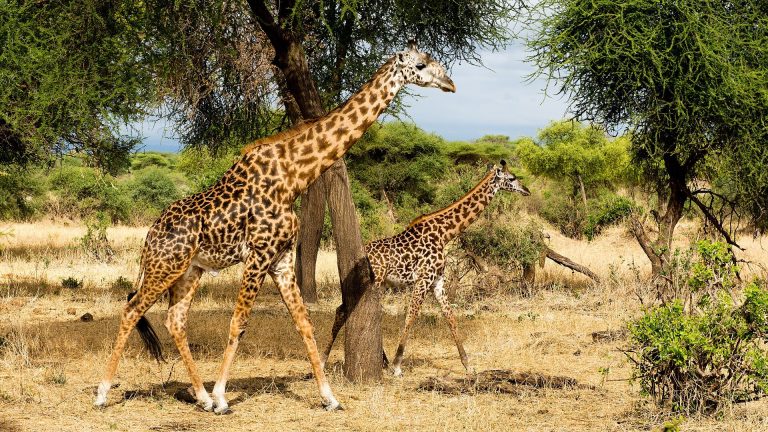
| Giraffe in core area | Absent from crater | Common |
| Fossil sites | Olduvai, Laetoli | None major |
The practical difference is density against space. On the crater floor a half day game drive covers a bowl roughly 260 square kilometres in area, so sightings come quickly and travel time is low. The Serengeti spreads the same species over an area nearly twice the size of the whole NCA, which means more driving but far fewer vehicles at each sighting. Travellers short on days get more from the crater; travellers who dislike company at a sighting get more from the Serengeti, and most itineraries do both.
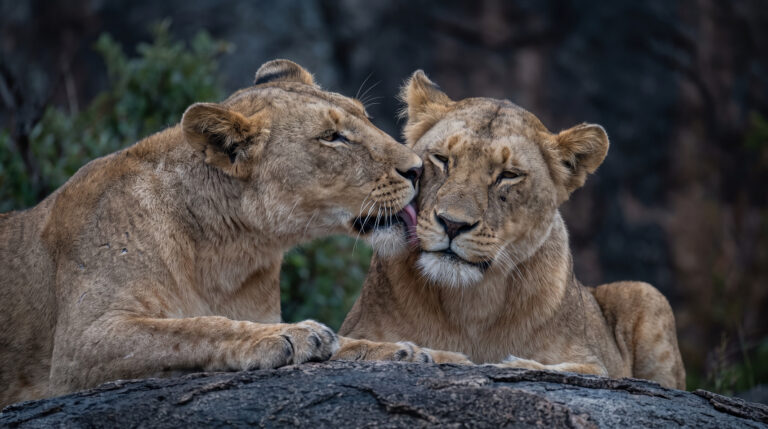
The walls also shape what you see. Giraffe, impala and topi never reach the floor. No crocodiles either. It is, on UNESCO’s assessment, home to the highest density of mammalian predators in Africa.
Is Ngorongoro Conservation Area Worth Visiting?
Ngorongoro Conservation Area is worth visiting for first time safari travellers and anyone with limited days, because a single crater game drive regularly shows lion, buffalo, elephant, hippo, hyena and often black rhino in a single morning. Experienced safari travellers who mind crowds should still go, but should plan an early descent and add the quieter highlands.
The case against is cost and company. A couple pays about USD 554 in conservation fees alone for one night on the rim and one crater drive, before the lodge and vehicle. In July and August, and from mid morning onwards, vehicles gather at the best sightings. NCAA rules cap a sighting at five vehicles, but travellers report queues regardless at peak times.
In its favour, nothing else in Tanzania gives this much wildlife per hour, and the area holds more than the crater. Olduvai Gorge, Empakaai’s flamingo lake and the Ndutu calving grounds turn a single day stop into a two or three day trip with real variety.
Ngorongoro Wildlife: Black Rhino, Lions and More
Ngorongoro Crater holds about 25,000 large animals, mostly grazers, according to UNESCO, and the wider conservation area adds forest, highland and plains species. Nothing is guaranteed. Still, the enclosed floor tilts the odds.
Big Five on the Ngorongoro Crater Floor
The Ngorongoro Crater is one of the few places in Tanzania where a Big Five safari is realistic in a single game drive. Lion and spotted hyena turn up on most drives. Buffalo herds are large and resident, and their numbers peak in the rains. Old bull elephants move between the Lerai Forest and the swamps. Leopard is the hard one.
The black rhino is the reason many people come. The crater population is small and heavily protected, and rhinos often graze far out on the open grassland, so binoculars matter more than a long lens. A sighting is likely on many drives but never certain.
Grazers, Hippos and Smaller Predators
Wildebeest, zebra and both gazelles graze the open floor, with waterbuck mostly near the Lerai Forest. Up to a fifth of the wildebeest and half the zebra leave the crater in the wet season. Hippos wallow in the swamp fed by the Ngoitokitok spring. Jackals and serval turn up often; cheetah and wild dog are rare.
Birds of the Crater Highlands
UNESCO counts around 500 bird species in the NCA. Lesser and greater flamingos feed on the soda shallows of Lake Magadi on the crater floor when water levels suit them, and Empakaai’s crater lake is a flamingo breeding site. Grey crowned cranes and kori bustards are common on the floor, while the rim forests hold sunbirds and turacos.
Ngorongoro Highlights Beyond the Crater
The NCA’s main attractions beyond the crater are Olduvai Gorge, the Laetoli footprints, Empakaai and Olmoti craters, the Shifting Sands and the Ndutu plains, all reached on a guided safari from the rim or Karatu.
Ngorongoro Crater and Lake Magadi
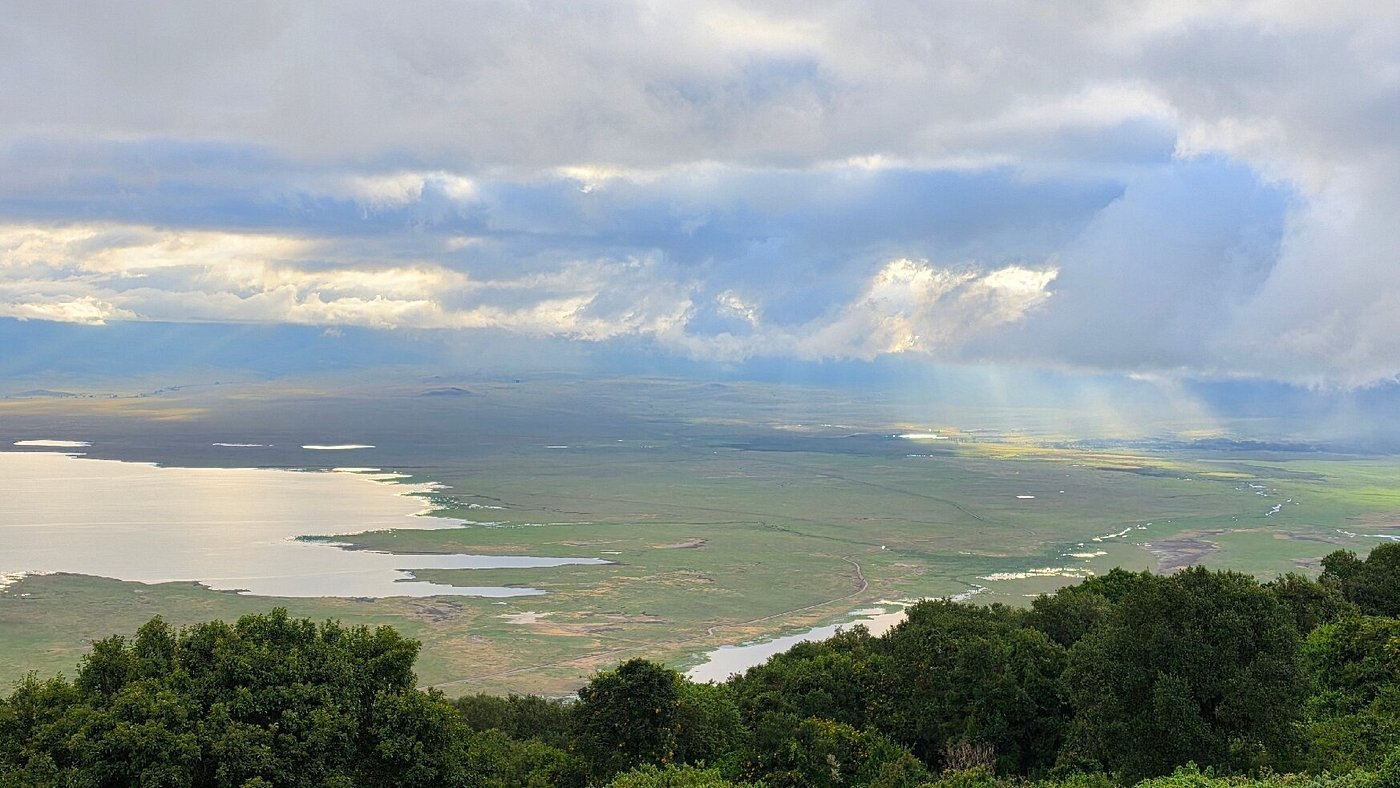
The Ngorongoro Crater is the largest unbroken, inactive and unfilled volcanic caldera in the world. Its floor sits about 1,800 m above sea level, with walls about 610 m high. The seasonal soda lake in the centre goes by two names, Magadi and Makat, both meaning salt. The Lerai Forest of yellow fever trees fills the south west corner, and the Ngoitokitok spring feeds a swamp and a picnic site on the eastern side.
Olduvai Gorge and the Museum
Olduvai Gorge is a steep ravine about 14 km long on the plains between the crater and the Serengeti, and one of the most important sites for human evolution anywhere. Mary and Louis Leakey’s excavations found early Homo and Paranthropus fossils here. The museum and viewpoint make an easy stop of about an hour on the drive to the Serengeti, with an NCAA fee of USD 35.40 per adult.
Laetoli Footprints
Laetoli, south of Olduvai, preserves hominin footprints in volcanic ash dated to about 3.6 million years ago, evidence for early upright walking. Rangers keep the original prints buried for protection, so visitors see the site and a replica. The NCAA charges USD 23.60 per adult, so it suits travellers with a real interest in archaeology more than casual visitors.
Empakaai and Olmoti Craters
Empakaai Crater is a caldera about 6 km wide and 300 m deep with a soda lake on its floor, according to Ngorongoro Serena Safari Lodge, and on clear days its rim looks over Lake Natron and Ol Doinyo Lengai. Olmoti is smaller and shallower, drained by the Munge stream that feeds the main crater. Both see a fraction of the crater’s traffic.
Shifting Sands and the Ndutu Plains
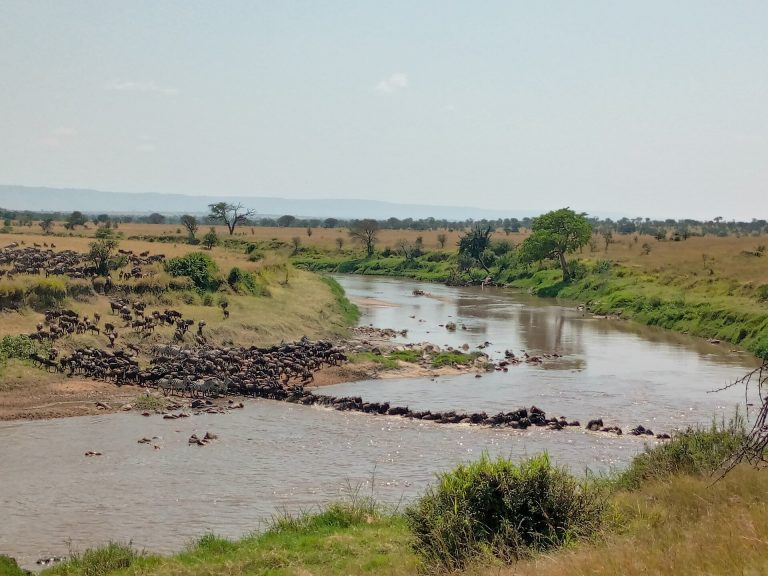
The Shifting Sands is a crescent dune of volcanic ash that moves slowly across the plains north of Olduvai; it shares the USD 35.40 Olduvai fee. The Ndutu area, in the south west of the NCA, is where the wildebeest migration calves on the short grass plains that straddle the Serengeti boundary early in the year.
What to Do in Ngorongoro Conservation Area Besides the Crater Drive
Besides the crater game drive, Ngorongoro Conservation Area offers guided walking safaris with an NCAA ranger, crater hikes at Empakaai and Olmoti, cultural boma visits, calving season game drives at Ndutu and hot air balloon flights, each with its own NCAA fee.
Ngorongoro Crater Game Drive
The Ngorongoro Crater game drive is the core of almost every visit. Vehicles go down a steep one way road early and climb out by the afternoon. Only 4×4 vehicles up to 3,500 kg tare weight may go down, the floor speed limit is 25 kph, and a licensed guide must accompany every crater visitor. Operators commonly plan around about six hours on the floor per descent, and the descent gates close at 16:00.
The crater service fee of USD 295 is charged per vehicle per descent, so it is the same for one passenger or six. That single rule shapes the cost of the whole day: a full shared vehicle divides it six ways, while a couple on a private safari carries it alone. Picnic lunches are allowed at designated sites such as Ngoitokitok, and a hot bush lunch carries a separate USD 23.60 per vehicle permit.
Empakaai Crater Hiking Safari
The Empakaai Crater hike drops from the rim to the lake shore on a steep forest path, with an armed NCAA ranger, as every walking safari in the NCA requires. Travellers report about 30 to 45 minutes down and longer to climb back, at an altitude where the climb is felt. NCAA walking fees run USD 23.60 per adult for a walk of one to four hours and USD 29.50 for longer walks.
Plan a full day. Empakaai is a long, rough drive from the main crater rim. Trip reports mention cold, wet mornings on the rim even in the dry months, so pack a warm layer and shoes with grip for the muddy descent.
Crater Rim Walks and the Endoro Trail
Short guided walks along the Ngorongoro Crater rim run from several lodges; Serena’s resident naturalist leads a 90 minute rim walk. The NCAA’s Endoro Nature Trail, which visits a waterfall and the elephant caves in the northern highland forest, costs USD 17.70 per adult.
Maasai Cultural Boma Tours
Maasai cultural boma tours run at designated bomas along the main road, and the NCAA charges USD 20 per vehicle for entry. NCAA rules forbid photographing local people anywhere except at these designated cultural bomas, so keep the camera down in villages and along the road.
Calving Season Safari at Ndutu
A calving season safari at Ndutu, usually from late January to March with February the common peak, follows huge wildebeest herds giving birth on the plains and the lions, cheetahs and hyenas that follow them. Off road driving inside the NCA needs the Conservation Commissioner’s authorisation. Ask your operator how they handle Ndutu before you book.
Hot Air Balloon Safaris
Hot air balloon safaris operate over the southern plains in the NCA during the calving months, with an NCAA balloon fee of USD 39.53 per person aged 8 and over on top of the operator’s flight price. Wind decides whether you fly. The balloon company sets the flight price.
Ngorongoro Fee Calculator
Enter your group and trip shape to total the NCAA conservation fees for a Ngorongoro Conservation Area visit, before lodge, vehicle hire and guide costs.
Estimated NCAA fees
USD 554.60
About USD 277.30 per paying person, for 2 adults with 1 night inside and 1 crater descent.
| Fee line | How it is charged | USD |
|---|---|---|
| Entry permit | USD 70.80 per adult, USD 23.60 per child, per 24 hour entry | 141.60 |
| Concession or camping fee | Lodge: USD 59 per adult, USD 11.80 per child, per night | 118.00 |
| Crater service fee | USD 295 per vehicle, per descent | 295.00 |
| Walking safari guide fee | Per person | 0.00 |
| Olduvai Gorge and Shifting Sands | USD 35.40 per adult, USD 11.80 per child | 0.00 |
| Laetoli footprints | USD 23.60 per adult, USD 11.80 per child | 0.00 |
| Total NCAA fees | 554.60 | |
Fees are for non East African visitors on the NCAA’s published tariff and are indicative; the NCAA says tariffs can change without notice, and some quotes add VAT. Children under 5 enter free and are not counted. Not included: the vehicle permit (USD 177 for a foreign registered 2,001 to 3,000 kg vehicle; TZS 41,300 if locally registered), lodge rates, vehicle hire, guide fees and tips. Each permit, including the crater service fee, is valid for one entry within 24 hours. Last checked November 2026. Source: Ngorongoro Conservation Area Authority tariffs and visitor guidelines.
Ngorongoro Conservation Area Weather and Seasons
The best time to visit the Ngorongoro Conservation Area for the crater is the long dry season from June to October, when grass is short and tracks are firm; January and February are best for the calving at Ndutu. The crater has resident wildlife all year, so there is no month without game; see the best time to visit Tanzania for the wider circuit.
| Months | Season | Crater | Wider NCA |
|---|---|---|---|
| Jan to Feb | Short dry | Good, green | Calving at Ndutu |
| Mar to May | Long rains | Quiet, muddy | Rough roads |
| Jun to Oct | Long dry | Best viewing | Dusty, busy |
| Nov to Dec | Short rains | Good, fewer cars | Herds return south |
Altitude is the variable most packing lists miss. The crater floor sits at about 1,800 m and the rim roughly 600 m higher, so early mornings on the rim are cold in every month. One traveller in early September described a lodge room cold enough that the in room fire went out and extra blankets were needed. Pack warm.
The long rains from March to May bring the fewest vehicles, but descent roads turn slippery and some highland tracks become hard going. Crowds peak in July and August, especially from mid morning. For a calm crater with decent weather, November and early December are a sensible compromise.
Travelling to Ngorongoro Conservation Area from Arusha
Most travellers reach the Ngorongoro Conservation Area by road from Arusha, about 180 km away, in a safari 4×4 through Karatu to Loduare Gate; a light aircraft flight to Lake Manyara airstrip shortens the trip.
Road Transfer from Arusha via Karatu
The road from Arusha to Karatu is tarred and the drive to Loduare Gate is usually quoted at about three to four hours, depending on stops. From the gate a gravel road climbs to the crater rim. Vehicles in the NCA must be registered company vehicles with a valid tour operator licence, other than private and government vehicles, so most visitors arrive with a safari operator.
Flights to Lake Manyara Airstrip
Scheduled light aircraft from Arusha airport to Lake Manyara airstrip take roughly 25 to 40 minutes on published schedules. A pre arranged vehicle then drives up to the crater rim. Flying makes most sense when the crater is a short add on to a beach or Serengeti trip.
Crossing from the Serengeti
Travellers coming from the Serengeti enter at Naabi Hill and drive east past Olduvai Gorge to the crater. Every pass through the NCA, even a transit with no crater descent, needs the USD 70.80 entry permit per adult.
Ngorongoro Fees and Crater Service Fee Prices
Ngorongoro fees are set by the NCAA, not TANAPA: non East African adults pay USD 70.80 entry per 24 hour permit, USD 59 per night concession fee in a lodge or permanent camp, and USD 295 per vehicle for each crater descent, on the current NCAA tariff.
| NCAA fee | Adult 16+ | Child 5 to 15 |
|---|---|---|
| Entry permit, 24 hours | USD 70.80 | USD 23.60 |
| Lodge concession, per night | USD 59 | USD 11.80 |
| Public campsite, per night | USD 35.40 | USD 11.80 |
| Special campsite, per night | USD 70.80 | USD 35.40 |
| Olduvai and Shifting Sands | USD 35.40 | USD 11.80 |
Under 5s go free. Residents and expatriates living in Tanzania with valid immigration status pay USD 35.40 per adult, and Tanzanian and East African citizens pay TZS 11,800. The crater service fee is USD 295 per vehicle per trip for non East African visitors and TZS 11,800 for citizens. A foreign registered vehicle of 2,001 to 3,000 kg tare weight pays USD 177, while a locally registered one pays TZS 41,300.
Each permit, including the crater service fee, is valid for a single entry within 24 hours, so a second descent the next day is a second crater fee. The NCAA states its tariffs can change without notice, and some quotes add VAT on top of the published figures, so ask whether a quote includes it. The guide to how much a Tanzania safari costs puts these fees in the context of a full trip.
Six adults sharing one vehicle on the same plan pay about USD 179 each, because the crater fee spreads further. Most operators include these fees in the safari price; check the quote lists the concession fee for each night inside the NCA.
Accommodation In and Near Ngorongoro Conservation Area
Accommodation for the Ngorongoro Conservation Area splits between crater rim lodges inside the NCA, which add the USD 59 nightly concession fee but put you at the descent road first, and lodges around Karatu outside the gate, which save that fee but add drive time.
The saving from staying in Karatu is the concession fee alone; entry and crater fees are the same either way. For a couple that is USD 118 a night, which a cheaper Karatu room may or may not outweigh once the longer drive and later start are counted.
Crater Rim Lodges
Crater rim lodges sit on the edge of the caldera at altitude, and rooms often have fires or hot water bottles for the cold nights. Ngorongoro Serena Safari Lodge has 74 rooms built into the rim, with standard rooms from USD 383 per room on its own website and the Kimba Suite from USD 518. Rhino Lodge and Ngorongoro Wildlife Lodge are other long running choices on or near the rim; check rates direct.
Karatu Lodges and Farm Stays
Karatu lodges range from simple guesthouses to coffee farm stays in the Ngorongoro highlands foothills, such as Gibb’s Farm. They suit travellers on a budget and those who find the rim’s altitude and cold uncomfortable. Contact each lodge for current rates.
Campsites Inside the NCA
Camping inside the NCA happens at designated public campsites, such as Simba on the crater rim, at USD 35.40 per adult per night, or at special campsites booked in advance at USD 70.80. Nights are cold and campsites are basic, so camping suits hardy travellers on an organised budget safari.
Ndutu Tented Camps
Ndutu tented camps and lodges in the south west of the NCA put travellers next to the calving herds early in the year, which saves hours of driving from the crater. Lake Ndutu and Lemala Ndutu camps are among those operating; rates vary by season, so ask the camps direct.
How Many Days to Spend in Ngorongoro, with Sample Plans
One day in Ngorongoro covers the crater game drive; two or three days let you add Olduvai Gorge, a highland hike or the Ndutu plains. These plans use verified fees and common drive times, not package prices.
One Day Ngorongoro Crater Safari from Karatu
Leave Karatu before dawn, pass Loduare Gate as it opens and descend into the crater early. Spend the morning on the floor looking for rhino and lion, then eat a packed lunch at the Ngoitokitok picnic site before the climb out. You pay one entry permit per person and one crater service fee, with no concession fee.
Three Day Ngorongoro Highlands and Olduvai Safari
Day one: drive from Arusha, walk the crater rim in the afternoon and sleep on the rim. Day two: an early descent for a full crater game drive. Day three: drive west to Olduvai Gorge and the Shifting Sands, then continue to Ndutu in the calving months or into the Serengeti through Naabi Hill. Swap day three for an Empakaai hike if walking matters more to you than fossils.
Frequently Asked Questions About Visiting Ngorongoro Conservation Area
Is Ngorongoro Conservation Area a national park?
No. The Ngorongoro Conservation Area is a multiple land use conservation area managed by the Ngorongoro Conservation Area Authority, not a national park run by TANAPA. Maasai communities live and graze livestock inside it, which a national park would not allow, and its fees follow a separate NCAA tariff.
How much does it cost to enter the Ngorongoro Crater?
Entering the Ngorongoro Crater costs a non East African adult USD 70.80 for the NCAA entry permit, plus a USD 295 crater service fee shared by everyone in the vehicle. Children aged 5 to 15 pay USD 23.60 entry, under 5s are free, and a night in a lodge inside the NCA adds a USD 59 concession fee per adult.
Can you see the Big Five in the Ngorongoro Crater in one day?
Seeing four of the Big Five in one Ngorongoro Crater game drive is common, with lion, buffalo, elephant and black rhino all resident on the floor. Leopard is the one usually missed, because it keeps to the forested edges. Nothing is guaranteed, and the rhino is often far off. Bring binoculars.
Is the Ngorongoro Crater too crowded?
The Ngorongoro Crater gets busy in July and August and from mid morning, when many day trippers arrive. Travellers who descend as the road opens report far fewer vehicles at sightings. NCAA rules limit a sighting to five vehicles and require them to stay at least 25 metres from animals.
Can you self drive in Ngorongoro Conservation Area?
Private vehicles may enter the Ngorongoro Conservation Area, but a licensed guide or official NCAA guide must accompany all crater visitors, and only 4x4s up to 3,500 kg tare weight may descend. Foreign registered vehicles pay a separate vehicle permit, and driving is allowed only between 06:00 and 18:00.
How cold does it get on the Ngorongoro Crater rim?
The Ngorongoro Crater rim sits at high altitude above a floor of about 1,800 m, so nights and early mornings are cold in every month, and mist is common. Rim lodges often provide fires or hot water bottles. Pack a fleece and a rain layer even for a dry season safari.
Can children visit Ngorongoro Conservation Area?
Children can visit Ngorongoro Conservation Area, and the crater game drive suits families because sightings come quickly with little driving. Under 5s enter free and children aged 5 to 15 pay reduced fees. Balloon passengers must be 8 or older. Walking safaris carry child guide fees.
Do you need a guide for the Empakaai Crater hike?
Yes. Every walking safari in the Ngorongoro Conservation Area, including the Empakaai Crater hike, must be accompanied by an armed NCAA ranger, and walking fees are charged per person. Travellers report a steep descent of about 30 to 45 minutes to the lake shore and a longer climb back.
Planning the crater, Olduvai and the Serengeti as one route takes some juggling of fees and early starts. Tanzania Safari.travel covers Tanzania’s northern parks in depth and can help you shape a Ngorongoro Conservation Area safari around the days and budget you have.