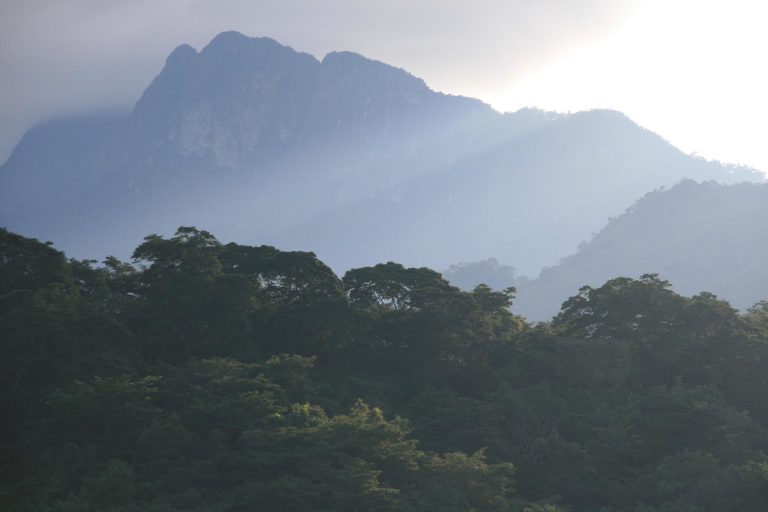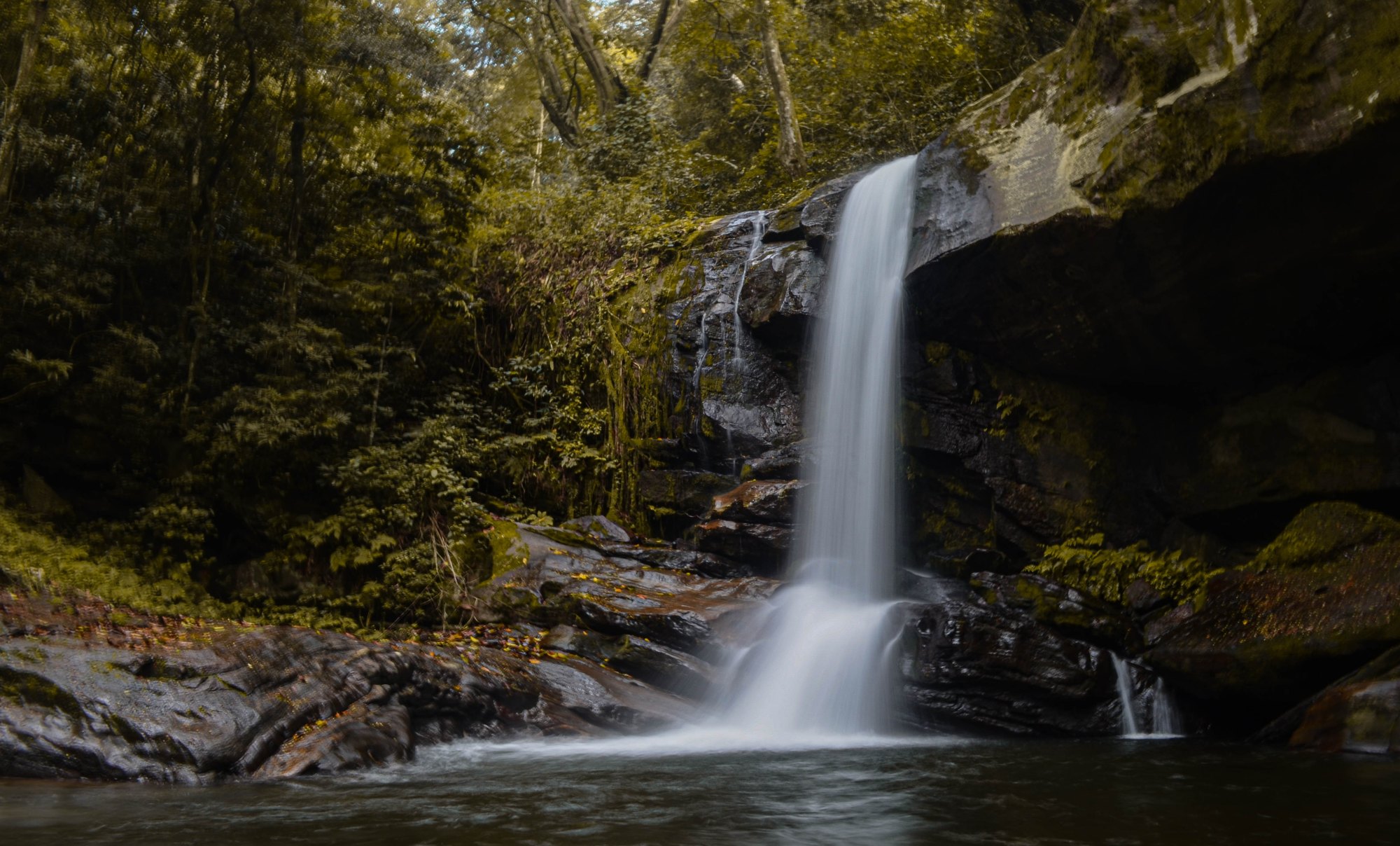
Udzungwa Mountains National Park has no roads inside it, so every visit to this 1,990 km² Eastern Arc rainforest in south central Tanzania is made on foot with a TANAPA guide. Most visitors walk one trail, the four to six hour return hike to the 170 metre Sanje Waterfalls, starting near Mang’ula, about an hour south of Mikumi National Park. The forest is the only home of the Udzungwa red colobus and the Sanje crested mangabey.
Why Travellers Choose an Udzungwa Hiking Safari
Travellers choose an Udzungwa hiking safari because it swaps the vehicle for the trail: you walk through Eastern Arc rainforest to waterfalls and plunge pools, looking for primates that live in no other forest on Earth. For anyone who has spent days in a safari vehicle in Mikumi, Ruaha or Nyerere, a morning forest walk in shade at Udzungwa is a real change of pace.
Three reasons come up again and again. The first is Sanje Falls, a three tier cascade you can stand above and, at the right pool, swim in. The second is the chance of seeing the Udzungwa red colobus or the Sanje mangabey on a guided walk. The third is how easily the park fits a southern circuit trip, since Mang’ula sits on the Mikumi to Ifakara road.
Lion seekers should look elsewhere. Elephants and buffalo do live in the park, yet they keep to the deeper forest and higher grassland, and day hikers on the main trails mostly see monkeys and birds.
Udzungwa Hiking Tours and Activities
Guided hiking is the core activity in Udzungwa Mountains National Park, on trails that run from a 30 minute stroll to a four night expedition, and every one of them needs a TANAPA guide booked at the Mang’ula headquarters. Primate tracking, birdwatching and overnight forest camping all happen along the same trail network.
Choose by the time you have. A spare hour covers Prince Bernhard Falls or the Sonjo Trail. Half a day covers Sanje. Hidden Valleys needs a full day, and Mwanihana Peak needs two or three.
Udzungwa Trail Finder
Filter Udzungwa’s main guided trails by the time you have, how hard you want to walk and what you most want to see.
Showing all 8 trails
| Trail | Time | Effort | Starts at | What it means for you |
|---|---|---|---|---|
| 01Prince Bernhard FallsAbout 500 m from headquarters | Around 30 minutes | Easy | Park headquarters, Mang’ula | A taste of the forest while fees are processed; links on to Njokamoni |
| 02Sonjo Waterfalls TrailTwo cascades on a gentle path | About 35 minutes to the falls | Easy | Sonjo, on the main road | Good second walk after Sanje, or on the way out of the park |
| 03Sanje Waterfalls TrailClimb of about 450 m to a 170 m fall | 4 to 6 hours return | Moderate, one steep upper section | Sanje village, about 10 km past HQ | The signature hike; swim only in pools your guide approves |
| 04Njokamoni TrailAbout 6.5 km, up to about 700 m | Half day | Moderate | Park headquarters | Quieter than Sanje, with a 40 m waterfall and good monkey chances |
| 05Sanje Mangabey TrackingOff trail walk to a habituated troop | A few hours, varies with the troop | Moderate, off path | Forest above Mang’ula | Ask at HQ a day or two ahead; rangers track the troop |
| 06Hidden Valleys TrailLongest day hike, up to 1,300 m | 6 to 7 hours | Hard | Near Hondo Hondo camp | Cool high forest and elephant tracks; the lower path is easy to lose |
| 07Sanje Overnight CampSpecial campsite above the falls | 1 night | Moderate | Sanje village | The falls at first light; needs a special campsite booking |
| 08Mwanihana Peak Trek38 km round trip to about 2,140 m | 1 to 2 nights | Hard | Sonjo village | Porters and camping kit needed; buy 48 or 72 hours of park fees |
No trails match all selected filters. Try removing one filter.
Last checked November 2026. Every trail needs a TANAPA guide booked at the Mang’ula headquarters. Times are typical and vary with pace, rain and wildlife stops; sightings are never guaranteed. Sources: TANAPA Udzungwa visitor guide and tariff, Udzungwa Forest Lodge (Hondo Hondo) trail notes, Africa Geographic.
Sanje Waterfalls Hiking Trail
The Sanje Waterfalls hike is the trail almost every Udzungwa visitor walks, and the best known of Tanzania’s waterfall hikes: a guided climb of roughly 450 metres to the top of a 170 metre, three tier waterfall, taking about four to six hours return. The trailhead lies on the main road about 10 km beyond the headquarters, so you register and pay at Mang’ula first, then drive on with your guide.
Trip reports describe the route closely. The path starts between village houses, where sellers offer walking sticks, then zigzags up a ridge on earth steps braced with branches. About halfway, a picnic bench looks across the valley at the falls. A steeper push follows to the top.
At the top the river slides over the lip of the falls beside you, with the Kilombero sugar fields far below. Guides allow swimming only in certain pools; one walker was told the middle cascade was off limits because of its force and hidden rocks. Expect cold water.
Coming down often takes longer than going up. Guides slow the descent to scan the canopy, which is when walkers often spot colobus high above the trail.
Sanje Mangabey Tracking with Park Rangers
Sanje mangabey tracking is an off trail walk to a habituated troop living in the forest above the Mang’ula area, which park staff follow most days. Hondo Hondo, the tented camp beside the park, says the rangers usually know where the troop is and can arrange a visit with a day or two of notice. Ask at the headquarters when you arrive rather than on the morning you want to go. The Njokamoni Trail is the other good bet, since it is quieter than Sanje and troops of monkeys are often seen along it.
Mwanihana Peak Trekking Expedition
The Mwanihana Peak trek is a 38 km round trip from Sonjo village to a summit of about 2,140 metres, walked over one or two nights with a guide, porters and camping kit. The trail climbs through miombo woodland, open grassy plateaus, montane forest and bamboo to heather at the top, and elephants are often seen on the way.
The first day rises gently to the Njia Panda campsite at about 900 metres. Summit day gains some 1,250 metres, steeply once the path enters the forest at around 1,500 metres. Park fees run in 24 hour blocks, so a one night trek needs 48 hours of fees and a two night trek needs three days.
Hidden Valleys Day Hike
The Hidden Valleys hike is the longest one day trail in Udzungwa, about six to seven hours, climbing to 1,300 metres where tall mossy trees keep the air cool. It follows river valleys above the escarpment where elephant and buffalo tracks cross the path, then drops steeply past the Moyer waterfall turnoff. The lower section crosses old burn scars where the trail is easy to lose, which is one more reason the guide earns the fee.
Birdwatching Safaris in the Udzungwa Forest
Birdwatching in Udzungwa means searching for Eastern Arc endemics among more than 400 recorded species, best done on early morning birding walks along forest edges and ridges. The Udzungwa forest partridge and rufous winged sunbird head most birders’ lists, with Iringa akalat, white chested alethe and green headed oriole close behind. Hornbills roost in large numbers along the forest edge at Hondo Hondo each evening, so birding starts before you even reach a trailhead.
Overnight Forest Camping Trips
Overnight camping in Udzungwa is booked as a special campsite stay with a guide, from one night above Sanje Falls to the four night Lumemo Trail. Hondo Hondo packages these trips with tents, porters, a cook and food. The reward is tree hyrax calls after dark and the falls to yourself at first light.
Primates and Birds of Udzungwa Mountains National Park
Udzungwa Mountains National Park is known first for its primates, above all the Udzungwa red colobus and Sanje crested mangabey, which live only here, and second for a bird list above 400 species. Sightings depend on the trail, the hour and luck; nothing here is guaranteed, and the canopy is high.
Udzungwa Red Colobus and Sanje Crested Mangabey
The Udzungwa red colobus, also sold as the Iringa red colobus, is a red and black leaf eater that crashes through the high canopy in groups. The Sanje crested mangabey was unknown to science until 1979; troops of 30 to 50 forage on the ground and in the lower trees around the Sanje River forest. Walkers on Sanje often get only a brief view of the colobus through leaves, so a camera with a long zoom helps.
Other Monkeys and Galagos on the Forest Trails
Black and white colobus, blue (Sykes’) monkeys, vervets and yellow baboons are the primates day hikers see most. Galagos, or bushbabies, come out after dark.
Elephants, Duikers and Forest Mammals
Elephants, buffalo and leopard live in the park but are seldom seen on the short trails; their tracks are common on Hidden Valleys and Mwanihana. On lower paths look for bushbuck, red and blue duikers, and the grey faced sengi, a giant elephant shrew that dashes across leaf litter.
Udzungwa Forest Partridge and Other Birds
The Udzungwa forest partridge lives only in these mountains and keeps to the forest floor. More visible birds include Livingstone’s turaco, crowned eagle, hornbills, greenbuls and sunbirds.
Chameleons, Frogs and Butterflies
Wet gullies hold several chameleons found only in the Udzungwa range or the wider Eastern Arc, plus frogs and toads still being described by scientists. Butterflies gather at stream crossings on sunny mornings.
What Makes Udzungwa Mountains National Park Unique
Udzungwa stands apart because it has no road network inside, rare among Tanzania’s national parks, and because two of its primates live nowhere else. It is also the largest and richest of the dozen or so forested ranges in the Eastern Arc chain, which runs from the Taita Hills in Kenya down through Tanzania.
Most travellers do both: Mikumi for big mammals on one day, Udzungwa for the forest on the next, from a single base.
The Story of Udzungwa: From Forest Reserves to National Park
Udzungwa Mountains National Park was gazetted in 1992 from forest reserves first set aside in the 1950s, and Tanzania National Parks (TANAPA) manages it today. The name comes from Wadzungwa, a term linked to the Hehe people who lived on the slopes.
Prince Bernhard of the Netherlands opened the park, and the small waterfall near headquarters carries his name because he walked there instead of to Sanje. About 2,500 plant species have been recorded, roughly a quarter of them endemic, and new trees and toads are still being described.
Finding Udzungwa on the Map of Southern Tanzania
Udzungwa Mountains National Park lies in south central Tanzania, split between Kilolo District in Iringa Region and Kilombero District in Morogoro Region. Its eastern scarp drops to the Kilombero Valley, the Great Ruaha River runs along its northern side, and the park headquarters and main gate sit at Mang’ula village on the Mikumi to Ifakara road. Mikumi National Park lies about 60 km to the north, with Nyerere National Park to the east and Ruaha to the west.
Main Sights of Udzungwa Mountains National Park
The main sights of Udzungwa Mountains National Park are its waterfalls, its two big peaks and the viewpoints over the Kilombero Valley, all of them reached on foot.
Sanje Waterfalls
Sanje Falls drop about 170 metres in three tiers through rainforest, with pools between the drops and a full view of the falls from a ridge bench halfway up the trail. The river flows all year, though the volume is highest after the rains.
Prince Bernhard Falls near Park Headquarters
Prince Bernhard Falls is a small forest cascade about 500 metres from the Mang’ula headquarters, an easy walk while your fees are being processed. A larger fall sits a little further up the track by Campsite 2.
Njokamoni and Sonjo Waterfalls
Njokamoni waterfall is a single drop of about 40 metres into a shallow pool, reached on a quieter 6.5 km trail from headquarters. The two Sonjo falls are the easiest of all, about 35 minutes from the road on a gentle path.
Mwanihana and Luhomero Peaks
Mwanihana, at about 2,140 metres, is the summit most hikers reach. Luhomero, at 2,576 metres, is the highest point in the park and sits deep in the interior, well beyond normal visitor routes.
Kilombero Valley Viewpoints
Rock shelves on the Sanje trail and the ridges above Mang’ula look east over the Kilombero Valley’s rice and sugar fields and the river beyond, best in the clear air of the dry months.
Best Months for an Udzungwa Hiking Safari
The best months for an Udzungwa hiking safari are June to October, when the dry season firms up trails, cools the higher slopes and makes the Mikumi road easiest. The park opens all year, and seasons change the hike more than the wildlife.
March to May brings the long rains: steep sections on Sanje and Hidden Valleys turn muddy and slippery, and multi day treks are harder to run. November brings short rains. January and February often give drier spells with heat of around 31 to 32°C at the lowest altitudes, making them a quieter option for walkers who start early.
The dry season has one cost. Sanje flows all year, but the river runs lower late in the dry season than just after the rains, so June and July give the best balance of firm trails and a full waterfall.
Udzungwa Park Fees for Foreign and Resident Visitors
Udzungwa Mountains National Park entry costs TZS 76,650, about US$30, per non resident adult on TANAPA’s current tariff, which runs from 1 July to 30 June. Fees cover 24 hours from entry, and children under five enter free. TANAPA takes cards and mobile money through its government payment gateway.
| Fee | Non resident | Note |
|---|---|---|
| Adult entry | US$30 | Per 24 hours |
| Child entry | US$10 | Ages 5 to 15 |
| Guide | US$20 | Per group per day |
| Public campsite | US$30 | Per adult night |
| Special campsite | US$50 | Book ahead |
| Park rest house | US$50 | Per person night |
TANAPA’s park page for Udzungwa still shows US$50 for an adult, but the current tariff that the booking system charges from lists TZS 76,650, which converts to US$30. TANAPA says its fees include 18% VAT where applicable, while some operators add VAT on top, so confirm the final figure when you book. The guide, camping and rest house fees in the table come from that tariff, which also sets walking safari fees of US$20 for walks of one to four hours and US$25 for longer ones, so ask at Mang’ula whether one applies to your trail.
Places to Stay for an Udzungwa Safari
Most Udzungwa visitors sleep in Mang’ula village at the park gate, in a forest tented camp, a simple hotel or a guesthouse, while others stay in Mikumi and visit on a day trip. Inside the park there are only campsites and a TANAPA rest house.
Hondo Hondo Udzungwa Forest Tented Camp
Hondo Hondo, also called Udzungwa Forest Lodge, sits on the park boundary with six en suite forest tents, five thatched bandas with shared bathrooms, and a campsite with solar hot showers. It runs Sanje day hikes and packaged overnight treks, and its grounds face the forest canopy where hornbills roost at dusk. Rates are given on request.
Udzungwa Falls Lodge and Twiga Hotel in Mang’ula
Udzungwa Falls Lodge sits on the lower slopes of the range. The Twiga Hotel, run by TANAPA, offers plain rooms close to the park headquarters. Guesthouses in Mang’ula cover the budget end. Confirm rates directly with each property.
Camping and the TANAPA Rest House Inside the Park
TANAPA charges US$30 per adult per night at public campsites and US$50 at special campsites, which need advance booking, and the Udzungwa rest house costs US$50 per person per night. Overnight treks use the special campsites.
Staying in Mikumi for a Udzungwa Day Trip
Camps around Mikumi National Park, such as Vuma Hills Tented Camp, run day excursions to Udzungwa, about an hour’s drive south to Mang’ula. The trade off is a later start on the Sanje trail and the heat that comes with it.
Reaching Udzungwa: Routes and Transfer Times
Most visitors reach Udzungwa by road from Dar es Salaam, a trip of about 350 to 380 km and five to six hours via Morogoro and Mikumi. Charter or scheduled light aircraft, the TAZARA railway and buses all serve the Mang’ula area too.
Driving from Dar es Salaam via Mikumi
The road route runs Dar es Salaam, Chalinze, Morogoro and Mikumi, then turns south on the Mikumi to Ifakara road to Mang’ula. The highway crosses Mikumi National Park, so game such as giraffe and zebra are often visible from the road.
Day Transfer from Mikumi National Park
From Mikumi town to the headquarters at Mang’ula is about 60 to 65 km, roughly an hour by road. Allow extra time on the speed bumps through the villages and any unpaved stretches.
Flights to Kilombero Airstrip
Kilombero airstrip, about 24 km from the park gate, takes charter flights, and Hondo Hondo reports that Auric Air includes it on its Dar es Salaam to Iringa service. Safari Air Link flies to Mikumi for connections with Ruaha, Nyerere and Zanzibar. Check current schedules with the airlines.
TAZARA Train and Buses to Mang’ula
The TAZARA railway from Dar es Salaam towards Zambia stops at Mang’ula station, just outside the park, about twice a week, though timings are unreliable and services have paused before. Daily buses from Dar es Salaam to Ifakara pass Mang’ula, taking about six to seven hours.
Udzungwa Trip Ideas from 1 to 4 Days
Udzungwa trips range from a single day on the Sanje trail to a four day southern circuit with Mikumi, and two nights in Mang’ula is the length most walkers find comfortable. These plans use the drive times and trail lengths above.
One Day Sanje Waterfalls Trip from Mikumi
Leave Mikumi at dawn, reach Mang’ula in about an hour, register, and start the Sanje climb by 8am. Back at the trailhead by early afternoon, drive back to Mikumi for an evening game drive.
Two Day Udzungwa Hiking Itinerary
Day one: drive from Dar es Salaam to Mang’ula, about six hours, with a late afternoon walk to Prince Bernhard Falls. Day two: Sanje Falls in the morning, then the short Sonjo trail on the way out, or Njokamoni if your legs allow.
Four Day Mikumi and Udzungwa Safari
Day one: Dar es Salaam to Mikumi with an afternoon game drive. Day two: full day in Mikumi. Day three: transfer to Mang’ula and hike Sanje. Day four: Njokamoni or mangabey tracking in the morning, then the drive back to Dar es Salaam. Serious hikers can swap days three and four for the Mwanihana trek.
Udzungwa Mountains National Park FAQs
Is Udzungwa Mountains National Park worth visiting?
Udzungwa Mountains National Park is worth visiting for walkers, birders and anyone adding a forest day to a Mikumi or Ruaha safari, because few Tanzanian parks let you hike to a 170 metre waterfall and look for endemic monkeys. Skip it if you dislike steep, humid climbs or want big game, since day hikers rarely see large mammals.
How hard is the Sanje Waterfalls hike in Udzungwa?
The Sanje Waterfalls hike is moderate with one harder upper section: about 450 metres of climbing on earth steps, taking four to six hours return. Heat and humidity make it feel harder than its length. Reasonably fit walkers manage it, and families with children of about eight and older often do the lower section.
Do you need a guide in Udzungwa Mountains National Park?
Yes, every trail in Udzungwa Mountains National Park needs a TANAPA guide, assigned when you register at the Mang’ula headquarters. The guide fee on TANAPA’s tariff is US$20 per group per day for non residents.
Can you swim at Sanje Falls in Udzungwa?
Swimming at Sanje Falls is allowed only in pools your guide says are safe, usually near the upper tier. TANAPA rules permit swimming only at signed pools and when conditions allow, and after heavy rain the current can be strong.
How many days do you need in Udzungwa?
One full day covers the Sanje Falls hike, and two days let you add Njokamoni, Sonjo or a mangabey tracking walk. Hikers attempting Mwanihana Peak need two to three days in the park, plus travel time.
Can you visit Udzungwa without a car?
Udzungwa can be reached without a car. Daily buses from Dar es Salaam to Ifakara pass Mang’ula, and the TAZARA train stops at Mang’ula station. You still need a lift to the Sanje trailhead, about 10 km from headquarters, which lodges and local drivers arrange.
What should you pack for hiking in Udzungwa?
Pack shoes with good grip, at least two litres of water per person, a light rain layer, insect repellent, swimwear, binoculars and a camera with a zoom lens. Long trousers help against biting insects and leeches in wet months. TANAPA also asks hikers to carry snacks and start early.
Is there malaria in Udzungwa Mountains National Park?
Mang’ula and the lower trails sit at low altitude in a region where malaria occurs, so speak to a travel clinic about prevention before visiting Udzungwa. Use repellent at dusk and sleep under the nets lodges provide.
Tanzania Safari.travel plans Tanzania safari trips that pair Udzungwa’s forest trails with game drives in Mikumi, Ruaha and Nyerere, built around verified park fees, drive times and lodges near each gate. Tell us your dates and fitness level, and we will suggest how many nights in Mang’ula your trip needs.