
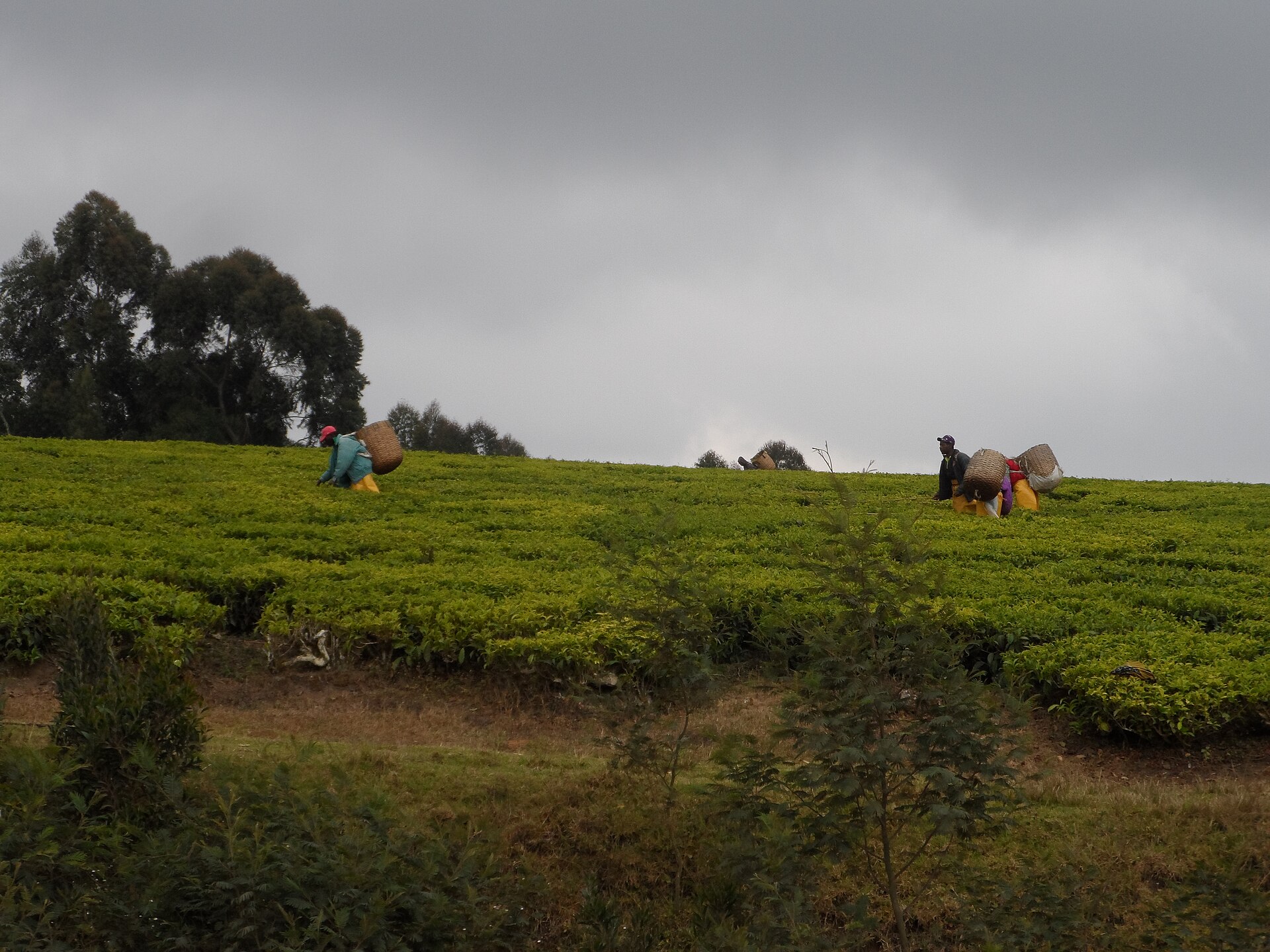
Tea country south of Iringa
Mufindi is the highland district south of Iringa, and it carries some of the largest tea plantings in Tanzania. The country is rolling, high, cool and wet — closer in feel to a temperate upland than to anything else on a Tanzanian itinerary — and the estates run in blocks across it for kilometre after kilometre.
Mufindi District Council records that before independence the area was part of Iringa District, under the Uhehe “Native Authority” and the chief Mutwa Adam Sapi Mkwawa. At independence in 1961 the area was one of nine districts, within the Southern Highlands Province of Iringa, Ruvuma and Rukwa. Mufindi District itself was established on 1 October 1965, and now has 27 wards built from the older divisions of Ifwagi, Kibengu, Malangali, Sadani and Kasanga.
What the district council lists
Mufindi District Council names, as the attractions in its area: the tea estates, the Kihansi falls and the spray toad, a floating island, the Ngwazi dam, the Sao Hill forest plantation, the German fort at Chamumbwi, and the Sao Hill forest wetland.
The tea is the reason most visitors come. The tea plantation tours guide covers what an estate visit actually involves and how the working estates differ from the smallholder version; Mufindi is where you go if you want the scale of the plantings and are already travelling south.
Sao Hill is the largest forest plantation in the country, a working softwood estate rather than natural forest, and the wetland within it is listed separately by the council. It is an unusual landscape to drive through: plantation conifer at altitude in East Africa.
Kihansi sits on the escarpment below the district. It is best known for the Kihansi spray toad, a species that lived only in the spray zone of the Kihansi gorge and became one of the better-documented amphibian conservation cases in Africa after the gorge was dammed for hydropower. Tanzania Forest Services names Kihansi and the Kidatu power station among the attractions near its Uzungwa Scarp reserve, which is the neighbouring protected area.
Trout, horses and forest
Mufindi’s highland streams hold trout, introduced during the colonial period and now the basis of a small and genuinely unusual fishing tradition at altitude. It belongs to the freshwater fishing family rather than to lake fishing, and the whole thing is small-scale and local.
The Mufindi highlands are also one of the very few places in Tanzania where horse riding is a real activity rather than a novelty, with estate tours offered on horseback. That combination — tea, trout, horses, pine forest and cold nights — is what gives the district its reputation among Tanzanians as somewhere that feels like nowhere else in the country.
Forest walking on the natural forest patches and around the wetland is the other activity, and it suits the same visitor: forest walks rather than game viewing.
Getting there
Mufindi lies off the A7 south of Iringa. There is no airstrip with scheduled service and no railway station; everything here is reached by road, and the access roads into the estates are unsurfaced — the guide to driving and chartering in Tanzania covers what that means for a self-driven or chartered leg. The nearest town of any size is Iringa, which is served by regional flights and sits on the trunk road from Dar es Salaam.
When to go
This is unimodal country: one rainy season from November into April or May, wetter in its second half. Altitude keeps Mufindi cold, and visitors from the coast consistently underpack. The dry months from June to October give the most reliable access on unsurfaced estate roads and the best chance of long views; the wet season is greener, and the tea is being picked either way.
Where it fits in a trip
Mufindi is a two-or-three-night stop on the road between Iringa and Njombe, on the way into the Southern Highlands proper. It suits travellers who have finished the safari part of a southern circuit at Ruaha and want a complete change of landscape before heading further south to Mbeya and Lake Nyasa.
It does not work as a standalone destination flown into from Dar es Salaam, and it is not a wildlife destination at all. It is an addition to a southern loop for travellers who already have the days to spare, which the guide to how much time Tanzania asks for puts in context.
Common questions
What is Mufindi known for?
Tea. The district carries some of the largest plantings in Tanzania, alongside the Sao Hill forest plantation, highland trout streams and cold, high, rolling country unlike anywhere else on a Tanzanian itinerary.
Can you visit a tea estate?
Estate visits operate here, including tours on horseback. Arrangements are made through whoever is handling the Southern Highlands leg rather than booked from a central system.
Is there wildlife?
Not in the safari sense. Forest birds, the natural forest patches, and the amphibian conservation story at Kihansi below the escarpment. The nearest serious game viewing is Ruaha.
How cold does it get?
Cold enough to need proper clothing at night year-round. The neighbouring Njombe Town Council records a cold season from May to August with temperatures dropping to around four degrees Celsius, and Mufindi sits in the same highland belt.