Serengeti National Park covers 14,763 square kilometres of northern Tanzania and is home to the Great Migration, a circuit of more than 1.5 million wildebeest and zebra, plus over 3,000 lions on TANAPA’s count. Safaris reach it on a one hour flight from Arusha or a full day’s drive through Ngorongoro. Foreign adults pay USD 82.60 per 24 hours in the high season, VAT included.
Wildlife in Serengeti National Park
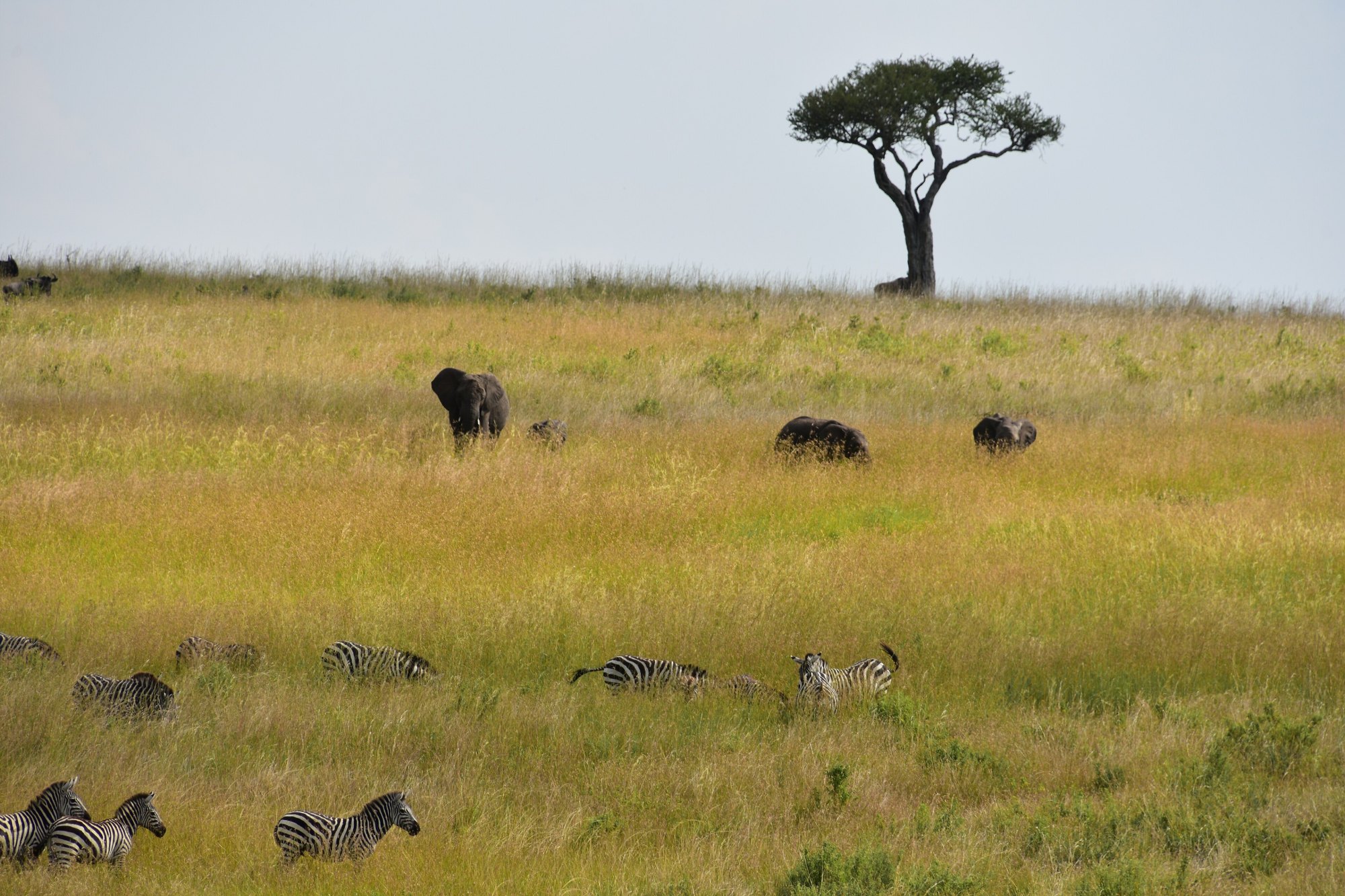
Serengeti National Park holds Africa’s largest concentration of plains game and all of the Big Five, with lion, leopard, cheetah and spotted hyena seen on most game drive safaris and black rhino the rarest of the five. Numbers peak wherever the migrating herds are, but the resident predators and grazers stay put all year, so a Serengeti safari has strong game viewing in every month.
The park sits at 920 to 1,850 metres, a mix of short grass plains in the south, acacia savannah around Seronera, riverine forest along the Grumeti and Mara rivers and rolling woodland in the north. Each habitat holds a different set of animals, which is why guides plan routes by area rather than by species.
The Great Migration of Wildebeest and Zebra
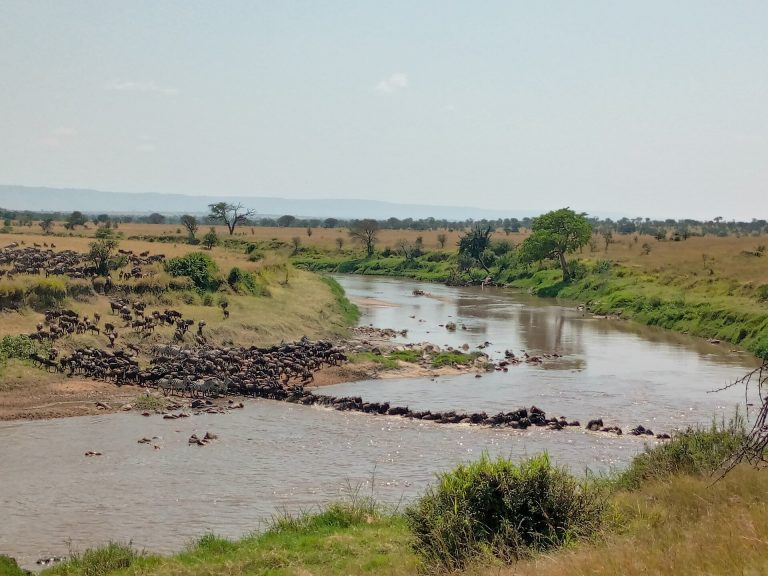
The Great Migration is a year round loop of wildebeest, zebra and gazelle through the Serengeti and Kenya’s Masai Mara, driven by rain and fresh grass. TANAPA puts the herds at over 1.5 million animals. They calve on the southern plains around Ndutu in January and February, drift west and north through the Western Corridor from May to July, and spend roughly July to October in the northern Serengeti and the Mara, where the river crossings happen.
Timing moves with the rain from one season to the next. A late short rains season can hold the herds in the north into November, and an early dry spell can push them off the southern plains in March. River crossings are short and unpredictable: a herd can mass on the bank for hours and then turn away, and when a crossing does happen it may last half an hour. Travellers who build a whole trip around a crossing sometimes come home without one, while those who aim for the herds themselves rarely leave disappointed.
Serengeti Migration Month Planner
Pick your travel month, or what you most want to see, to find where the herds usually are, which airstrip to fly into and where to base yourself.
Showing all 12 months
| Month | Herds usually in | Fly into | Where to base | What to expect |
|---|---|---|---|---|
| 01January | Southern plains and Ndutu | Ndutu or Serengeti South | Camps around Ndutu and the southern plains | Calving starts late in the month. Short rains are ending and the south is busy. |
| 02February | Southern plains and Ndutu | Ndutu or Serengeti South | Camps around Ndutu and the southern plains | Calving peak, with lions, cheetahs and hyenas hunting the newborns. Book months ahead. |
| 03March | Southern plains, starting to move toward Moru | Ndutu or Seronera | Ndutu early in the month, Seronera later | Long rains begin from mid March. Fewer vehicles and lower lodge rates. |
| 04April | Central Serengeti and the Moru area | Seronera | Lodges around Seronera | Long rains. Some tracks turn to mud and a few seasonal camps close; green season rates. |
| 05May | Central Serengeti moving into the Western Corridor | Seronera or Grumeti | Seronera, or the Western Corridor late in the month | Rains ease from mid May. High season entry fees resume on 16 May. |
| 06June | Western Corridor and the Grumeti River | Grumeti or Sasakwa | Camps in the Western Corridor | Dry season starts. First Grumeti River crossings are possible. |
| 07July | Western Corridor, then pushing into the north | Grumeti, then Kogatende | Western Corridor early, Mara River camps late in the month | Mara River crossings become possible late in the month. Busy across the park. |
| 08August | Northern Serengeti around Kogatende and Lamai | Kogatende or Lamai | Camps near the Mara River | Mara River crossings. The busiest weeks in the park. |
| 09September | Northern Serengeti around Kogatende and Lamai | Kogatende or Lamai | Camps near the Mara River | Mara River crossings continue. Still busy at the crossing points. |
| 10October | Northern Serengeti, starting to drift south | Kogatende or Lobo | Mara River or Lobo camps | Crossings still possible. Dry season ends and crowds thin. |
| 11November | Moving south through Lobo and the eastern woodlands | Lobo or Seronera | Lobo or Seronera | Short rains begin as afternoon storms. Low season from early November. |
| 12December | Arriving back on the southern plains | Ndutu or Seronera | Ndutu or Seronera | Herds settle in the south ahead of calving. Quiet until the holiday weeks. |
No months match both choices. Try removing one filter.
Last checked November 2026. Herd positions are typical patterns that shift with the rains each season, and sightings and crossings are never guaranteed. Airstrips: Coastal Aviation route list. Fee season: TANAPA tariff.
Lions, Leopards and Cheetahs of the Serengeti
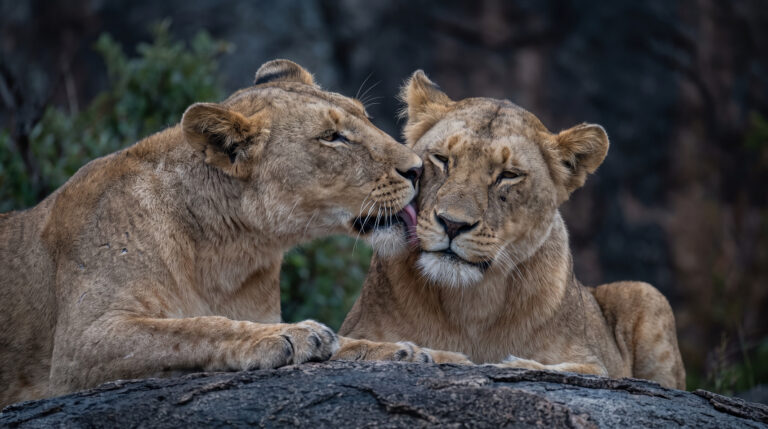
Big cat sightings are the main reason many travellers rate the Serengeti above other parks. TANAPA’s park page counts more than 3,000 lions. Prides rest on the granite kopjes of the central and southern plains, leopards use the sausage trees and yellow fever acacias along the Seronera River, and cheetahs hunt the open short grass south of Seronera, especially during calving.
The flip side is crowding. Trip reports from the August peak describe 20 or more vehicles at a single leopard near Seronera, and the same cat can draw a queue that takes half an hour to clear. A guide who drives away from the radio calls, toward the quieter Moru or Namiri areas, usually finds cats with only a handful of other cars around.
Elephants, Black Rhino and Other Large Mammals
Elephants are most common in the northern woodlands around Lobo. Buffalo herds move through the whole park, while hippos and Nile crocodiles crowd the Grumeti and Mara rivers. Black rhino survive in a small, closely guarded population around the Moru Kopjes, and sightings are rare; the Ngorongoro Crater gives better rhino odds than anywhere in the Serengeti. Smaller animals reward patient drives: bat eared fox, serval, dik dik, topi and Coke’s hartebeest are all regulars.
Birds of Serengeti National Park
Birdwatching safaris in Serengeti National Park can turn up around 500 species on TANAPA’s figures, from ostrich and kori bustard on the plains to secretary birds, several vulture species and Fischer’s lovebird, one of several birds found only in Tanzania or close by. November to April is the strongest birding season, when migrants arrive from Europe and resident species are in breeding plumage.
Best Time to Visit the Serengeti
The best time to visit the Serengeti for general game viewing is the dry season from June to October, while January and February are best for the wildebeest calving on the southern plains. Both windows bring the most visitors and the highest lodge rates, so the right month depends on whether the herds, the crowds or the price matters most to you.
June to October: Dry Season Game Viewing
From June the grass shortens, water shrinks to the rivers and wildlife becomes easier to find. Afternoons reach about 25C, mornings drop to around 14C and an open vehicle at dawn feels cold, so a fleece and a warm hat earn their place in the bag. This is the season for the Mara River crossings in the north, and it is also when the Seronera area is at its busiest.
November to March: Short Rains and Calving
The short rains arrive in November as afternoon storms that rarely spoil a full day. By December the herds are back on the southern plains, and from late January to February thousands of calves are born each day around Ndutu, drawing lions, cheetahs and hyenas. The grass is green, the light is clear and the birding is at its peak.
April and May: the Long Rains
The long rains from mid March to mid May bring the quietest weeks. Some black cotton soil tracks turn to deep mud and a few seasonal camps close, though many lodges drop to green season rates. Resident predators stay in their territories, so game viewing near Seronera holds up well for travellers who can live with a wet afternoon.
First time visitors who want the herds and can book early do well with late June or July in the Western Corridor and north. Travellers watching the budget, or who dislike crowds, get more for their money in November or early March.
Things to Do in Serengeti National Park
Game drive safaris are the core activity in Serengeti National Park, and TANAPA also licenses hot air balloon safaris, guided walking safaris, bush meals and sundowners. Night drives are not allowed inside the park itself; operators run them in the neighbouring wildlife management areas and private concessions.
Game Drive Safaris on the Serengeti Plains
A Serengeti game drive safari usually runs from first light until lunch and again from mid afternoon until the 18:00 curfew, when every vehicle must be back at camp. Full day drives with a packed lunch suit the northern and western areas, where sightings are spread out. Pop top 4×4 vehicles are standard, and a private vehicle lets you sit with one sighting for as long as you like.
Hot Air Balloon Safari over the Serengeti
The hot air balloon safari is the Serengeti’s signature splurge. Flights launch at sunrise from Seronera, the Western Corridor and the south, drift for about an hour over the plains and end with a bush breakfast. TANAPA’s tariff lists a balloon safari fee of USD 50, charged on top of the operator’s own price, which is quoted when you book.
Walking Safaris with an Armed Ranger
Walking safaris in the Serengeti go out with an armed TANAPA ranger and a guide, and they show the small life that vehicles miss: tracks, dung, termite mounds, birds and the smell of the bush. The current tariff charges non resident adults USD 20 for a short walk and USD 25 for a long walk, plus a ranger fee of USD 20.
Bush Meals and Sundowners in the Serengeti
A bush breakfast or lunch under an acacia, or a sundowner on a kopje, turns a game drive into a slower afternoon. TANAPA charges USD 5 per person for each, usually folded into the lodge or operator price.
Cultural Tours and Olduvai Gorge
Maasai village visits take place outside the park boundary, mostly in the Ngorongoro Conservation Area, since no one lives inside the national park. Olduvai Gorge, where Louis and Mary Leakey’s finds reshaped the study of human origins, sits a short detour off the road between Ngorongoro and Naabi Hill Gate and has a small museum worth an hour on a road safari.
Top Attractions in the Serengeti
The Serengeti’s best known places are the Seronera River Valley, the Grumeti River, the Mara River crossing points, and the granite kopjes that break the plains. Most are reached on game drive safaris from the lodges nearby.
Seronera River Valley
The Seronera Valley in the central Serengeti has year round water, which keeps leopards, lions and grazers in the area whatever the migration is doing. It is the most visited part of the park, with the main airstrip, the visitor centre and many lodges within 10 kilometres.
Retima Hippo Pool
Retima Hippo Pool, on the Grumeti River north of Seronera, holds a large pod of hippos packed into a few deep pools, and it makes a good late morning stop on a Seronera game drive.
Moru, Simba and Gol Kopjes
Kopjes are granite outcrops that rise from the plains and give lions shade and lookout points. Moru Kopjes, in the south west, is where the rhino population lives. Simba Kopjes sit on the road south from Seronera, and the Gol Kopjes in the far south east are a cheetah stronghold. Visiting the Gol Kopjes carries a separate vehicle entry fee on the TANAPA tariff.
Grumeti and Mara River Crossing Points
The Grumeti River in the Western Corridor carries large Nile crocodiles and sees the first crossings in June and July. The Mara River in the far north, near Kogatende and Lamai, is where most crossing footage is filmed, between roughly July and October.
Lobo Valley and the Northern Woodlands
Lobo, in the north east near the Kenyan border, has rocky hills, elephant herds and far fewer vehicles than Seronera. The herds pass through on their way north and again in November.
About Serengeti National Park
Serengeti National Park is Tanzania’s oldest national park, gazetted in 1951 and managed today by Tanzania National Parks. Its name comes from the Maa word for endless plains. A game reserve of 2,286 square kilometres was set aside in the southern and eastern Serengeti in 1930, and the first national park included the Ngorongoro highlands until 1959, when the Ngorongoro Conservation Area was split off so that Maasai herders could keep living and grazing there.
The park reached the Kenyan border after that split, and the Lamai Wedge between the Mara River and the border was added in 1965, giving the herds a protected corridor north. UNESCO inscribed the park in 1981 for its natural beauty and its biodiversity, and the wider Serengeti and Ngorongoro area is also a UNESCO biosphere reserve. Bernhard Grzimek’s book and film Serengeti Shall Not Die brought the park to a world audience in the late 1950s.
What Makes the Serengeti Unique
The Serengeti stands apart for its scale: no other Tanzanian park combines an unfenced area of 14,763 square kilometres, a migration of more than 1.5 million animals and big cat densities high enough to see lions on most drives. Its nearest rivals each do one thing better or differently.
| Park | Best for | Trade off |
|---|---|---|
| Serengeti | Migration, big cats | Long transfers |
| Masai Mara | Crossings | Smaller area |
| Ngorongoro | Rhino, one day | Crater crowds |
| Tarangire | Elephants | No migration |
The Masai Mara in Kenya shares the same ecosystem and the same herds from about July to October, and it is easier to reach from Nairobi. The Ngorongoro Crater gives the best chance of black rhino in a single morning, but it is a small, busy caldera rather than open country. Tarangire is the place for elephants and baobabs in the dry season. For a first northern Tanzania safari, most itineraries pair the Serengeti with Ngorongoro for exactly these reasons.
Where Is Serengeti National Park?
Serengeti National Park lies in northern Tanzania, mainly in the Mara and Simiyu regions, and stretches from the Ngorongoro Conservation Area in the south east to the Kenyan border in the north, where it meets the Masai Mara National Reserve. Lake Victoria lies to the west, and the tip of the Western Corridor lies about 8 kilometres from its shore.
Kilimanjaro International Airport, the usual arrival point, is about 320 kilometres from the southern entrance by road. Naabi Hill Gate, the main entrance, is about 45 kilometres from Seronera, and Ndabaka Gate in the west is 1.5 to 3 hours by road from Mwanza, depending on the stops. The Bologonya border post with Kenya is closed, so travellers cannot drive straight from the Mara into the Serengeti.
How to Get to the Serengeti
Most visitors reach the Serengeti by light aircraft from Arusha or Kilimanjaro, or by a road safari from Arusha that takes about eight hours with stops. The best choice depends on time and budget: flying saves a day each way, while driving takes in Tarangire, Lake Manyara or Ngorongoro on the route.
Scheduled Flights to Serengeti Airstrips
Coastal Aviation flies three times a day to each Serengeti airstrip, and its timetable shows a 07:45 departure from Arusha that lands at 08:55, a Kilimanjaro service leaving at 10:50, and direct flights from Zanzibar at 08:00. Airstrips include Seronera in the centre, Ndutu and Serengeti South for calving season, Grumeti and Sasakwa in the west, and Lobo, Kogatende and Lamai in the north. Light aircraft carry soft bags only, with tight weight limits, so check the airline’s baggage policy before packing.
Road Safari from Arusha through Ngorongoro
The classic road route runs from Arusha past Lake Manyara, over the Ngorongoro highlands and down to Naabi Hill Gate, two to three hours from the crater rim. Passing through the Ngorongoro Conservation Area requires an NCAA entry permit of USD 70.80 per non East African adult, even if you do not stop. Most road safaris break the journey with a night near Karatu or in a park on the way.
From Mwanza and Lake Victoria
Travellers coming from Lake Victoria can fly to Mwanza and drive 1.5 to 3 hours to Ndabaka Gate, which opens straight onto the Western Corridor. It is a useful route for June and July, when the herds are near the Grumeti River.
Where to Stay in Serengeti National Park
Accommodation in Serengeti National Park ranges from public campsites with basic shared toilets to permanent lodges and luxury tented camps, with mobile camps that move with the migration. The right area matters more than the brand: stay where the herds or the cats are in your month.
Public and Special Campsites
Public campsites around Seronera are the cheapest option inside the park, at a TANAPA camping fee of USD 30 per non resident adult per night plus VAT. Facilities are basic, and recent trip reports mention cold showers and hyenas passing through after dark. Special campsites cost more and are booked for a single private group.
Lodges in the Central Serengeti
Lodges around Seronera give year round access to the best resident game. Serengeti Serena Safari Lodge has 65 rooms in thatched rondavels and lists rooms from USD 728 per night on its own website. Four Seasons Safari Lodge Serengeti, with 77 rooms, suites and villas overlooking a waterhole used by elephants, sits at the luxury end; it publishes rates only through its booking engine.
Tented Camps in the Northern and Western Serengeti
Permanent and seasonal tented camps near Kogatende, Lamai and Lobo put you close to the Mara River from July to October, while camps in the Western Corridor, such as Kirawira Serena Camp, suit June and July. Mobile camps shift between the south and the north during the year, which saves long drives to the herds.
Staying inside the park adds a TANAPA concession fee of USD 50 per non resident adult per night, plus VAT, in the current low accommodation period from October to June, usually included in the lodge’s bill.
Serengeti Entry Fees and Permits
Serengeti entry fees on the current TANAPA tariff are USD 70 per non resident adult per 24 hours in the high season from 16 May to 14 March, plus 18% VAT, which comes to USD 82.60. Children aged 5 to 15 pay USD 20 plus VAT, children under 5 enter free, and Tanzanian and East African citizens pay a much lower rate in shillings.
| Fee | Non resident | Basis |
|---|---|---|
| Adult entry | USD 70 | Per 24 hours |
| Child 5 to 15 | USD 20 | Per 24 hours |
| Concession | USD 50 | Per night |
| Public camping | USD 30 | Per night |
| Balloon safari | USD 50 | Per balloon trip |
All TANAPA fees are quoted before VAT, and park fees are charged per 24 hours, so the clock starts at the time you pass the gate. A safari operator normally pays them on your behalf and includes them in the quote. Expatriates living in Tanzania pay a lower resident rate, and a licensed guide enters free.
The figures above show why a three night Serengeti safari costs more than the lodge rate suggests. Vehicle entry, the NCAA permit for road safaris and any balloon or walking fees come on top.
Why Visit the Serengeti
The Serengeti is worth visiting for anyone who wants to see the Great Migration and Africa’s big cats in one park, and it is the strongest choice in Tanzania for a first safari that can run three nights or more. Few other places put a million grazing animals and resident lion prides in the same view.
The cost and distance argue against it for short trips. Park and concession fees run past USD 140 per adult per day once VAT is added, and a road safari from Arusha spends close to a full day each way in the vehicle. Short trips and rhino hunters may do better at the Ngorongoro Crater. For everyone else, three nights split between two areas of the Serengeti, one with the herds and one away from the crowds, gives the best of the park.
Sample Serengeti National Park Itineraries
Serengeti National Park itineraries usually run from two days by air to five or more days on a road safari, and the right length depends on how far the herds are from your arrival point. Tanzania Safari.travel builds each trip around the month and the area the herds are likely to be in.
Two Day Serengeti Fly In Safari
Day one starts with the 07:45 Coastal flight from Arusha, landing in the Serengeti at 08:55, then a game drive along the Seronera River and an afternoon on the kopjes. Day two begins with a dawn drive or an optional balloon flight, and the 10:45 flight returns to Arusha. Two days suits travellers short on time who want the central Serengeti’s resident cats.
Four Day Serengeti and Ngorongoro Road Safari
Day one drives from Arusha to Karatu, with a stop at Lake Manyara or Tarangire. Day two crosses the Ngorongoro highlands, stops at Olduvai Gorge and enters at Naabi Hill Gate for an afternoon drive toward Seronera. Day three is a full day in the central Serengeti, and day four drives back to the crater rim for a morning in the Ngorongoro Crater before the return to Arusha.
Five Day Northern Serengeti Migration Safari
Built for August to October, this plan flies from Arusha to Kogatende, spends three full days on the Mara River with a camp near the crossing points, then flies south to Seronera for a final day of cat viewing before the flight back.
Serengeti National Park FAQs
How many days do you need in Serengeti National Park?
Three nights is the sensible minimum for Serengeti National Park. One night barely covers the transfer, two nights gives a single area, and three or four nights lets you split time between the central Serengeti and the area where the herds are that month. Add two more days for a road safari via Ngorongoro.
Can you see the Big Five in the Serengeti?
Yes, all of the Big Five live in the Serengeti, but black rhino is rare and confined to a small guarded population around the Moru Kopjes. Lion, leopard, buffalo and elephant are seen on most multi day safaris. Travellers who want a rhino should add a morning in the Ngorongoro Crater.
Is the Serengeti in Kenya or Tanzania?
Serengeti National Park is in Tanzania. Its northern edge meets Kenya’s Masai Mara National Reserve, and the two form one ecosystem shared by the migrating herds, but the border crossing at Bologonya is closed, so travellers move between them by air via Nairobi or Arusha.
Can you self drive in Serengeti National Park?
Self drive is allowed in Serengeti National Park with a 4×4, but it is not easy. Distances are long, tracks turn to mud in the rains, fuel is limited and foreign registered vehicles pay higher fees. Most visitors take a guided safari, and TANAPA advises travelling with a guide or tour operator.
Are drones allowed in the Serengeti?
No. TANAPA prohibits drones in Serengeti National Park without special permission, and filming for commercial use carries a separate fee on the tariff. Leave the drone at home or apply well in advance through TANAPA.
How crowded is the Serengeti in the high season?
The Serengeti is busiest in July, August and September, and again around the calving in February. Crowding concentrates at river crossings and leopard or cheetah sightings near Seronera. Away from those spots the park is large enough to drive for an hour and meet only a few vehicles.
Is a Serengeti safari worth it?
A Serengeti safari is worth it for first time visitors and wildlife photographers with at least three nights, because no other Tanzanian park matches its mix of migrating herds and resident big cats. Park and concession fees pass USD 140 per adult per day, so travellers with only one or two days, or those mainly after rhino, get better value from the Ngorongoro Crater or Tarangire.
Is the Serengeti safe for tourists?
The Serengeti is safe for visitors who follow park rules: stay in the vehicle except at marked sites, keep arms inside near animals, be back at camp by 18:00 and walk only with a ranger. Camps escort guests after dark because animals move freely through unfenced areas.
Tanzania Safari.travel plans Serengeti safaris around the month you travel, matching the area, the camp and the flight or road route to where the herds and the cats are likely to be. Tell us your dates, group size and budget, and we will send a route with the current park fees set out line by line.