The second deepest lake in the world
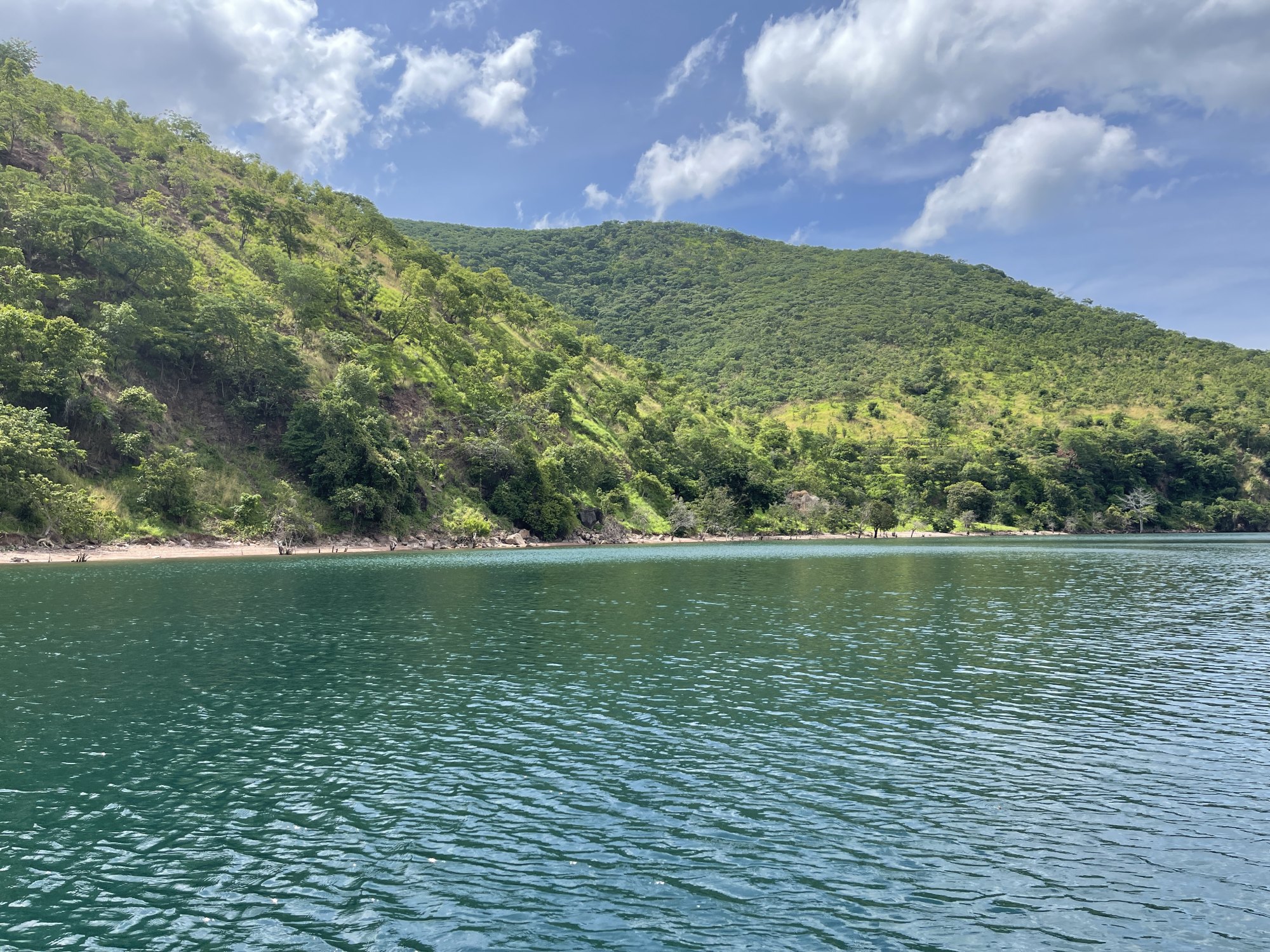
Lake Tanganyika forms most of Tanzania’s western border, and it is one of the few superlatives in East African travel that holds up under scrutiny. It is the second deepest lake on earth and among the oldest, a rift lake of extraordinary depth and age whose isolation has produced a fish fauna found nowhere else. Kigoma Region’s own regional government describes the lake in exactly these terms, and the scientific literature that uses Tanganyika as a study system routinely opens by calling it the world’s second deepest lake.
Four countries share it: Tanzania, the Democratic Republic of the Congo, Burundi and Zambia, which together form the Lake Tanganyika Authority, the intergovernmental body established to manage it. Tanzania holds the long eastern shore. Kigoma Region alone counts 8,552 of its 45,075 square kilometres as water, and describes itself as ringed by the lake from the north-east round to the south-east.
For a visitor, the practical meaning of all this is that Tanganyika is not a lake you look at. It is one you get into, travel on, and use as the road between places that have no roads.
What the lake is for, from the Tanzanian shore
Snorkelling over endemic cichlids
Tanganyika’s cichlid radiation is the thing that makes shore snorkelling here genuinely worth doing rather than merely available. The water is clear, the rock shallows are densely populated, and a substantial proportion of what is swimming past exists only in this lake. TANAPA lists snorkelling among the headline activities at Mahale Mountains National Park, where forest, beach and reef shallows sit within a few hundred metres of each other. The snorkelling guide covers technique and expectations; this is freshwater snorkelling with no coral and no tide, and it rewards patience over distance.
Boats, kayaks and the shoreline
Boat transfer is the normal way to move along the eastern shore, and it doubles as the sightseeing. TANAPA lists inshore coves and boat routes among Mahale’s attractions and boat transfers among Gombe’s. Kayaking along sheltered shoreline is offered at Mahale and is covered in the kayaking guide, which includes lake paddling. Winds on Tanganyika get up quickly and TANAPA’s safety guidance is explicit about lifejackets and following the skipper — this is a large body of open water, not a pond. How the lake fits into a wider itinerary, and what the flights and the Central Line actually offer, is covered in the guide to reaching western Tanzania.
Fishing
Sport fishing is listed by TANAPA among Mahale’s lake activities. Tanganyika fishing is a different product from the Nile perch fishing of Lake Victoria, and both are dealt with in the freshwater fishing guide. The lake is also a working fishery of regional importance, and the small-boat fleet that goes out at night from the villages along the shore is part of what the place looks like.
Beaches
The sand beaches under the Mahale forest are the best known, but the shoreline carries them at intervals the whole way down. The Tanzania Forest Services Agency describes a beach on the lake shore among the attractions of the Kalambo Nature Forest Reserve at the southern end. Swimming is permitted in designated areas in the national parks. See the beach holidays guide, and read the next section first.
Bilharzia: the honest version
Schistosomiasis, or bilharzia, is a documented risk in Lake Tanganyika’s Tanzanian shallows, and anyone planning to swim or snorkel should make the decision with the evidence in front of them rather than on the strength of a lodge’s reassurance.
The clearest published case is a report in the Journal of Travel Medicine in 2013 by Steiner and colleagues, describing sixteen students from Berlin who had spent two to three months on fieldwork in Kigoma District, all of whom had frequent freshwater contact with the lake. Eight of the sixteen were diagnosed with schistosomiasis. Six had symptoms — fever, and in some cases cough, weakness, headache or abdominal pain. Critically, two of those who tested positive reported no symptoms at all and showed no abnormal laboratory results. The authors describe it as the first reported outbreak imported from the Tanzanian shore of the lake, and argue for serological screening after freshwater contact in endemic areas regardless of whether anyone feels unwell.
Two things follow, and neither is a reason to write the lake off. The first is that the infection is treatable and the treatment is straightforward, but you have to know you have it, which is why post-travel screening matters when two of eight infected people had nothing to report. The second is that the widely repeated advice that “it’s fine in deep water away from the reeds” does not come from anywhere authoritative. The United States Centers for Disease Control and Prevention names only the sea and adequately chlorinated pools as safe for swimming in schistosomiasis-endemic countries. It does not rank lakes, and it does not publish a safe depth or a safe distance from shore.
The realistic position is that many visitors snorkel at Mahale and come to no harm; that the risk is real, cumulative with exposure, and not eliminated by any of the folk rules; and that the sensible response is to decide deliberately, and to be screened afterwards if you had significant contact with the water.
The places on the Tanzanian shore
Kigoma is the port, the railhead and the practical gateway. Boats to Gombe leave from there, and the town is the connection point for flights and for the Central Line railway. Ujiji, just south of Kigoma, was the last major trading centre of the central caravan route and the place associated with Stanley’s meeting with Livingstone.
Gombe National Park and Mahale Mountains National Park both front directly onto the lake, and both are effectively lake-access destinations. At the far southern end, the Kalambo Nature Forest Reserve protects the falls and gorge of the Kalambo River, which reaches the lake through a small delta a few kilometres downstream. UNESCO’s documentation places the falls on the edge of the Tanganyika Rift escarpment near the lake’s south-eastern corner.
Seasons
The Tanzanian shore of Lake Tanganyika, outside the Kakonko and Kibondo districts in the far north of Kigoma Region, falls in the Tanzania Meteorological Authority’s unimodal zone: one long wet season running from around November into April or May, then a long dry period. TMA’s Vuli forecasts, which cover the country’s two-season areas, explicitly limit their Kigoma coverage to those two northern districts. The tourism shorthand of “short rains and long rains” does not apply to most of this coast.
Kigoma’s regional government gives the region an annual rainfall range of 800 to 1,200 millimetres and temperatures between 17 and 33 degrees Celsius, with the rains running October to May. Kigoma Ujiji Municipal Council, describing the town specifically, gives a wider annual rainfall band of 800 to 1,600 millimetres and notes that peak temperatures occur in September and October. The two figures come from different authorities covering different areas and are best read as a range rather than reconciled. The seasonal guide to the south and west explains why most of this shore runs on one long wet season rather than two.
Common questions about Lake Tanganyika
How deep is Lake Tanganyika?
It is the second deepest lake in the world. Kigoma’s regional government and the scientific literature that uses the lake as a study system both state this directly. A single authoritative maximum-depth figure is not published by the regional bodies consulted here, so none is given rather than repeating a number that cannot be traced.
Which countries share Lake Tanganyika?
Tanzania, the Democratic Republic of the Congo, Burundi and Zambia. They are the four contracting states of the Lake Tanganyika Authority.
Is it safe to swim in Lake Tanganyika?
Bilharzia is a documented risk on the Tanzanian shore. A 2013 report in the Journal of Travel Medicine found eight of sixteen European fieldworkers infected after two to three months in Kigoma District, two of them with no symptoms. The CDC names only the sea and chlorinated pools as safe in endemic countries and does not rank lakes. Many visitors swim and snorkel without incident; the point is to decide knowingly and to be screened afterwards.
Is the snorkelling actually good?
Yes, and unusually so for fresh water. The lake’s endemic cichlids are abundant in the rock shallows and the water is clear. TANAPA lists snorkelling among the headline activities at Mahale.
Can you get to Gombe and Mahale without flying?
Gombe is reached by boat from Kigoma, which is on the Central Line railway from Dar es Salaam and has an airport. Mahale is normally reached by air and then boat; TANAPA describes limited dry-season road access on remote tracks as possible with a high-clearance four-wheel-drive, but it is not the usual route.
When is the best time to visit the lake?
Roughly June to October, the dry months, when trails are firmer and lake transfers more comfortable. The wet season from about November into April or May is greener and quieter, with less reliable flying.