
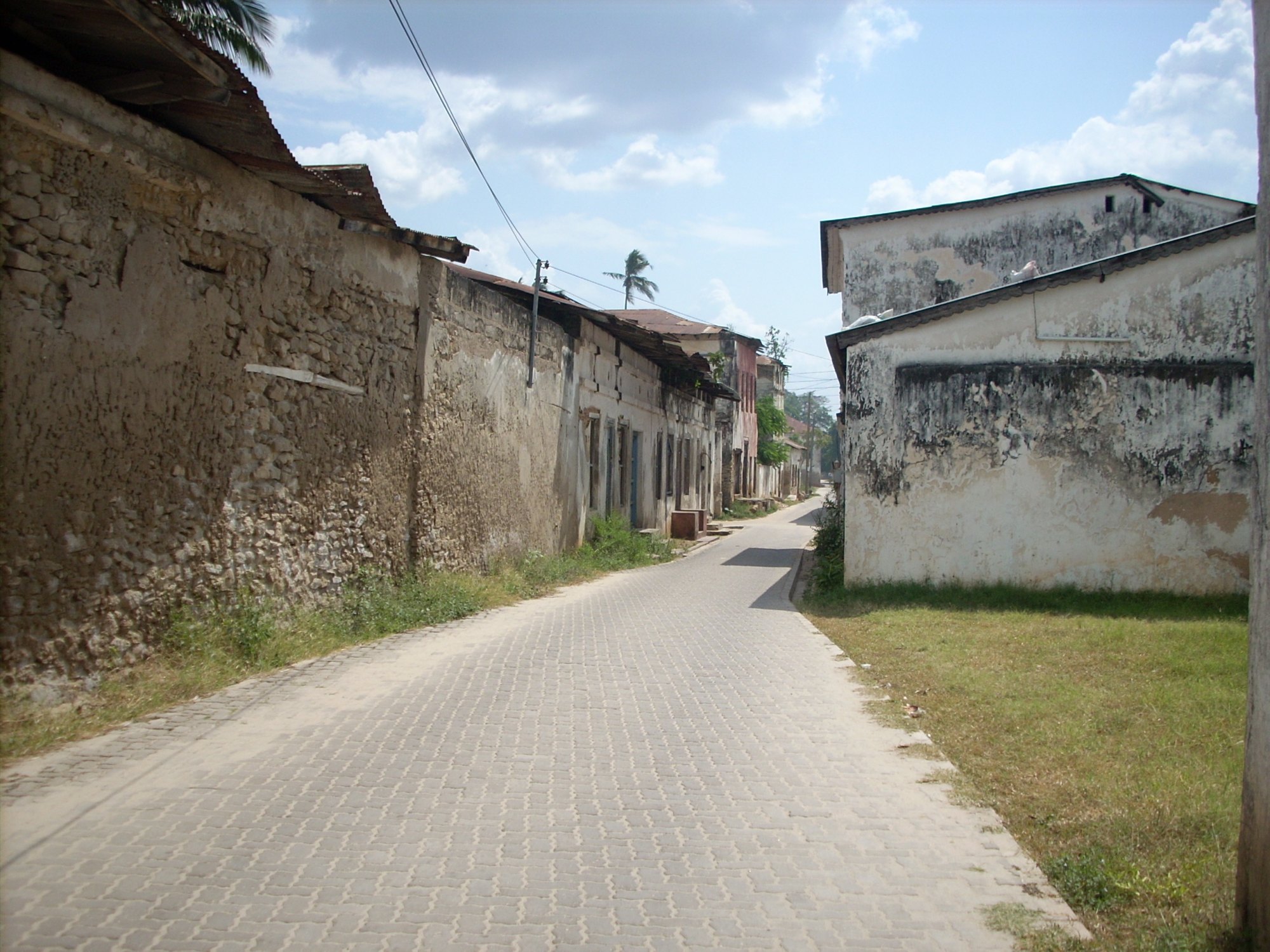
Where the caravan roads reached the sea
Bagamoyo sits on the coast about 65 kilometres north of Dar es Salaam, and for a few decades in the nineteenth century it was one of the most consequential places in East Africa. It was the coastal terminus of the central caravan route from the interior — a road that ran more than 1,200 kilometres from Ujiji on Lake Tanganyika — and it was where almost everything and almost everyone crossing between the mainland interior and Zanzibar changed hands. The European expeditions of the Livingstone and Stanley era set out from here. So did the missionaries, and so did the German colonial administration, which made Bagamoyo its first mainland capital before moving the seat of government to Dar es Salaam.
Today it is a quiet town of low coral-rag houses, carved doors, a working fishing beach and a scatter of ruins and museums, with a district population that the 2022 census put at 205,478 across a council area of 945 square kilometres. Its old quarter is officially designated a historic town, and it is the easiest place on the mainland to walk a Swahili stone town that is not Zanzibar.
It is also the place on this coast where circulating tourist copy and the documentary record part company most sharply, so this page sets that out plainly before anything else.
Three claims to get right
Bagamoyo is not a World Heritage Site. This is asserted constantly and it is untrue. Tanzania has seven inscribed World Heritage properties: the Kondoa Rock-Art Sites, the Ruins of Kilwa Kisiwani and Songo Mnara, the Stone Town of Zanzibar, Kilimanjaro National Park, Selous Game Reserve, Serengeti National Park and the Ngorongoro Conservation Area. Bagamoyo is on none of that list. What it does have is a place on Tanzania’s Tentative List, submitted by the Antiquities Department on 20 February 2006, as one of six named centres along “The Central Slave and Ivory Trade Route” — the others being Mamboya, Mpwapwa, Kilimatinde, Kwihara and Ujiji. A tentative listing is a statement of intent to nominate. It is not inscription, and the property has not been inscribed. On this coast, the World Heritage site is Kilwa.
Whether Bagamoyo was a major slave port is genuinely contested. The interpretation offered at the sites, and the text of the tentative-list submission, present the town as a principal harbour of the East African slave trade and the point from which captives were shipped on to the Zanzibar market. Peer-reviewed research published in 2013 does not support that reading. It argues that slaves were a minor part of Bagamoyo’s exports, that the figures in general circulation are greatly exaggerated, and that what made the town matter was the ivory trade. The same work, and another study reaching the same conclusion independently, found no evidence for Bagamoyo as a major slave port and instead corroborated Kilwa in that role. On the buildings identified locally as a slave market, the research found no record of when such a market closed — which suggests it was neither permanent nor substantial — and raised the possibility that local memory of a market has been transferred onto the German customs house. None of this makes Bagamoyo’s connection to slavery fictional; it makes the scale and the specific sites uncertain. The full treatment, including what the record does establish, is in the guide to slave trade history tours.
The “lay down your heart” etymology is a tradition, not a documented origin. Every guide will tell you that Bagamoyo comes from bwaga moyo, and that it means enslaved people laying down their hearts because there was no hope of return. The official on-site interpretation says exactly this. The same 2013 research treats that reading sceptically and notes a competing one, which connects the phrase to the relief of porters reaching the end of a long march. Neither should be presented as settled.
Saying all this does not diminish the town. It means that a visit here is more interesting, not less, if you arrive prepared to ask where a particular claim comes from — which is the right posture for the whole of this coast.
What is actually there
The old town
Bagamoyo’s stone town is small, low and walkable, and the pleasure of it is the fabric rather than any single monument: coral-rag walls, carved doors, the baraza benches built into house fronts, the Old Fort on the shore, the customs house, the Old Market. It is a Swahili town of the caravan era rather than the Omani merchant era, which makes it a useful counterpoint to Stone Town. A guided walk is worth it here, for the same reason it is worth it in Dar — the buildings do not explain themselves. See historical walking tours for what to expect, and Swahili cultural tours for the wider coastal context.
The Caravan Serai
Now a museum, the Caravan Serai was the compound where caravans from the interior ended their journey. The official description records a well dating from the 1860s, the marks of the compound’s pillars, and Abushiri’s wall of 1888 — a relic of the revolt led against the German administration by Abushiri bin Salim in 1888 and 1889. It is one of the three sites the district council itself names as Bagamoyo’s tourist attractions.
The Catholic mission
The Holy Ghost Fathers founded a mission here in 1868 under Father Antoine Horner — the first Catholic mission in East Africa — specifically to house children rescued from slavery, and it grew into a church, a school, workshops and a farm. Archival records show that between 1873 and 1877 the mission received 166 liberated people handed over by British anti-slavery cruisers, the great majority of them women and children. The mission’s freedom village and its museum are the most solidly documented part of a Bagamoyo visit, and the tentative-list submission names both.
Kaole
A few kilometres south of the town are the Kaole ruins: a thirteenth-century mosque and a field of pillar tombs from a settlement that predates Bagamoyo itself by centuries. Kaole is promoted as a tourism site by Tanzania Forest Services alongside Bagamoyo stone town, and it is the archaeological half of the day. The guide to archaeological tours covers how Swahili coastal sites are read and what the standing remains at each period actually tell you. A snake park and a crocodile ranch operate at Kaole as well, and the district council lists both among the town’s attractions.
The arts college and the beach
Bagamoyo is home to Tanzania’s national college of arts, and the town has a long-standing association with music, dance and sculpture — the district council explicitly counts paintings, sculptures and traditional dance among its cultural tourism assets. Performance is not laid on year-round for visitors, but it is a real part of the town rather than a staged one. See traditional music and dance and craft workshops.
The beach itself is a working fishing shore with dhows drawn up on it, not a resort strand. Dhow trips run from here, and the mangrove creeks north and south of the town are quiet and good for birds — see dhow sailing and mangrove tours.
When to go
Bagamoyo is in the northern coastal zone, which the Tanzania Meteorological Authority treats as bimodal: Vuli from October to December, Masika from March to May. The district council’s own figures give annual rainfall of 800 to 1,200 millimetres and describe the same two seasons, with its longer season running March to June. June to September is the coolest and driest period and the best for walking the town; January and February are hot and generally dry.
Because almost everything here is done on foot and outdoors, the rains matter more than they would at a beach lodge. An afternoon of heavy Masika rain will close down a walking day entirely. The rainfall calendar for the northern coast sets those two seasons against the rest of the country.
How it fits a trip
Bagamoyo is a straightforward day trip or overnight from Dar es Salaam, about 65 kilometres up the coast. It works far better as a pairing than alone: with Saadani National Park immediately to the north, which supplies the wildlife half of a coastal few days; with Dar es Salaam and its national museums for the collections that explain what you have been looking at; and, for anyone following the caravan route inland, with Tabora, Kigoma and Ujiji at the far end of the same road. The guide to getting around Tanzania by road, rail and air covers what the short coastal run and the long inland route each involve.
Common questions
Is Bagamoyo a UNESCO World Heritage Site?
No. It has been on Tanzania’s Tentative List since 2006, as one of six centres in a proposed “Central Slave and Ivory Trade Route” property, but it has not been inscribed. The inscribed coastal property in Tanzania is the Ruins of Kilwa Kisiwani and Songo Mnara, together with the Stone Town of Zanzibar.
Was Bagamoyo the main slave port of East Africa?
The research does not support it. Peer-reviewed work concludes that slaves were a minor component of Bagamoyo’s exports, that circulating figures are greatly exaggerated, and that ivory is what made the town important. Kilwa is the port the evidence corroborates in the role usually assigned to Bagamoyo. What Bagamoyo indisputably was is the coastal terminus of the central caravan route and the base of the first Catholic mission in East Africa, established to shelter people freed from slavery.
Does the name really mean “lay down your heart”?
That is the traditional reading and the one offered on site. It is a tradition rather than a documented origin, and a competing reading connects the phrase to porters at the end of a long march. Both circulate; neither is established.
How long do you need?
A full day covers the old town, the Caravan Serai, the mission and Kaole without rushing. An overnight lets you take the morning on the beach and see the town before the heat. Two nights makes sense only if you are combining it with Saadani.
Is a guide necessary?
Necessary, no; worthwhile, yes. Very little at Bagamoyo interprets itself, and the difference between a good guide and a poor one here is large. Ask how they know what they are telling you — at these sites that is a fair and useful question, and the better guides welcome it.