
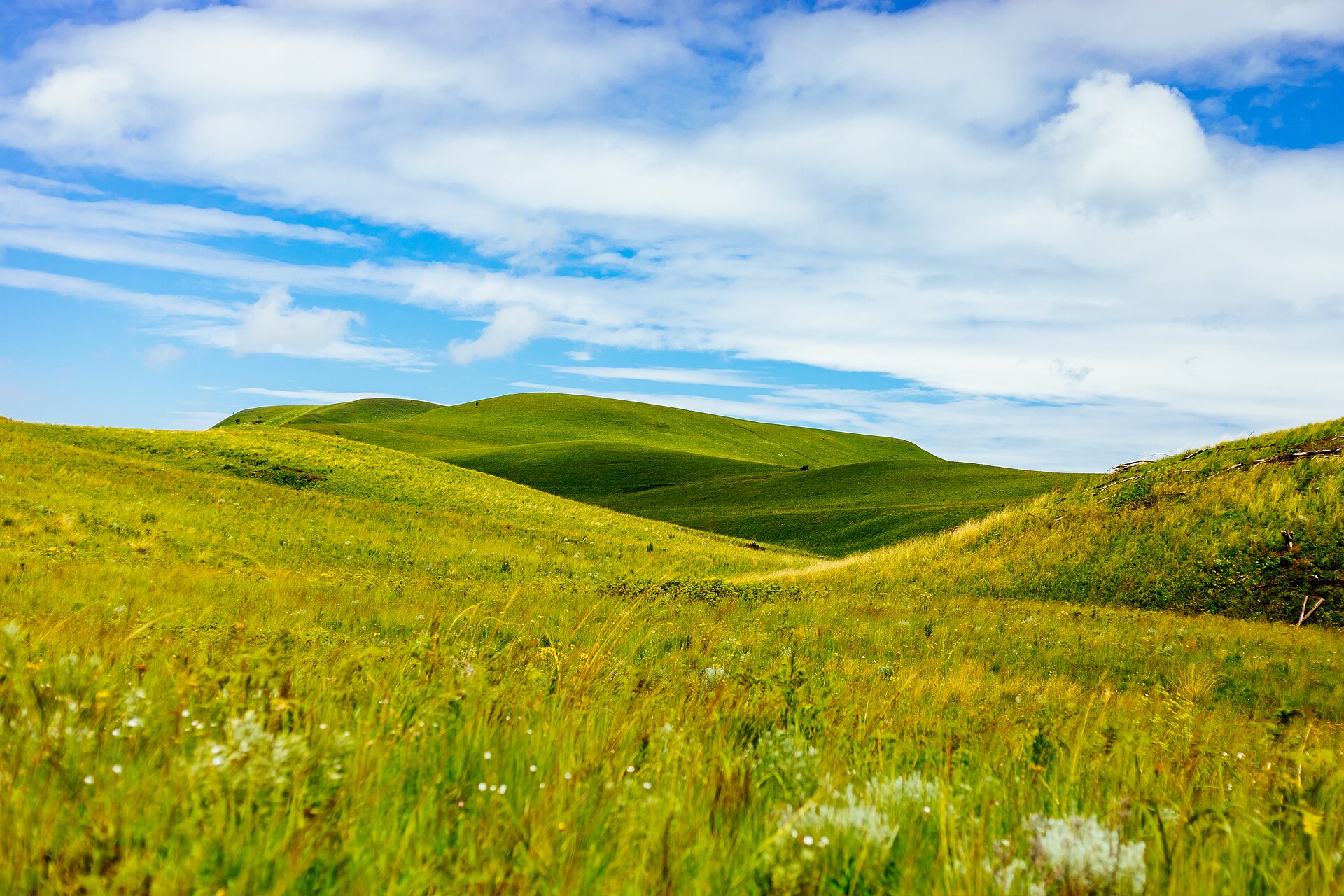
If you are routing a southern Tanzania safari through Mbeya and want a day on foot instead of another game drive, Kitulo National Park is the stop to plan for. It protects about 413 square kilometres of montane grassland at roughly 2,600 metres on the Kitulo Plateau, where more than 350 plant species, about 45 of them terrestrial orchids, flower from December to April. Entry is USD 30 per foreign adult per day on the latest TANAPA tariff.
Why Travellers Choose Kitulo
Travellers choose Kitulo for a wildflower and walking safari that no other Tanzanian park offers: open grassland you explore on foot, orchids at your boots and highland birds found in few other places in the country. It was the first national park in tropical Africa set up mainly to protect plants, and botanists call it the Serengeti of Flowers. Local people know it as Bustani ya Mungu, the Garden of God.
The appeal is quiet. Wikipedia records just 409 visitors in 2012, a figure drawn from TANAPA’s corporate data, and trip reports still describe near empty visitor books. You walk, you look down, you look up when the mist lifts.
Cool air is part of the draw. Daytime highs on the plateau sit around 14.5 to 18°C between December and April, according to the park’s own brochure, which is a relief after the heat of Ruaha or Mikumi.
Is Kitulo National Park Worth Visiting?
Kitulo National Park is worth visiting for walkers, birders, plant lovers and photographers who time it for the December to April flowers, and for anyone already in Mbeya with a spare day. Travellers who want lions, elephants or big herds should skip it: big game is sparse, and the reintroduced zebra herd is the largest mammal most visitors see. Set against a USD 30 entry fee and two or three days of road travel, the value depends almost entirely on the season you choose.
Best Months for a Kitulo Wildflower Safari
The best time to visit Kitulo for a wildflower safari is December to April, when the plateau is carpeted in orchids, red hot pokers, lilies and aloes. September to November gives the clearest mountain views and firmer tracks, with far fewer flowers. May to August is cold and misty, and frost forms on the plateau.
The trade off is plain. The flower months are the rain months, and the park brochure puts average annual rainfall at about 1,600 mm, with the wet season running from October to May. Afternoon storms build quickly; one horticulturist’s trip report describes thunder and soaking rain arriving within an hour of a sunny picnic, with the rain gear left behind in the car.
Orchid lovers aiming for one particular species should ask the park before travelling, because flowering shifts with the rains. TANAPA notes, for example, that Disa fragrans flowers in March. A traveller who only has June free gets cold walking and good birding, and that can still be worth a day. The guide to the best time to visit Tanzania sets Kitulo’s single wet season against the rest of the country’s calendar.
Kitulo National Park Fees for Foreign and Resident Visitors
Kitulo National Park entry costs USD 30 per non resident adult per 24 hours on TANAPA’s latest published tariff, USD 10 for children aged 5 to 15, and nothing for children under 5. Expatriates and Tanzania residents pay USD 15, and East African citizens pay TZS 5,000. These conservation fees include 18% VAT and are paid electronically through TANAPA’s GePG system, by card or mobile money.
| Fee line | Non resident | Resident | EA citizen |
|---|---|---|---|
| Entry, adult | USD 30 | USD 15 | TZS 5,000 |
| Entry, child 5 to 15 | USD 10 | USD 5 | TZS 2,000 |
| Public campsite | USD 30 | USD 30 | TZS 5,000 |
| Special campsite | USD 50 | USD 50 | TZS 10,000 |
| Walk 1 to 4 hours | USD 20 | USD 20 | TZS 5,000 |
| Walk over 4 hours | USD 25 | USD 25 | TZS 10,000 |
| Guide, per group | USD 20 | USD 20 | TZS 5,000 |
| Cycling, per day | USD 25 | USD 25 | TZS 30,000 |
Camping and walking fees are per person per night or per walk, adult rates, and sit on top of the daily entry fee. Vehicles pay separately: a foreign registered vehicle up to 2,000 kg pays USD 40, and a Tanzanian registered one TZS 20,000, with open vehicles charged 50% more. The Kitulo park brochure also lists park accommodation at USD 35 per person per night, booked in advance.
Two cautions apply. The online tariff portal still shows an older July to June schedule as the latest published, so confirm figures at booking. TANAPA’s own Kitulo web page currently lists USD 70 for international adults and an airport 40 km from Kilimanjaro, which reads as a template copied from a northern park; the published tariff and the park brochure both give USD 30. For how park fees fit into a full trip budget, see how much a Tanzania safari costs.
Kitulo Park Fee Estimator
Choose your visitor category, group and plans to total the TANAPA park fees for a Kitulo National Park visit. Transport, food and private lodging are not included.
USD 160
For 2 adults over 1 day. About USD 80 per adult.
- Conservation fee
- USD 60
- Guided walk, short
- USD 40
- Guide fee
- USD 20
- Vehicle
- USD 40
| Fee line | Non resident | Resident | EA citizen |
|---|---|---|---|
| Entry, adult, per 24 hours | USD 30 | USD 15 | TZS 5,000 |
| Entry, child 5 to 15 | USD 10 | USD 5 | TZS 2,000 |
| Short walk, adult | USD 20 | USD 20 | TZS 5,000 |
| Short walk, child 12 to 15 | USD 10 | USD 10 | TZS 2,500 |
| Long walk, adult | USD 25 | USD 25 | TZS 10,000 |
| Long walk, child 12 to 15 | USD 15 | USD 15 | TZS 5,000 |
| Guide, per group per day | USD 20 | USD 20 | TZS 5,000 |
| Public campsite, adult per night | USD 30 | USD 30 | TZS 5,000 |
| Public campsite, child per night | USD 5 | USD 5 | TZS 2,500 |
| Special campsite, adult per night | USD 50 | USD 50 | TZS 10,000 |
| Special campsite, child per night | USD 10 | USD 10 | TZS 5,000 |
| Vehicle up to 2,000 kg, per entry | USD 40 foreign | USD 40 foreign | TZS 20,000 TZ |
Last checked November 2026. Indicative only: fees from TANAPA’s latest published tariff, which runs July to June; confirm at booking. Child walk rates are set for ages 12 to 15; the estimator applies them to every child, so ask the park whether younger children may walk. Camping nights are counted as park days minus one. Vehicle fee charged once per 24 hour entry. Source: Tanzania National Parks tariff schedule and Kitulo National Park brochure.
Places to Stay for a Kitulo Safari
Places to stay for a Kitulo safari fall into three groups: the campsites and simple park rooms inside the park, guesthouses in Matamba village at the gate, and hotels and lodges in Mbeya, which is the comfortable option. There is no safari lodge or tented camp on the plateau itself.
Campsites and Park Rooms Inside Kitulo
Mwakipembo Public Campsite has a shower block, flush toilets, an indoor dining area and a fire place, and costs USD 30 per adult per night for non residents. Maua Special Campsite is a more private site at USD 50 per adult, booked in advance. The park brochure also mentions cottage rooms with shower, toilet and double or single beds, at USD 35 per person, again by prior booking. Bring a sleeping bag rated close to freezing for any month. On clear nights, mostly from September to November, the high plateau is also a fine place for stargazing.
Guesthouses in Matamba Village
Matamba, at the park gate, is the base most walkers use because it cuts out the long drive each morning. TANAPA’s brochure names Mtanganyika Lodge, Ngogo Lodge, Kitulo God’s Garden and Eden Motel among the simple guesthouses there. Expect basic rooms and payment in cash; none publishes rates online, so ask your driver or the park office to call ahead.
Lodges and Hotels in Mbeya
Mbeya has the widest choice and the only properties with real comfort. Utengule Coffee Lodge sits on a working coffee estate about 20 km from Mbeya town, with 16 en suite rooms and views over the Rift Valley, and Mbeya airport is about 15 minutes away. Staying in Mbeya means a long return drive on park days, so most visitors combine one Mbeya night with at least one night in Matamba.
Reaching Kitulo: Routes and Transfer Times
Kitulo is reached by road from Mbeya, either via Chimala and the Matamba gate (about 103 km) or via Isyonje on the Mbeya to Tukuyu road (about 67 to 70 km). Visitors flying in land at Songwe Airport in Mbeya. TANAPA recommends a 4×4, especially from November to May. The guide to getting around Tanzania covers how Mbeya connects to the rest of an itinerary by road, rail and air.
Flights to Songwe Airport in Mbeya
Air Tanzania flies non stop from Dar es Salaam to Mbeya, and its published evening schedule shows a flight of about one and a half hours. From Songwe, TANAPA gives about 90 km to the park via Isyonje and 125 km via Chimala. There is no airstrip at Kitulo, so a vehicle and driver have to be arranged in Mbeya.
Road via Chimala and the 57 Hairpins
The classic route follows the Dar es Salaam to Mbeya highway (A104) to Chimala, 78 km east of Mbeya and about 750 km from Dar. From Chimala a gravel road climbs 42 km to Matamba through the bends known as Hamsini na Saba, Swahili for fifty seven. The park itself is about 11 km beyond the Matamba gate. Operators commonly allow two to three hours from Mbeya, and the climb is slow in rain.
Road via Isyonje or from Njombe
The shorter Isyonje route leaves the Mbeya to Tukuyu road at Isyonje junction and runs about 67 to 70 km to the park. From the east, Njombe town connects through Ikonda and Makete, about 165 km. The government has announced a tarmac upgrade between Isyonje and Makete; check how far it has reached before relying on it in the rains.
Train and Public Transport
The TAZARA railway from Dar es Salaam stops at Makambako and Iyunga, the stations TANAPA suggests for Kitulo. Buses and minibuses run to Chimala and Makete, but onward transport to the plateau is irregular, and backpackers report hiring a motorbike or sharing a 4×4 for the last stretch. Carry cash and food, because there are no services on the plateau.
Kitulo Tours and Activities
Kitulo tours and activities are built around walking: guided wildflower walks, hikes to waterfalls and Mtorwi Peak, birdwatching, cycling and slow drives along Matamba Ridge. TANAPA’s visitor guide asks that walks follow marked trails or go with an authorised guide or ranger.
Wildflower and Orchid Walking Safaris
A wildflower walking safari is the reason most people come to Kitulo, and it is slower than any game walk. Many orchids are small and close to the ground, so the walk is mostly looking down. A short walk of one to four hours costs USD 20 per adult on the TANAPA tariff. Do not pick flowers or dig bulbs: orchid tubers are poached here and in the neighbouring Kipengere Range for a cooked dish called chikanda sold across the border in Zambia, and the park treats any collecting as a serious offence.
Matamba Ridge and Mtorwi Peak Hiking
Hiking Matamba Ridge is a full day walk; TripAdvisor reviewers describe five to six hours along the ridge with views over the plateau, and call it easy going at altitude. Mtorwi Peak, at 2,961 m on the eastern side of the park, is reached on a rising trail from the Nhumbe Valley and is the longer objective. Either counts as a long walk at USD 25. Start early, because cloud usually builds by early afternoon.
Birdwatching Tours on the Plateau
Birdwatching on the Kitulo Plateau is best early in the morning and in the evening, the park says, on the open grassland and at Lake Dhambwe. Kitulo is an Important Bird Area, and the specialities are listed in the wildlife section below. Bring a telescope if you have one; much of the action is distant grassland birds.
Cycling the Mwakipembo Loop
Cycling in Kitulo follows a 22 km loop from Mwakipembo gate past Nguzo Mbili, the Uwanda picnic site, Mlivili Cave and Mwakipembo Waterfall, then back to the gate. It costs USD 25 per day on top of entry. Bring your own bike; the park does not list hire.
Game Drives Along Matamba Ridge
A Kitulo game drive is a slow scenic drive more than a wildlife safari, following Matamba Ridge toward the bamboo and the edge of the Livingstone Forest. It suits travellers who cannot walk far and photographers who want to stop often. A 4×4 is recommended year round.
Birds, Primates and Antelope of Kitulo National Park
The wildlife of Kitulo National Park is mostly birds, small antelope, a reintroduced zebra herd and rare forest primates; there are no big cats or elephants to look for. Sightings of the mammals are a bonus, not the purpose of the trip.
Highland Birds of the Kitulo Plateau
Kitulo holds breeding Denham’s bustard and the endangered blue swallow, along with mountain marsh widowbird, Njombe cisticola and Kipengere seedeater, according to TANAPA. In the wet season it is a wintering ground for Abdim’s stork, white stork, lesser kestrel and pallid harrier. Lake Dhambwe adds waterbirds such as yellow billed duck, white faced whistling duck and red knobbed coot.
Zebra and Antelope on the Grassland
Plains zebra are the most visible mammals. WCS, TANAPA and TAWIRI released 24 zebras from Mikumi, about 700 km away, in October, thirteen years after the park opened and zebra had been gone from the plateau for about half a century. Southern reedbuck and steenbok have recovered since protection began, and eland, klipspringer, bushbuck and common duiker are also recorded.
Kipunji and Other Forest Primates
The kipunji, a monkey first described by WCS scientists in the early 2000s and one of the world’s most endangered primates, lives in the Livingstone Forest on the park’s western side and on nearby Mount Rungwe. It is shy and high in the canopy, so do not plan a trip around seeing it. Black and white colobus, Abbott’s duiker and the tiny Rungwe galago share the same forest.
Main Sights of Kitulo National Park
The main sights of Kitulo National Park are Nhumbe Waterfall with its juniper valley, then a scatter of smaller sights: Mwakipembo Waterfall, Lake Dhambwe, Mtorwi Peak and two historic caves. Most can be linked in one long day by vehicle and on foot.
Nhumbe Waterfall and the Nhumbe Valley
Nhumbe Waterfall drops about 100 metres and lies 20 km from Mwakipembo main gate; the walk down to the falls and back to the picnic site takes about an hour, the park says. The valley around it is the head of the Nhumbe River, a tributary of the Great Ruaha, and holds one of East Africa’s largest juniper forests, with trees up to 50 m tall. Paths are steep and wet in the rains.
Mwakipembo Waterfall
Mwakipembo Waterfall is a small 8 metre cascade 4 km from the main gate, on the road toward the Nhumbe Valley. Orchids and everlasting flowers grow around it, which makes it an easy first stop on arrival day.
Lake Dhambwe Crater Lake
Lake Dhambwe is a small volcanic crater lake in the middle of the park, reached on a 3 km trail through bamboo from the Kimondo to Kikondo road. It is the park’s waterbird spot and the shortest walk with a clear destination.
Mlivili and Usalama Caves
Mlivili Cave lies on Matamba Ridge beyond Mwakipembo Waterfall, and Usalama Cave is about 8 km from the Common Works junction on the Isyonje road. The park says Wawanji, Wakinga and Nyakyusa people used both as hiding places during past intertribal wars.
What Sets Kitulo Apart from Other Tanzania Parks
Kitulo National Park stands apart in Tanzania because it was created to protect a flora, not a fauna: the largest and most important montane grassland and floral community in the country, with about 31 orchid species endemic to Tanzania and at least three found only in the park, according to the park brochure. The nearest comparison travellers make is with Udzungwa Mountains and Ruaha on the same southern circuit.
Plant lovers and walkers who have already done the big game parks get the most from Kitulo. Travellers on a first safari usually do better spending scarce days in Ruaha and adding Kitulo only if the route passes Mbeya anyway.
The Story of Kitulo: From Dairy Farm to National Park
Kitulo became a national park on 16 September 2005, by Government Notice 279, after decades as farmland. The park’s history notes that explorer Frederick Elton crossed the area around 1870, a United Nations FAO wheat and sheep scheme took over much of the plateau in the 1960s, and the land was turned into a state dairy farm in 1972 when neither crop nor flock thrived.
The Wildlife Conservation Society pushed for protection because orchid tubers were being dug for trade and the surrounding forests logged. The new park took in part of the farm and what had been the Livingstone and Ndumbi forest reserves, and became Tanzania’s fourteenth national park. Official figures for its size vary from 412.9 to 465.9 square kilometres; about 413 is the figure TANAPA’s general brochure uses.
Finding Kitulo National Park on the Map of the Southern Highlands
Kitulo National Park lies in Tanzania’s Southern Highlands, straddling Mbeya and Njombe regions, south of Ruaha National Park and north of Lake Nyasa. Mbeya is the nearest city, and the main gate is at Matamba village. On clear days the Livingstone Mountains on the southern edge look down toward Lake Nyasa and Matema Beach.
Kitulo Trip Ideas from 2 to 5 Days
Kitulo trip ideas run from a two day wildflower trip out of Mbeya to five days that add hiking and the Mbeya highlands. A single day from Mbeya is possible but rushed, because of the road time and the afternoon weather.
Two Day Kitulo Wildflower Trip from Mbeya
Day one: fly into Songwe, drive to Matamba via Chimala and the hairpins, and stop at Mwakipembo Waterfall in the afternoon light; night in Matamba or at the campsite. Day two: an early guided walk on the plateau for flowers and birds, then Nhumbe Waterfall before the clouds build, and back to Mbeya for the evening flight or a night at Utengule.
Three Day Kitulo Hiking Trip with Mtorwi Peak
Day one: Mbeya to Matamba via Isyonje, with Lake Dhambwe on the way in. Day two: a long walk to Mtorwi Peak from the Nhumbe Valley, starting at first light. Day three: Matamba Ridge on foot or by bike, then return to Mbeya. Two nights at Matamba keeps the walking days long enough.
Five Day Kitulo and Mbeya Highlands Trip
Spend two nights at a Mbeya lodge and two in Matamba. The Kitulo days follow the three day plan; the Mbeya days add the coffee estates and the crater lakes of the Rungwe area, such as Lake Ngozi, before the flight back to Dar es Salaam. Add a buffer day in the rains, when the gravel climb can close for hours after a storm.
Pack for cold and wet whatever the month. Trip reports and the park both point to the same short kit list:
- Waterproof jacket and trousers kept in your daypack, not the vehicle
- Warm fleece, hat and gloves for mornings and evenings
- Sleeping bag rated near freezing if camping
- Walking boots with grip for wet slopes
- Binoculars and a macro lens for small orchids
- Cash in Tanzanian shillings for guesthouses and food
Mobile coverage is patchy on the plateau, so tell someone your route before a long walk.
Kitulo National Park FAQs
What is Kitulo National Park famous for?
Kitulo National Park is famous for its wildflowers: more than 350 plant species, including about 45 terrestrial orchids, flowering across a high plateau from December to April. It was the first national park in tropical Africa created mainly to protect plants, which is why it is called the Serengeti of Flowers and, locally, the Garden of God.
Can you see animals in Kitulo National Park?
Yes, but Kitulo National Park is not a big game park. Plains zebra, reintroduced from Mikumi by WCS and TANAPA, southern reedbuck, eland and other antelope live on the grassland, and the rare kipunji monkey lives in the Livingstone Forest. Birds are the stronger wildlife draw, especially Denham’s bustard and the blue swallow.
How cold does Kitulo get?
Kitulo gets cold. The park brochure gives daytime highs of about 14.5 to 18°C and lows of 7 to 8°C from December to April, and nights as low as 0.5°C with frost from June to August. Pack a warm layer, hat and rain gear for every month.
Can you visit Kitulo as a day trip from Mbeya?
A day trip to Kitulo from Mbeya is possible via the shorter Isyonje road, but after four to five hours of return driving it leaves little time on the plateau and often runs into the afternoon rain. One night in Matamba or at the park campsite gives an early start, when the light is best and the birds are active.
Do you need a 4×4 to reach Kitulo National Park?
TANAPA recommends a 4×4 for Kitulo National Park, especially from November to May, because the final climbs to the plateau are steep and rough and the gravel turns slippery in the rains. In the dry months a high clearance vehicle with a careful driver usually manages the Chimala road.
Can you camp in Kitulo National Park?
Yes. Mwakipembo Public Campsite has showers, toilets and a dining shelter at USD 30 per non resident adult per night, and Maua Special Campsite costs USD 50. You need your own tent, food, water and a sleeping bag warm enough for near freezing nights.
How much is the Kitulo National Park entrance fee?
The Kitulo National Park entrance fee is USD 30 per non resident adult per 24 hours, USD 15 for expatriates and residents, and TZS 5,000 for East African citizens, on TANAPA’s latest published tariff. Walks, guides, camping and vehicles cost extra. Confirm the figures at booking, because TANAPA reviews tariffs each July.
Kitulo works best as part of a wider southern Tanzania route, timed for the flowers and with a night at the gate. Tanzania Safari.travel plans Tanzania safaris and can build Kitulo into a southern circuit trip with Mbeya, Ruaha or the Southern Highlands, with the park fees, transport and nights set out before you pay.