Why you sleep in Marangu
Marangu is a Chagga village on Kilimanjaro’s south-eastern slopes that happens to have the national park’s headquarters at the top of it. Marangu Gate is where Kilimanjaro National Park is administered from, 41 kilometres from Moshi and 86 from Kilimanjaro International Airport, which makes it the easiest trailhead on the mountain to reach.
Sleeping in Marangu rather than in Moshi is a choice a minority of climbers make and a choice most of them are glad of. It puts you at the gate, in cool forested country at the top of the banana zone, rather than in a warm town half an hour below. TANAPA names Moshi and Marangu together as the two places climbers stay either side of a trek. The trade-off is that Marangu is a village: fewer beds, fewer restaurants, and nothing much to do after dark.
It is also a reasonable base for people who are not climbing at all. The slopes around the village are steep, green, intensively farmed and threaded with paths, and a day walking among them is one of the better non-park days in Kilimanjaro Region.
Where Marangu sits
Marangu is not a town council or a district. It is two wards — Marangu East and Marangu West — of Moshi District Council, the rural council that rings Moshi municipality in Kilimanjaro Region. Kilimanjaro Region’s own tourism material places Marangu Gate in Moshi Rural District and notes that the gate carries historical material on the mountain and on the first climbers to reach the summit.
The village sits in Chagga country, on the belt of the mountain where banana, coffee and smallholding cultivation has been practised for centuries. Above it the farmland stops and the national park’s montane forest begins, abruptly, at the gate.
Marangu is one link in a chain. Reading down Moshi District Council’s ward list is effectively a tour of the mountain’s southern slope — Kibosho, Uru, Old Moshi, Mbokomu, Kimochi, Mamba, Mwika, Kilema, Kirua Vunjo and Marangu itself — and these are the old Chagga chiefdom districts, each occupying a ridge between two stream valleys. The pattern is visible from the road: settlement and cultivation on the ridges, forest and water in the gullies between them.
The farming
Moshi District Council describes its own agricultural advantage in terms that explain what you are walking through: volcanic soils, a cool climate, and a long history of coffee and banana that has left skilled growers and established market systems in place. Beyond those two, the council lists beans, vegetables, fruit including mangoes and avocados, and root crops. What that looks like on the ground is a continuous canopy of banana with coffee bushes underneath it and a house in the middle, repeated for tens of kilometres along the slope.
This is the densest rural landscape most visitors to Tanzania will see, and the thing worth noticing is that it is all smallholding. There is no estate belt here in the way there is on parts of Meru.
The gate and the route
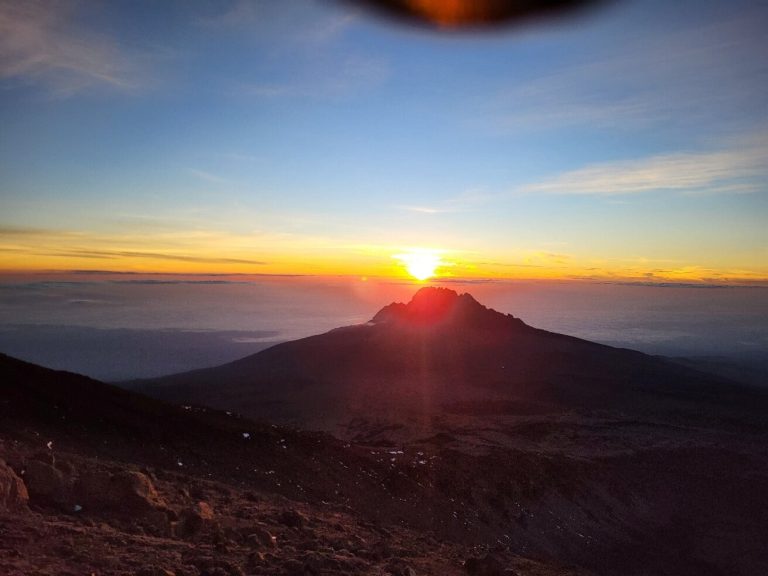
The Marangu Route is different from every other route on Kilimanjaro in a way no itinerary can change: it is the only one where you sleep in a building, in TANAPA huts at Mandara, Horombo and Kibo. It is the oldest route, the busiest, and the one with the most argued-about summit statistics. All of that belongs in its own guide, along with the honest account of why its success rate is what it is.
What belongs here is that Marangu is also the mountain’s back door in a second sense. Climbers who go up the Rongai Route on the dry northern side come down this way, so the village sees traffic from two directions. And anyone choosing between routes should read the Kilimanjaro climb guide before choosing a base, because the gate you start from determines which town is convenient. The wider decisions behind a climb — how long to take, what the operator is responsible for, what the mountain asks of you — are in the guide to the practicalities of a Kilimanjaro climb.
A day in Marangu
Waterfalls
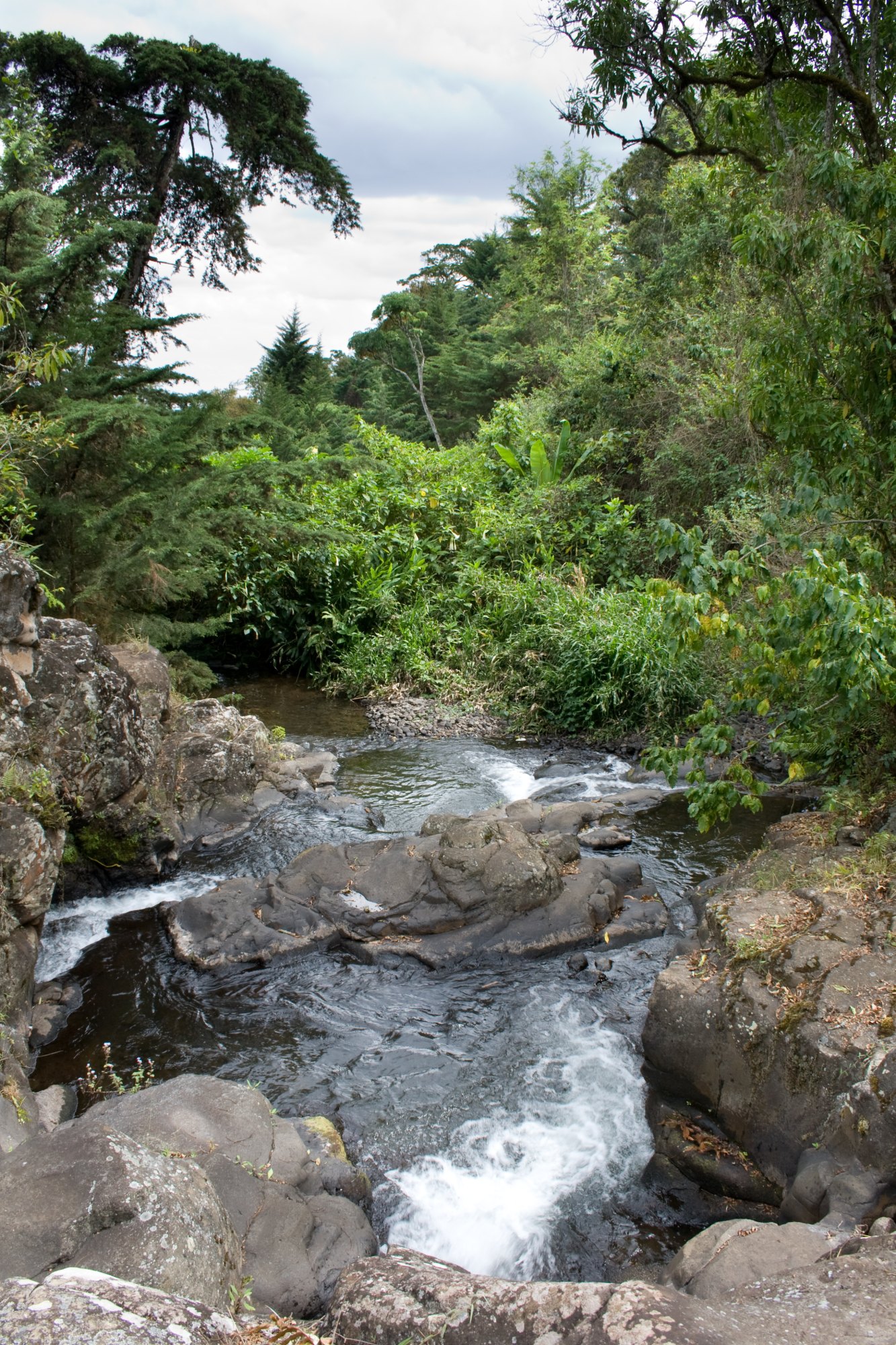
Marangu has a cluster of small waterfalls in the stream valleys around the village, of which Kinukamori above the village is the best known. These are short, steep walks through farmland rather than expeditions, and they are frequently sold together with a coffee demonstration and lunch. The waterfall hiking guide covers the walking, which is slippery in every season.
Chagga country
The smallholdings around Marangu are the classic Kilimanjaro agricultural landscape: coffee grown in the shade of banana, with irrigation furrows running along the contours. Seeing it properly is covered in the coffee tours guide and the farm tours guide, and the villages themselves in the village tours guide.
There are also caves in the country around Marangu, dug and used historically as refuges. What is genuinely visitable in Tanzania, and what merely circulates as a name, is covered in the cave exploration guide.
Walking without a park fee
The footpath network below the gate is public and does not require a permit, which makes Marangu one of the few places where you can walk on Kilimanjaro’s slopes without entering the national park. See the day hiking guide. A guide is worth taking, partly for navigation and partly because these are people’s farms.
When to come
Marangu is in the bimodal zone — Vuli from October to December, Masika from March to May — but its altitude and its position on the mountain’s wet south-eastern flank mean it receives more rain, and more cloud, than Moshi below. The forest above the gate is wet for much of the year; that is why it is forest.
It is also cooler than Moshi, which is the point of it, and the village follows the northern highlands’ two-season rainfall pattern rather than the single wet season further south — see how Tanzania’s rainfall regimes divide. For the climbing seasons themselves, see the Kilimanjaro climb guide.
Common questions about Marangu
Should I stay in Marangu or Moshi before a climb?
Marangu if you are climbing the Marangu Route and want to be at the gate; Moshi if you are on Machame, Lemosho or Umbwe, or if you want a town with restaurants and gear shops. TANAPA names both as the normal bases.
How far is Marangu Gate from Moshi?
41 kilometres, and 86 kilometres from Kilimanjaro International Airport. It is the most easily reached trailhead on the mountain.
Is Marangu a town?
It is a village, or more precisely two wards — Marangu East and Marangu West — of Moshi District Council. Do not expect town facilities.
Can you visit Marangu Gate without climbing?
The gate is the national park headquarters and normal park entry rules apply to going beyond it. The village, the waterfalls and the farm paths below the gate are outside the park and need no permit.
What is there to do in Marangu apart from the mountain?
Waterfall walks including Kinukamori, coffee and banana smallholding visits, village walking on the farm paths, and caves in the surrounding country. It makes a good rest day at the end of a climb.
Is Marangu the village or the route?
Both, which is a common confusion. Marangu is a village and two wards on the mountain’s south-eastern slopes; the Marangu Route is the climbing route that starts from the gate above it. An itinerary mentioning Marangu may mean either, so it is worth checking whether a night “in Marangu” is in the village or at a hut on the mountain.
Why do Rongai climbers end up in Marangu?
Because the Rongai Route does not descend the way it goes up. Climbers cross the summit area and come down the south-eastern side on the Marangu path, so they finish at Marangu Gate having started on the far side of the mountain.