Why you sleep in Moshi
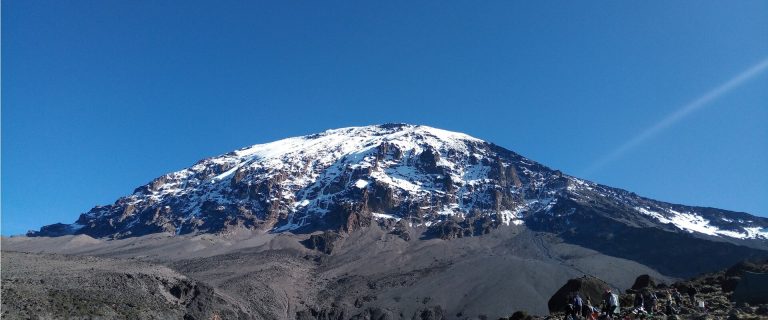
Moshi is the town at the bottom of the mountain. It sits on Kilimanjaro’s southern slopes, close enough that on a clear morning the summit is simply there above the rooftops, and far enough down that you are walking around in shirtsleeves while looking at a glacier. Almost everyone who climbs Kilimanjaro sleeps here on the night before and the night after, and a lot of people who are not climbing anything sleep here anyway, because it is the pleasanter of the two northern towns to spend an evening in.
The practical reason to choose Moshi over Arusha is proximity to the gates. TANAPA lists the main entry points to Kilimanjaro National Park as Marangu, Machame, Lemosho via Londorossi and Rongai in the north, with Mweka used for descent, and it names Moshi and Marangu as where climbers stay either side of a trek. Machame and Marangu are the two closest to Moshi, and a briefing that ends in Moshi the night before a Machame start is a shorter morning than the same briefing in Arusha.
The second reason is that Moshi has a better spare day than its size suggests, which matters because trips built around Kilimanjaro almost always contain spare days — the acclimatisation buffer, the weather day, the day after you come down and cannot face a vehicle.
The town itself
Moshi Municipal Council is one of the seven councils of Kilimanjaro Region. The council’s own history is unusually specific: the town was established in 1892 and moved to its present site from Kolila in Old Moshi, in what is now Moshi Rural District, in 1911. It was granted small-town status in 1926 and became a municipality in 1988. The municipality covers 58 square kilometres and lies between roughly 700 metres above sea level in the south and 950 metres in the north.
The council gives the population as 184,292 at the 2012 census, and adds a point worth carrying around with you: more than 76,000 further people come into the town in the daytime for work and trade and go home to the surrounding districts at night. Moshi is busier by day than its resident population implies, and quieter in the evening than you expect.
What this adds up to on the ground is a compact grid with a clock tower, a market, more cafés per head than anywhere comparable in Tanzania, and a very high density of people whose livelihood is the mountain — guides, porters, gear shops, and the outfitters behind them.
Arriving and leaving
Kilimanjaro International Airport lies west of Moshi on the road to Arusha, and is the international arrival point for both towns. The transfer from the airport to Moshi is shorter than the transfer to Arusha, which is a small point in Moshi’s favour if you land late.
By road, Moshi sits on the highway between Arusha and the coast. Eastwards it runs through Mwanga and Same — the approach to the Pare Mountains, Mkomazi National Park and, further on, the Usambaras. Westwards it goes to Arusha and the northern circuit. Kilimanjaro International Airport an hour away makes Moshi one of the easier towns in the country to reach directly, which the guide to arriving in Tanzania and moving on sets out alongside the road and air links to the northern circuit. There is no scheduled passenger rail service to build a trip around, whatever the German-era station suggests; the rail and ferry guide covers what actually runs in Tanzania.
The mountain, from the town
Kilimanjaro is the reason most people are here, and the climb itself is covered in its own guides rather than this one. The Kilimanjaro climb guide is the place to start, with the individual routes handled separately: Machame, Marangu, Lemosho, Rongai, Umbwe, Shira, the Northern Circuit, the Western Breach and Crater Camp.
What belongs on a Moshi page is the town’s side of it. This is where kit is checked, where the pre-climb briefing happens, where anything you forgot gets bought or hired, and where the weighing of porter loads takes place before vehicles leave for the gate. It is also where you come back to, and the single most reliable piece of trip design in this part of Tanzania is to put a genuine rest day in Moshi after the descent rather than flying out the next morning. That day, and everything else a climb asks you to decide in advance, is covered in the guide to preparing for a Kilimanjaro climb.
A day in Moshi when you are not on the mountain
Moshi’s day trips are the strongest of any base on the northern circuit, and unusually they are all short.
Coffee
Moshi is the administrative centre of Tanzanian coffee. The Tanzania Coffee Board licenses the trade and runs a weekly auction in the town through the season, and the Tanzania Coffee Research Institute works from Lyamungu in Hai District, about twenty-three kilometres away, on a station dating from 1934. Above the town, the Chagga smallholdings on the mountain’s lower slopes grow it in the shade of banana. The village coffee visits — Materuni above Moshi is the best known, and Kilimanjaro Region’s own tourism material names its waterfalls — are covered in the coffee tours guide, along with what separates a working estate visit from a demonstration.
Waterfalls
The southern slopes are cut by steep forested valleys and the falls in them are the standard Moshi half day, usually bundled with the coffee. Kilimanjaro Region names the Materuni falls specifically as a draw for visitors interested in scenery, hiking and Chagga culture. The waterfall hiking guide covers the walks themselves, which are steeper and more slippery than the photographs suggest.
Warm water, and a name to be careful with
The pool near Moshi variously called Kikuletwa, Chemka or Maji Moto lies in Hai District and is warm, clear and swimmable at around twenty-seven degrees. It is the standard decompression trip after a climb.
There is a separate place called Maji Moto below the escarpment in Lake Manyara National Park which runs at around sixty degrees and will scald. The names are shared and travel copy confuses them constantly. The hot spring swimming guide separates the two properly and covers the health questions that go with swimming in fresh water; it is worth reading before you agree to a trip described only as “the hot springs”.
Everything else
- Markets and street food — Moshi’s central market is small, walkable and unusually easy to visit without a guide.
- Cooking classes and farm tours on the banana-and-coffee smallholdings above town.
- Mountain biking on the lower slopes and the flats, which is the best way to see the farmland.
- Day hiking on the foothills without entering the national park, and caves in the Chagga country above the town.
- Scenic flights around the mountain, and quad biking and horse riding on the plains.
- Running events — Moshi hosts an annual marathon, and it is the reason a certain kind of visitor comes at all.
- Tanzanite is sold here as well as in Arusha, with the same certification questions.
- Golf, for the view rather than the course.
When to come
Moshi is in the bimodal rainfall zone. The Tanzania Meteorological Authority puts the Vuli rains from October to December and the Masika rains from March to May. The commonly repeated “short rains in November” is late by a month, and trips planned on it get wet.
For the mountain specifically, the climbing seasons and their trade-offs are covered in the Kilimanjaro climb guide, which is the right place for that decision. For the town, the useful thing to know is that at 700 to 950 metres Moshi is warm — noticeably warmer than Arusha at 1,500 — and the heat is the thing people underestimate on the day they walk down off the mountain.
Common questions about Moshi
Should I stay in Moshi or Arusha for a Kilimanjaro climb?
Moshi, in most cases. It is closer to the Machame and Marangu gates, TANAPA names it and Marangu as where climbers stay, and the outfitting trade is concentrated there. Arusha is the better base for the safari parks, which is why many itineraries use both.
How high is Moshi?
Moshi Municipal Council gives the town as lying between about 700 metres above sea level in the south and 950 metres in the north. It is not high enough to count as acclimatisation for Kilimanjaro.
Can you see Kilimanjaro from Moshi?
Yes, on a clear day, and it is directly above the town rather than in the distance. Cloud builds through the day in most seasons, so early morning is when you see it.
What is there to do in Moshi apart from climbing?
Coffee visits on the Chagga smallholdings and the machinery of the coffee trade in the town itself, the waterfalls on the southern slopes, the warm springs at Kikuletwa, the market, cycling and day walks in the foothills, and scenic flights around the mountain. It is the strongest set of short day trips of any base on the northern circuit.
Are Chemka and Maji Moto the same place?
Chemka and Kikuletwa are the same place, in Hai District near Moshi, and it is also called Maji Moto locally. But Maji Moto is also the name of a geothermal spring in Lake Manyara National Park that runs at around sixty degrees and cannot be swum in. Check which one is meant.
How far is Moshi from Arusha?
They are the two ends of the same short highway, with Kilimanjaro International Airport roughly between them. Transfers between the two are a routine part of northern circuit itineraries and are usually arranged by the operator running the trip.
Is Moshi worth a rest day after a climb?
It is one of the better places in Tanzania to have one. The town is compact and walkable, the warm springs and the coffee villages are both short trips, and the alternative — flying out the morning after descending — is the most commonly regretted decision in Kilimanjaro trip planning.