
The first port of the south
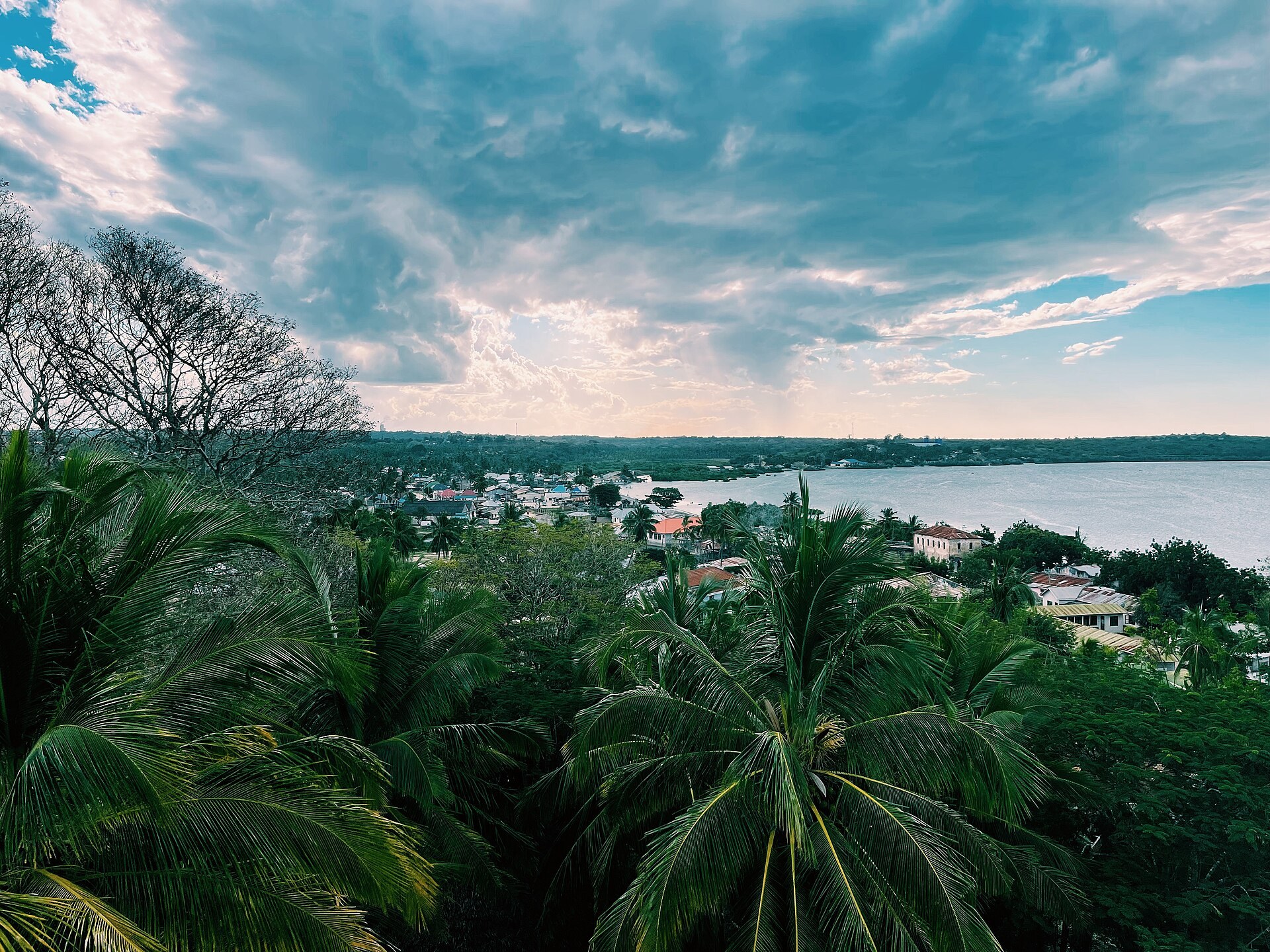
Mikindani is a small historic town on a near-enclosed bay in the far south of Tanzania, a few kilometres west of Mtwara and sharing a municipal council with it. It is the oldest settlement on this stretch of coast and, in the National Museum of Tanzania’s own words, the first port of the south — the harbour that Arab, German and British traders used in turn, and the thing that made the town.
Almost everything shipped out of the southern interior passed through here. The museum’s description of the site records that goods and raw materials were exported from the quay and that enslaved people were shipped from it too, to the neighbouring islands and beyond Africa. The quay was originally 170 metres long; sixty metres of it have been restored.
Mikindani is a National Museum of Tanzania historical centre in its own right, one of the small number of sites the national museum service runs outside Dar es Salaam and Arusha. It is not a resort and it is not on most itineraries. What it is, is an unusually intact small Swahili and German colonial town on a beautiful bay with very little tourism in it.
What is there
The old town is walkable in an hour: coral-rag houses with carved doors, a mosque, the remains of the harbour works, and above them the German boma — the administrative building of the colonial district, restored and the most conspicuous structure in the town. Mikindani also holds what the national museum describes as the first German bank building in the country, put up in 1895 to hold valuables such as gold, copper, diamonds and silver, and later used to store arms; it too has been restored and is back in use.
Interpretation on the ground is limited. As with Bagamoyo and Pangani, this is a place where a guide makes the difference between a pretty street and a legible one. See historical walking tours and, for the wider coastal context, Swahili cultural tours. The harbour’s role in the export of enslaved people belongs with the treatment in the guide to slave trade history tours.
The standard accounts of David Livingstone’s last expedition have him landing on this bay in 1866 and setting out for the interior from here. The museum’s own description of the site does not mention it; if a guide raises it, it is a reasonable thing to ask what the evidence on the ground actually is.
The bay, and the country around it
Mikindani bay is almost fully enclosed and calm, which is what made it a harbour and what makes it pleasant now. Swimming, kayaking and dhow trips all work here — see sea kayaking and dhow sailing — and mangrove fringes much of the shoreline, covered under mangrove tours.
The principal reason to base here, though, is what lies south. The Mnazi Bay–Ruvuma Estuary Marine Park begins about an hour away down the Msimbati road, and the park’s own management plan states plainly that most visitors to it make a day trip from hotels in Mtwara and Mikindani. Snorkelling, diving and — between July and November — whales are the draw there.
This is Makonde country. The Makonde are the main people of the region, known for the sindimba dance and for their carving, and the coastal Makonde are locally distinguished from those of the plateau inland. Carving here is a living craft rather than a souvenir industry, and is covered under craft workshops; dance and music under traditional music and dance. Cashew is the crop that carries the regional economy — see farm tours.
When to go
The far south does not share the northern coast’s calendar, and this is the single most common planning error for a trip down here. The Tanzania Meteorological Authority classifies Mtwara and Lindi regions as the southern coastal zone, which is unimodal: one rainy season a year, starting in November and ending between April and May. There is no separate short-rains season in October to December, and no dry interval in January and February.
Mtwara District Council describes the same pattern in local terms: a cool wet season, masika, from November to May, and a hot dry season, kianga, from June to October, with average annual rainfall of 800 to 900 millimetres and mean temperatures running from about 23°C in June to 30°C in October. June to October is therefore the season to travel, and it is also when the marine park’s road is passable without difficulty and when the whales are in — a narrower window than the national seasonal picture suggests for the coast generally.
Getting there
Mtwara has an airport with scheduled flights from Dar es Salaam, and Mikindani is a short drive from it. The flight is what makes the far south practical at all, and the guide to flying and driving in Tanzania covers the domestic network it belongs to. By road it is a very long day from Dar es Salaam, generally broken at Kilwa Masoko, which is the obvious and worthwhile stop on the way and makes a southern coastal trip out of what would otherwise be a single remote stay.
Common questions
Is Mikindani the same place as Mtwara?
No, but they are administered together. Mtwara is the regional capital and the larger town, with the airport and the port. Mikindani is the older settlement a few kilometres away on its own bay, and is the historic one.
Is it worth coming this far?
Only as part of a southern trip. Mikindani on its own is a day. Mikindani plus the Mnazi Bay marine park, plus a stop at Kilwa on the way down or back, is a genuinely distinctive week that almost nobody does.
Can you see whales from here?
Not from the town. The whale season is in the marine park’s waters around Msimbati and Ruvula, roughly an hour south, between July and November, and is covered on the Mnazi Bay–Ruvuma Estuary Marine Park page and under whale watching.